grecfacilegrecfacile
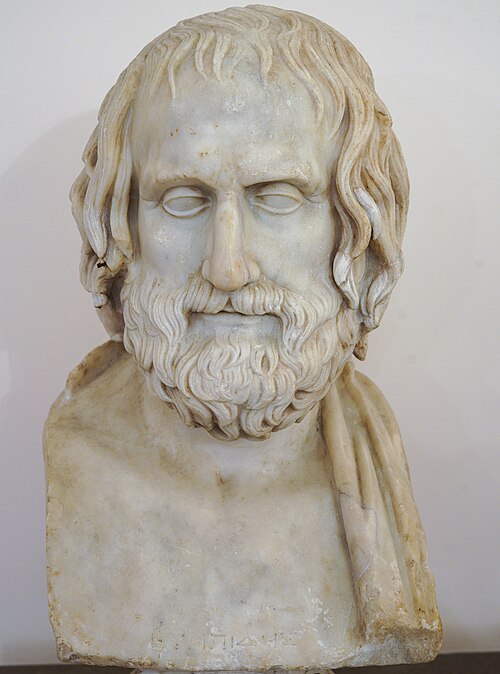
Euripides
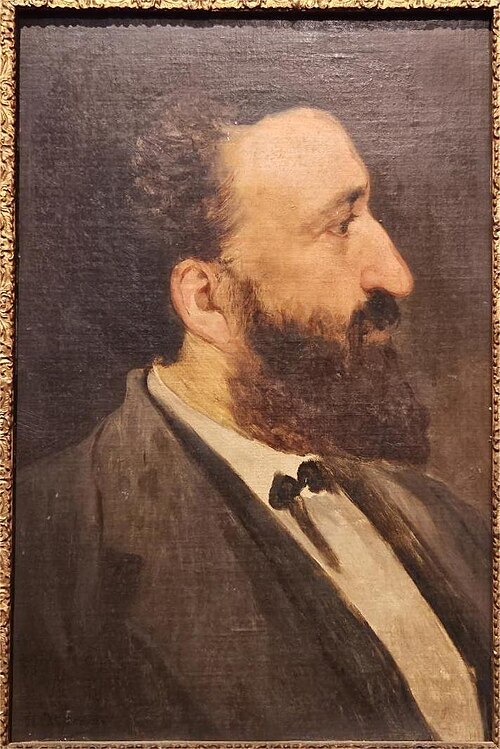
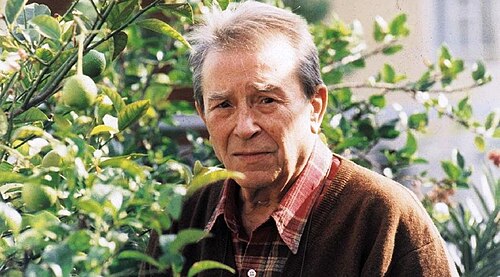
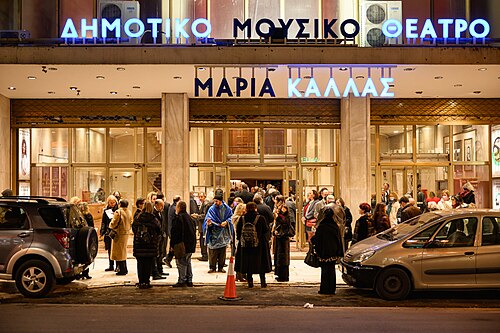
NikonZ7II · CC BY-SA 4.0 · Wikimedia Commons

B2Antiquity · Tragedian

Euripides

Ευριπίδης

c. 480 BC – 406 BC · Salamis; Athens; Pella (Macedonia)

Euripides (Ευριπίδης, c. 480–406 BC) was the youngest of the three great tragedians of Athens and the one the city understood least: he won the drama competition only four times in his life. Yet more of his plays survive than of Aeschylus and Sophocles together, and Μήδεια (Medea), Ιππόλυτος (Hippolytus), Τρωάδες (The Trojan Women) and Βάκχαι (The Bacchae) are performed around the world more than any other ancient dramas.

Life

Ancient tradition says Euripides was born on the island of Salamis on the very day of the great naval battle of 480 BC, which is probably too neat to be true; around 480 is as close as we can get. His parents were Mnesarchus and Cleito; the comic poets joked that his mother sold vegetables in the market, which tells us more about Athenian comedy than about her. He seems to have been well educated and to have owned a large library, a rarity at the time, and later writers linked him with the philosophers Anaxagoras and Socrates.

He first competed at the City Dionysia in 455 BC and won his first victory only in 441. Over almost fifty years he wrote about ninety plays and won just four times while alive; a fifth prize came after his death, for Βάκχαι and Ιφιγένεια εν Αυλίδι (Iphigenia at Aulis), produced by his son in 405 BC. Μήδεια, now his most famous play, came last in 431. Aristophanes mocked him in play after play, in Αχαρνής, Θεσμοφοριάζουσαι and Βάτραχοι, as a clever, chatty poet who put kings in rags and women in love on the stage.

Around 408 BC he left Athens, worn out by the war and perhaps by his audience, for the court of King Archelaus of Macedonia in Pella, where he wrote Βάκχαι. He died there in 406 BC. When the news reached Athens, Sophocles is said to have brought his chorus on stage in mourning. A cave on Salamis where, tradition says, he went to write alone was identified by archaeologists in the 1990s.

Works

Eighteen tragedies survive, plus Ρήσος (Rhesus), which may not be his, and Κύκλωψ (Cyclops), the only complete satyr play we have. Among them: Άλκηστις (Alcestis, 438 BC), about a wife who agrees to die in her husband's place; Μήδεια (431 BC), in which a betrayed foreign wife kills her own children to punish Jason; Ιππόλυτος (428 BC), in which Phaedra's hidden love for her stepson destroys them both; Εκάβη (Hecuba) and Τρωάδες (The Trojan Women, 415 BC), the bleakest pictures of what war does to the defeated; Ηλέκτρα, Ελένη (Helen, 412 BC), Ιφιγένεια εν Ταύροις (Iphigenia among the Taurians) and Ορέστης (408 BC); and finally Βάκχαι, in which the god Dionysus takes a terrible revenge on the king of Thebes who refuses to worship him.

Euripides brought the heroes of myth down to human size. His characters argue like Athenians in the law courts, doubt the gods, change their minds, and are shown from the inside; Medea's long speech about the lot of women is the first of its kind in European literature. He gave great parts to women, slaves and foreigners, and he liked to end a play by lowering a god on the stage crane to sort out the mess, the «από μηχανής θεός» (deus ex machina). Aristotle called him «the most tragic of the poets».

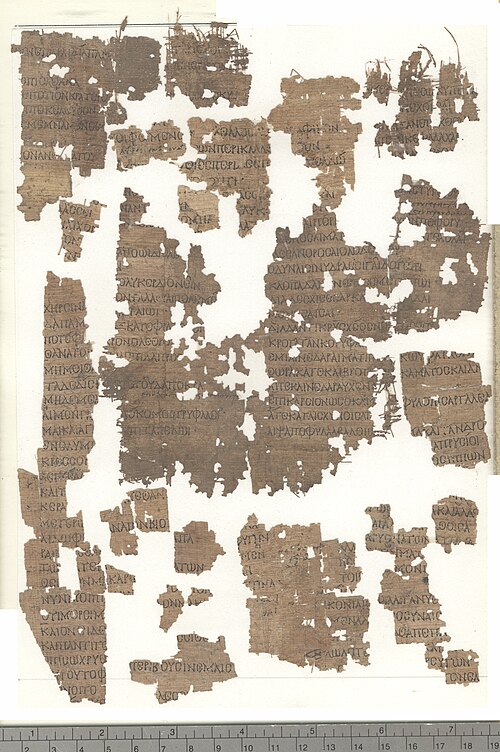
Many of his plays survive by luck: one volume of a complete alphabetical edition, containing the plays from Ελένη to Κύκλωψ, came through the Middle Ages intact, while from Aeschylus and Sophocles only selected school texts remain. That accident is why we can read Euripides at his most varied: tragedy, melodrama, near-comedy and romance.

Legacy in Greece today

Greek pupils meet Euripides at fourteen: Ελένη (Helen) is the set tragedy of the third year of Gymnasium, read in translation. Every summer Μήδεια, Βάκχαι or Τρωάδες are staged at Epidaurus; Theodoros Terzopoulos's Bacchae of 1986 became the most travelled Greek production of its time. The expression «από μηχανής θεός» is used in everyday Greek for any solution that arrives out of nowhere, and newspapers still call a mother who harms her children «μια Μήδεια». Medea has been an opera, a ballet and several films, including Pasolini's with Maria Callas. On Salamis you can visit the Cave of Euripides above the bay of Peristeria, and streets named Ευριπίδου run through Athens, Thessaloniki and most Greek towns.

Did you know?

  • Of about ninety plays he won only four first prizes while alive; Μήδεια, his most performed work today, came last in 431 BC.
  • Eighteen or nineteen of his plays survive, more than Aeschylus (seven) and Sophocles (seven) combined, partly because one volume of an alphabetical edition survived by chance.
  • He invented nothing less than the stage god: the «από μηχανής θεός» lowered by crane at the end of a play is a Euripidean habit.
  • Archaeologists excavating a cave on Salamis in the 1990s found a pottery fragment inscribed with his name, supporting the ancient story that he wrote there.

Key works

Greek titleTitleYear
ΆλκηστιςAlcestis438 BC
ΜήδειαMedea431 BC
ΙππόλυτοςHippolytus428 BC
ΤρωάδεςThe Trojan Women415 BC
ΕλένηHelen412 BC
ΒάκχαιThe Bacchae405 BC

A line to remember

Πάντων δ' ὅσ' ἔστ' ἔμψυχα καὶ γνώμην ἔχει / γυναῖκές ἐσμεν ἀθλιώτατον φυτόν.

In today's GreekΑπ' όλα τα πλάσματα που έχουν ζωή και νου, / εμείς οι γυναίκες είμαστε το πιο δυστυχισμένο.

Panton d' hos' est' empsycha kai gnomen echei / gynaikes esmen athliotaton phyton.

Of all creatures that have life and reason, / we women are the most wretched.

Μήδεια, στίχοι 230–231 (431 BC)

From the original

The text as Euripides wrote it, out of copyright, with our own translation beside it.

«Μήδεια»Medea

Early in the play, Medea, abandoned by Jason, wins over the chorus of Corinthian women with this speech on the lot of wives. The bracketed line is suspected by editors of being a later addition.

πάντων δ’ ὅσ’ ἔστ’ ἔμψυχα καὶ γνώμην ἔχειOf all creatures that have life and reason,
γυναῖκές ἐσμεν ἀθλιώτατον φυτόν·we women are the most wretched growth;
ἃς πρῶτα μὲν δεῖ χρημάτων ὑπερβολῇwe who first must, with a vast outlay of money,
πόσιν πρίασθαι, δεσπότην τε σώματοςbuy a husband, and take a master
λαβεῖν· κακοῦ γὰρ τοῦτ’ ἔτ’ ἄλγιον κακόν.for our body: an evil more painful still than the first.
κἀν τῷδ’ ἀγὼν μέγιστος, ἢ κακὸν λαβεῖνAnd here lies the greatest gamble: whether we take a bad one
ἢ χρηστόν. οὐ γὰρ εὐκλεεῖς ἀπαλλαγαὶor a good. For leaving a marriage brings no good name
γυναιξίν, οὐδ’ οἷόν τ’ ἀνήνασθαι πόσιν.to women, nor can we refuse a husband.
ἐς καινὰ δ’ ἤθη καὶ νόμους ἀφιγμένηνArriving among new customs and laws,
δεῖ μάντιν εἶναι, μὴ μαθοῦσαν οἴκοθεν,a woman must be a seer, since she has not learned it at home,
ὅτῳ μάλιστα χρήσεται ξυνευνέτῃ.to know how best to deal with the man who shares her bed.
κἂν μὲν τάδ’ ἡμῖν ἐκπονουμέναισιν εὖAnd if we work all this out well
πόσις ξυνοικῇ μὴ βίᾳ φέρων ζυγόν,and a husband lives with us without chafing at the yoke,
ζηλωτὸς αἰών· εἰ δὲ μή, θανεῖν χρεών.our life is enviable; if not, better to die.
ἀνὴρ δ’, ὅταν τοῖς ἔνδον ἄχθηται ξυνών,A man, when he is weary of those at home,
ἔξω μολὼν ἔπαυσε καρδίαν ἄσης·goes out and frees his heart of its weariness
[ἢ πρὸς φίλον τιν’ ἢ πρὸς ἥλικα τραπείς·][turning to some friend or to men of his own age];
ἡμῖν δ’ ἀνάγκη πρὸς μίαν ψυχὴν βλέπειν.but we must look to one soul alone.
λέγουσι δ’ ἡμᾶς ὡς ἀκίνδυνον βίονThey say of us that we live a life without danger
ζῶμεν κατ’ οἴκους, οἳ δὲ μάρνανται δορί·at home, while they go fighting with the spear:
κακῶς φρονοῦντες· ὡς τρὶς ἂν παρ’ ἀσπίδαhow wrong they are! I would rather stand three times
στῆναι θέλοιμ’ ἂν μᾶλλον ἢ τεκεῖν ἅπαξ.behind a shield than give birth once.

Μήδεια, στ. 230–251 (431 π.Χ.), Medea speaks to the women of Corinth · Public-domain text, source: el.wikisource.org
B2

Read about Euripides in Greek (B2)

Words from the passage

  • tragic
  • competition
  • the public, audience
  • I doubt
  • I change
  • comedy
  • rag

  • king

Test yourself: 4 words from this page

1 / 4

What does this word mean?

Want to learn Greek?Start learning Greek

Others at level B2

Modern Greece · PoetKiki Dimoula1931 – 2020Modern Greece · PoetAngelos Sikelianos1884 – 1951Modern Greece · PoetKostis Palamas1859 – 1943Modern Greece · Short-story writer and poetGeorgios Vizyinos1849 – 1896Antiquity · Historian and soldierXenophonc. 430 BC – c. 354 BCAntiquity · Biographer and essayistPlutarchc. 46 – c. 120Antiquity · PhilosopherHeraclitusc. 535 BC – c. 475 BCAntiquity · StatesmanPericlesc. 495 BC – 429 BCModern Greece · StatesmanEleftherios Venizelos1864 – 1936Modern Greece · First Governor of GreeceIoannis Kapodistrias1776 – 1831Modern Greece · PoetLorentzos Mavilis1860 – 1912Modern Greece · Novelist, short-story writerAndreas Karkavitsas1865 – 1922Modern Greece · Film and theatre directorMichael Cacoyannis1922 – 2011Modern Greece · ComposerVangelis1943 – 2022Modern Greece · NovelistDido Sotiriou1909 – 2004Modern Greece · Playwright and lyricistIakovos Kambanellis1922 – 2011Modern Greece · Prime minister, reformerCharilaos Trikoupis1832 – 1896Modern Greece · Novelist, essayistGiorgos Theotokas1905 – 1966Modern Greece · NovelistPantelis Prevelakis1909 – 1986Modern Greece · PoetTasos Livaditis1922 – 1988Modern Greece · MathematicianConstantin Carathéodory1873 – 1950Modern Greece · PainterKonstantinos Parthenis1878 – 1967Modern Greece · PainterYannis Moralis1916 – 2009Modern Greece · SculptorTakis (Panagiotis Vassilakis)1925 – 2019Modern Greece · ConductorDimitri Mitropoulos1896 – 1960Modern Greece · Stage actressMarika Kotopouli1887 – 1954Modern Greece · Writer, art criticZacharias Papantoniou1877 – 1940Modern Greece · ArchaeologistSpyridon Marinatos1901 – 1974Modern Greece · BenefactorEvangelos Zappas1800 – 1865Modern Greece · Rock singer, songwriterPavlos Sidiropoulos1948 – 1990Modern Greece · Rebetiko composer, bouzoukiYannis Papaioannou1913 – 1972Modern Greece · ChemistLeonidas Zervas1902 – 1980Modern Greece · ArchaeologistGeorge Mylonas1898 – 1988Modern Greece · PainterAglaia Papa1904 – 1984Antiquity · Choral poetAlcmanModern Greece · Stage actressAmalia MoutousiModern Greece · Choreographer · dancerAngeliki Stellatou1963Antiquity · Literary compilerAthenaeus2nd c. ADAntiquity · Biographer · history of philosophyDiogenes Laertius3rd c. ADModern Greece · Historian · ByzantinistEleni Glykatzi-Arveler1926 – 2026Modern Greece · AutobiographerElisavet Moutzan-Martinengou1801 – 1832Antiquity · Comic poetEpicharmusc. 540 BC – c. 460 BCModern Greece · Novelist · poetErsi Sotiropoulou1953Modern Greece · Novelist; short-story writerGalateia Saranti1920 – 2009Modern Greece · Film director · screenwriterYorgos Lanthimos1973Modern Greece · Speculative novelist and storytellerIoanna Bourazopoulou1968Modern Greece · Actress · theatre managerKakia Analyti1934 – 2002Modern Greece · Stage and TV actorKatia Dandoulaki1948Antiquity · Bronze sculptorLysipposModern Greece · Actress · acting teacherMary Aronic. 1914 – 1992Modern Greece · NovelistMargarita Karapanou1946 – 2008Modern Greece · Poet, playwright and translatorMaria Laina1947 – 2023Modern Greece · Singer · songwriterMaria PapageorgiouModern Greece · Novelist · essayistMaro Vamvounaki1948Modern Greece · Poet; translatorMatsi Hatzilazarou1914 – 1987Modern Greece · Singer · composerMichalis Hatzigiannis1978Modern Greece · Composer and music teacherNikolaos Mantzaros1795 – 1872Modern Greece · Film directorNikos Panagiotopoulos1941 – 2016Modern Greece · Painter · sculptorOpy Zouni1941 – 2008Antiquity · Historian · political inquiryPolybiusc. 200 BC – c. 118 BCModern Greece · Novelist · historical fictionRea Galanaki1947Modern Greece · Novelist · playwrightRina Katselli1938 – 2021Modern Greece · Poet · translatorRita Boumi-Papa1906 – 1984Modern Greece · Stage actress · director · translatorSofia FilippidouAntiquity · Lyric poetStesichorusc. 630 BC – c. 555 BCModern Greece · Novelist · short-story writerTatiana Gritsi-Milliex1920 – 2005Modern Greece · Novelist · journalistVassilis Alexakis1943 – 2021Antiquity · Philosopher · Stoic founderZeno of Citiumc. 334–333 BC – c. 262–261 BCModern Greece · Film and stage actressZoe Laskaric. 1942 – 2017Modern Greece · Novelist · short-story writerZyranna Zateli1951

All personalities →