grecfacilegrecfacile
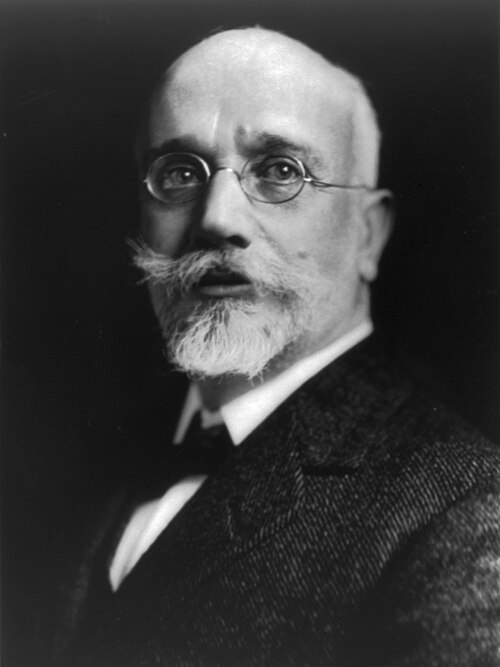
Eleftherios Venizelos
Harris & Ewing · Public domain · Wikimedia Commons

B2Modern Greece · Statesman

Eleftherios Venizelos

Ελευθέριος Βενιζέλος

1864 – 1936 · Mournies (Chania), Crete; Athens; Paris

Eleftherios Venizelos (Ελευθέριος Βενιζέλος, 1864–1936) was prime minister of Greece seven times between 1910 and 1933 and the dominant Greek politician of the twentieth century. Born in Ottoman Crete, he led the island's union with Greece, nearly doubled the country's territory in the Balkan Wars of 1912–13, split it in the National Schism, and after the Asia Minor Catastrophe negotiated the Treaty of Lausanne. Greeks still divide the century into «before Venizelos» and after.

Life

Venizelos was born on 23 August 1864 in Mournies, a village outside Chania, when Crete was still an Ottoman province. He studied law in Athens and returned to Chania as a lawyer and journalist. In the autonomous Cretan State created in 1898 he served as minister of justice, quarrelled with its ruler Prince George, and in 1905 led the armed revolt of Therisos, which forced the prince out and made Venizelos the leading man on the island.

In 1909 Greek officers staged the coup of Goudi and invited the Cretan outsider to Athens. He arrived in 1910, won the elections and became prime minister in October. Reforms followed at speed: a revised constitution in 1911, labour laws, a rebuilt army and navy. He then built the Balkan League, and in the Balkan Wars of 1912–13 Greece took Thessaloniki, Ioannina, Macedonia, Epirus, Crete and the eastern Aegean islands, growing from 2.7 to 4.8 million inhabitants.

The First World War set him against King Constantine I, who insisted on neutrality while Venizelos wanted to join the Entente. He resigned twice in 1915, set up a rival government in Thessaloniki in 1916 and returned to power in 1917 after the king was forced to leave. This Εθνικός Διχασμός (National Schism) poisoned politics for decades. The Treaty of Sèvres (1920) brought Smyrna, but he lost the elections of November 1920 and the Asia Minor campaign ended in the Catastrophe of 1922. He signed the Treaty of Lausanne in 1923, governed again in 1928–32, and after a failed coup by his supporters in 1935 fled to Paris, where he died on 18 March 1936.

Works

Venizelos' achievements are treaties, reforms and borders. The constitution of 1911 modernised the Greek state, and his first government passed the first social legislation. The Balkan Wars, prepared by his diplomacy and the alliance with Serbia, Bulgaria and Montenegro, are the reason Thessaloniki, Crete and Ioannina are Greek today.

The Treaty of Sèvres, signed in August 1920, was the high point of the Μεγάλη Ιδέα (Great Idea), the dream of a Greece including all the Greeks of the East: it gave Greece eastern Thrace and the region of Smyrna, «the Greece of two continents and five seas». Within three years it was dead. His most lasting work was the opposite of Sèvres: the Treaty of Lausanne of July 1923, which fixed the Greek–Turkish border on the Evros and, with the exchange of populations agreed in January 1923, moved some 1.2 million Orthodox Christians from Turkey to Greece and about 400,000 Muslims the other way. The settlement of the refugees, in new quarters around Athens, Piraeus and Thessaloniki, transformed Greek society, its music and its food.

His government of 1928–32 built roads and schools, drained the marshes of Macedonia and, in 1930, signed a friendship agreement with Kemal Atatürk's Turkey, closing the century of war between the two nations; in 1934 Venizelos nominated Atatürk for the Nobel Peace Prize. He was a brilliant parliamentary speaker and negotiator, charming the statesmen of Paris and London in fluent French and English; Lloyd George called him the greatest statesman Greece had produced since Pericles.

Legacy in Greece today

Arriving in Greece most visitors land at Athens International Airport «Eleftherios Venizelos», opened in 2001, and the main avenue of central Athens, Panepistimiou, is officially named Ελευθερίου Βενιζέλου, as is a street in almost every Greek town. His house in the Chalepa district of Chania is a museum, run by the National Research Foundation that bears his name, and the Venizelos Museum in Eleftherias Park in Athens preserves the house where he lived; his grave, with that of his son Sophoklis, stands on the hill of Profitis Ilias at Akrotiri above Chania, looking over the bay. Greek school history books treat his years as a chapter of their own, and the words βενιζελικός and αντιβενιζελικός, Venizelist and anti-Venizelist, still describe a family's political tradition. The site's B1 listening exercise on a history lesson is a good place to hear these events told in Greek.

Did you know?

  • He was born an Ottoman subject and did not live in Athens until he was forty-five; within months of arriving he was prime minister.
  • He survived two assassination attempts: at the Gare de Lyon in Paris in August 1920, days after signing the Treaty of Sèvres, and on the road to Kifisia in June 1933, when his wife Helena was wounded.
  • In 1934 he nominated Mustafa Kemal Atatürk, the man who had defeated the Greek army in 1922, for the Nobel Peace Prize.
  • After his death in Paris his body was taken by ship straight to Crete, bypassing Athens, to avoid clashes between his supporters and opponents.

Key works

Greek titleTitleYear
Επανάσταση του ΘερίσουTherisos revolt in Crete1905
Αναθεώρηση του ΣυντάγματοςRevision of the Greek constitution1911
Βαλκανικοί ΠόλεμοιBalkan Wars1912–13
Συνθήκη των ΣεβρώνTreaty of Sèvres1920
Συνθήκη της ΛωζάννηςTreaty of Lausanne1923
Ελληνοτουρκικό Σύμφωνο ΦιλίαςGreek–Turkish friendship agreement with Atatürk1930

A line to remember

Η Ελλάς των δύο ηπείρων και των πέντε θαλασσών

I Ellas ton dyo ipeiron kai ton pente thalasson

The Greece of two continents and five seas

The phrase that summed up Venizelos' Greece after the Treaty of Sèvres (1920)

From the original

The text as Eleftherios Venizelos wrote it, out of copyright, with our own translation beside it.

«Θουκυδίδου Ἱστορίαι, μετάφρασις Ἐλευθερίου Βενιζέλου»Thucydides, History, in Venizelos' translation

Venizelos' own prose rather than a speech: in the years out of office he translated the whole of Thucydides, and this is Pericles' portrait of Athenian democracy in the Funeral Oration as the statesman rendered it into the Greek of his own day.

Ζώμεν τωόντι υπό πολίτευμα, το οποίον δεν επιζητεί ν' αντιγράφη τους νόμους των άλλων, αλλ' είμεθα ημείς μάλλον υπόδειγμα εις τους άλλους παρά μιμηταί αυτών. Και καλείται μεν το πολίτευμά μας δημοκρατία, λόγω του ότι η κυβέρνησις του κράτους ευρίσκεται όχι εις χείρας των ολίγων, αλλά των πολλών. Αλλά δια μεν των νόμων ασφαλίζεται εις όλους ισότης δικαιοσύνης δια τα ιδιωτικά των συμφέροντα, ενώ υπό την έποψιν της κοινής εκτιμήσεως, έκαστος πολίτης προτιμάται εις τα δημόσια αξιώματα, όχι διότι ανήκει εις ωρισμένην κοινωνικήν τάξιν, αλλά δια την προσωπικήν του αξίαν, εφόσον διακρίνεται εις κάποιον κλάδον. Ούτε, εξ άλλου, εκείνος που είναι πτωχός, ημπορεί όμως να προσφέρη υπηρεσίας εις την πόλιν, ευρίσκει εμπόδιον εις τούτο, ένεκα της κοινωνικής του αφανείας. Και όχι μόνον εις τον δημόσιόν μας βίον πολιτευόμεθα με πνεύμα ελευθέριον, αλλά και εις την αναμεταξύ μας καθημερινήν επικοινωνίαν είμεθα ελεύθεροι καχυποψίας, διότι δεν αγανακτούμεν εναντίον των άλλων δι' όσα πράττουν χάριν της ευχαριστήσεώς των, ούτε προσλαμβάνομεν απέναντί των φυσιογνωμίαν σκυθρωπής αποδοκιμασίας, η οποία δεν ζημιώνει αληθώς, πληγώνει όμως.We live, in truth, under a constitution that does not seek to copy the laws of others; rather we are ourselves a model to others than imitators of them. Our constitution is called a democracy, because the government of the state lies in the hands not of the few but of the many. But while the laws secure to all equal justice in their private interests, in the matter of public esteem each citizen is preferred for public office not because he belongs to a particular social class but for his personal worth, so long as he distinguishes himself in some field. Nor, again, does a man who is poor but able to be of service to the city find any obstacle in this because of his social obscurity. And not only in our public life do we conduct ourselves in a liberal spirit, but in our daily dealings with one another we are free of suspicion, for we do not resent what others do for their own pleasure, nor do we put on towards them the look of sullen disapproval that does no real harm but wounds all the same.

Thucydides 2.37 (Pericles' Funeral Oration) in Venizelos' translation, written in the 1920s and published in 1940 · Public-domain text, source: el.wikisource.org
B2

Read about Eleftherios Venizelos in Greek (B2)

Words from the passage

  • empire
  • king
  • union
  • prime minister
  • constitution
  • area, extent
  • treaty
  • borders

Test yourself: 4 words from this page

1 / 4

What does this word mean?

Want to learn Greek?Start learning Greek

Others at level B2

Modern Greece · PoetKiki Dimoula1931 – 2020Modern Greece · PoetAngelos Sikelianos1884 – 1951Antiquity · TragedianEuripidesc. 480 BC – 406 BCModern Greece · PoetKostis Palamas1859 – 1943Modern Greece · Short-story writer and poetGeorgios Vizyinos1849 – 1896Antiquity · Historian and soldierXenophonc. 430 BC – c. 354 BCAntiquity · Biographer and essayistPlutarchc. 46 – c. 120Antiquity · PhilosopherHeraclitusc. 535 BC – c. 475 BCAntiquity · StatesmanPericlesc. 495 BC – 429 BCModern Greece · First Governor of GreeceIoannis Kapodistrias1776 – 1831Modern Greece · PoetLorentzos Mavilis1860 – 1912Modern Greece · Novelist, short-story writerAndreas Karkavitsas1865 – 1922Modern Greece · Film and theatre directorMichael Cacoyannis1922 – 2011Modern Greece · ComposerVangelis1943 – 2022Modern Greece · NovelistDido Sotiriou1909 – 2004Modern Greece · Playwright and lyricistIakovos Kambanellis1922 – 2011Modern Greece · Prime minister, reformerCharilaos Trikoupis1832 – 1896Modern Greece · Novelist, essayistGiorgos Theotokas1905 – 1966Modern Greece · NovelistPantelis Prevelakis1909 – 1986Modern Greece · PoetTasos Livaditis1922 – 1988Modern Greece · MathematicianConstantin Carathéodory1873 – 1950Modern Greece · PainterKonstantinos Parthenis1878 – 1967Modern Greece · PainterYannis Moralis1916 – 2009Modern Greece · SculptorTakis (Panagiotis Vassilakis)1925 – 2019Modern Greece · ConductorDimitri Mitropoulos1896 – 1960Modern Greece · Stage actressMarika Kotopouli1887 – 1954Modern Greece · Writer, art criticZacharias Papantoniou1877 – 1940Modern Greece · ArchaeologistSpyridon Marinatos1901 – 1974Modern Greece · BenefactorEvangelos Zappas1800 – 1865Modern Greece · Rock singer, songwriterPavlos Sidiropoulos1948 – 1990Modern Greece · Rebetiko composer, bouzoukiYannis Papaioannou1913 – 1972Modern Greece · ChemistLeonidas Zervas1902 – 1980Modern Greece · ArchaeologistGeorge Mylonas1898 – 1988Modern Greece · PainterAglaia Papa1904 – 1984Antiquity · Choral poetAlcmanModern Greece · Stage actressAmalia MoutousiModern Greece · Choreographer · dancerAngeliki Stellatou1963Antiquity · Literary compilerAthenaeus2nd c. ADAntiquity · Biographer · history of philosophyDiogenes Laertius3rd c. ADModern Greece · Historian · ByzantinistEleni Glykatzi-Arveler1926 – 2026Modern Greece · AutobiographerElisavet Moutzan-Martinengou1801 – 1832Antiquity · Comic poetEpicharmusc. 540 BC – c. 460 BCModern Greece · Novelist · poetErsi Sotiropoulou1953Modern Greece · Novelist; short-story writerGalateia Saranti1920 – 2009Modern Greece · Film director · screenwriterYorgos Lanthimos1973Modern Greece · Speculative novelist and storytellerIoanna Bourazopoulou1968Modern Greece · Actress · theatre managerKakia Analyti1934 – 2002Modern Greece · Stage and TV actorKatia Dandoulaki1948Antiquity · Bronze sculptorLysipposModern Greece · Actress · acting teacherMary Aronic. 1914 – 1992Modern Greece · NovelistMargarita Karapanou1946 – 2008Modern Greece · Poet, playwright and translatorMaria Laina1947 – 2023Modern Greece · Singer · songwriterMaria PapageorgiouModern Greece · Novelist · essayistMaro Vamvounaki1948Modern Greece · Poet; translatorMatsi Hatzilazarou1914 – 1987Modern Greece · Singer · composerMichalis Hatzigiannis1978Modern Greece · Composer and music teacherNikolaos Mantzaros1795 – 1872Modern Greece · Film directorNikos Panagiotopoulos1941 – 2016Modern Greece · Painter · sculptorOpy Zouni1941 – 2008Antiquity · Historian · political inquiryPolybiusc. 200 BC – c. 118 BCModern Greece · Novelist · historical fictionRea Galanaki1947Modern Greece · Novelist · playwrightRina Katselli1938 – 2021Modern Greece · Poet · translatorRita Boumi-Papa1906 – 1984Modern Greece · Stage actress · director · translatorSofia FilippidouAntiquity · Lyric poetStesichorusc. 630 BC – c. 555 BCModern Greece · Novelist · short-story writerTatiana Gritsi-Milliex1920 – 2005Modern Greece · Novelist · journalistVassilis Alexakis1943 – 2021Antiquity · Philosopher · Stoic founderZeno of Citiumc. 334–333 BC – c. 262–261 BCModern Greece · Film and stage actressZoe Laskaric. 1942 – 2017Modern Greece · Novelist · short-story writerZyranna Zateli1951

All personalities →