grecfacilegrecfacile
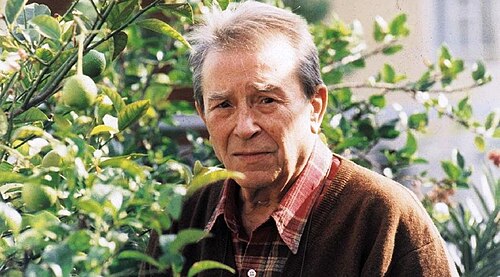
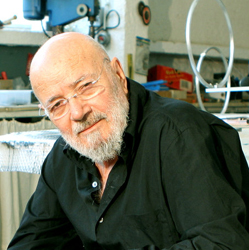
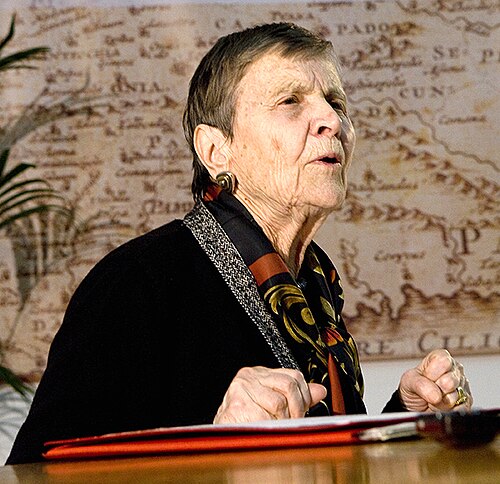
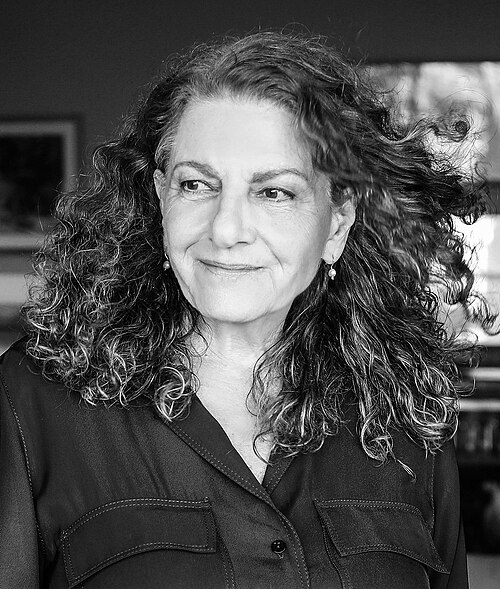
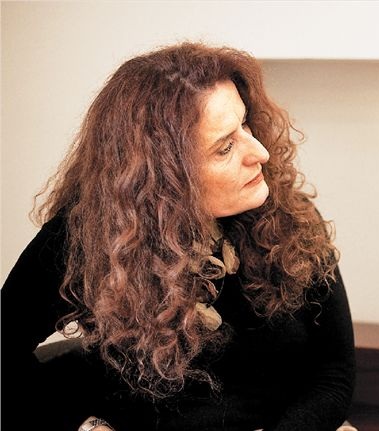
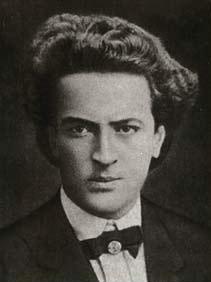
Kiki Dimoula
Svlioras · CC BY-SA 3.0 · Wikimedia Commons

B2Modern Greece · Poet

Kiki Dimoula

Κική Δημουλά

1931 – 2020 · Athens

Kiki Dimoula (Κική Δημουλά, 1931–2020) spent twenty-five years as a clerk at the Bank of Greece and wrote, in the evenings, some of the most original poems in Modern Greek. Her subjects are absence, old photographs, passing time and everyday objects, and her trick is to make grammar talk: in one poem love is «a noun, very substantive, singular in number». She was the first woman poet elected to the Academy of Athens and the most widely read Greek poet of her generation.

Life

Vasiliki Radou was born in Athens on 6 June 1931 and lived in the city all her life. After finishing school she joined the Bank of Greece in 1949, as a clerk, and stayed for a quarter of a century. Her first small collection, Ποιήματα (Poems), appeared in 1952, when she was twenty-one; she later disowned it as juvenile work. In 1954 she married the poet Athos Dimoulas, fifteen years older, who encouraged her and whose surname she kept as her pen name. They had two children.

Her early books, Έρεβος (Erebus, 1956), Ερήμην (In Absentia, 1958) and Επί τα ίχνη (On the Trail, 1963), attracted little notice. The breakthrough was Το λίγο του κόσμου (The Little of the World, 1971), followed ten years later by Το τελευταίο σώμα μου (My Last Body, 1981). The death of her husband in 1985 lies behind Χαίρε ποτέ (Hail Never, 1988), which won the State Poetry Prize and made her famous far beyond literary circles.

From then on each new book was an event: Η εφηβεία της λήθης (The Adolescence of Oblivion, 1994), Ενός λεπτού μαζί (One Minute Together, 1998), Χλόη θερμοκηπίου (Greenhouse Grass, 2005) and more. In 2002 she was elected to the Academy of Athens, in 2009 she received the European Prize for Literature in Strasbourg, and in 2010 the Grand State Prize for her life's work. She died in Athens on 22 February 2020, aged eighty-eight.

Works

Dimoula's poems look like short, conversational notes and turn out to be full of traps. Her favourite device is to take the language of grammar and bureaucracy literally. In Πληθυντικός αριθμός (Plural Number), from Το λίγο του κόσμου, she declines love and fear like words in a school exercise: love is a noun, singular, «of defenceless gender». In Σημείο αναγνωρίσεως (Identification Mark) she addresses a statue of a woman with bound hands and insists on calling her a woman, not a statue. Abstract nouns, absence, oblivion, chance, memory, walk through her poems as if they were people with jobs and moods.

Her other great subject is the photograph. Old snapshots, with their frozen smiles and lost backgrounds, let her write about time without ever saying anything solemn: the people in the picture have gone, the picture has stayed. Grief, after 1985, becomes a constant companion that she teases rather than mourns; Χαίρε ποτέ (Hail Never) plays on the greeting «χαίρε» and the word «ποτέ» (never).

The language is everyday Athenian Greek twisted at the joints: a verb put in the wrong tense, an adjective attached to the wrong noun, a cliché taken apart to show its hidden meaning. Readers who do not normally read poetry quote her; linguists study her. Her collected poems were published as Ποιήματα in 1998, and the later books kept the same voice to the end, drier and sadder but never pompous.

Legacy in Greece today

Dimoula was that rare thing, a difficult poet who sold tens of thousands of copies; her books from the publisher Ίκαρος are in every Greek bookshop. Poems such as Σημείο αναγνωρίσεως and Πληθυντικός αριθμός are in the school anthology for the Lyceum, and teachers use them to show that grammar can be alive. Recordings of her reading her own poems, in a low, ironic voice, are easy to find online: listen to Πληθυντικός αριθμός in her voice and then read it again. Several poems have been set to music, and lines like «Ο έρωτας, όνομα ουσιαστικόν» are quoted on cards and walls. When she died in 2020, newspapers across Europe ran obituaries, and for days Greeks shared her lines on social media.

Did you know?

  • She worked at the Bank of Greece from 1949 to 1974, twenty-five years of counting other people's money by day while writing about absence by night.
  • She published her first book at twenty-one and later refused to count it among her works.
  • In 2002 she became the third woman ever elected to the Academy of Athens, and the first woman poet.
  • Her poem Πληθυντικός αριθμός is a grammar lesson: it declines love, fear and memory by number and gender.

Key works

Greek titleTitleYear
Το λίγο του κόσμουThe Little of the World1971
Το τελευταίο σώμα μουMy Last Body1981
Χαίρε ποτέHail Never1988
Η εφηβεία της λήθηςThe Adolescence of Oblivion1994
Ενός λεπτού μαζίOne Minute Together1998
Χλόη θερμοκηπίουGreenhouse Grass2005

A line to remember

Ο έρωτας, όνομα ουσιαστικόν, / πολύ ουσιαστικόν, ενικού αριθμού

O erotas, onoma ousiastikon, / poly ousiastikon, enikou arithmou

Love, a noun, / very substantive, singular in number
Πληθυντικός αριθμός, Το λίγο του κόσμου (1971)
B2

Read about Kiki Dimoula in Greek (B2)

Words from the passage

  • woman poet
  • clerk, employee
  • unnoticed
  • recognition
  • prize
  • absence
  • oblivion
  • I forget

Test yourself: 4 words from this page

1 / 4

What does this word mean?

Want to learn Greek?Start learning Greek

Others at level B2

Modern Greece · PoetAngelos Sikelianos1884 – 1951Antiquity · TragedianEuripidesc. 480 BC – 406 BCModern Greece · PoetKostis Palamas1859 – 1943Modern Greece · Short-story writer and poetGeorgios Vizyinos1849 – 1896Antiquity · Historian and soldierXenophonc. 430 BC – c. 354 BCAntiquity · Biographer and essayistPlutarchc. 46 – c. 120Antiquity · PhilosopherHeraclitusc. 535 BC – c. 475 BCAntiquity · StatesmanPericlesc. 495 BC – 429 BCModern Greece · StatesmanEleftherios Venizelos1864 – 1936Modern Greece · First Governor of GreeceIoannis Kapodistrias1776 – 1831Modern Greece · PoetLorentzos Mavilis1860 – 1912Modern Greece · Novelist, short-story writerAndreas Karkavitsas1865 – 1922Modern Greece · Film and theatre directorMichael Cacoyannis1922 – 2011Modern Greece · ComposerVangelis1943 – 2022Modern Greece · NovelistDido Sotiriou1909 – 2004Modern Greece · Playwright and lyricistIakovos Kambanellis1922 – 2011Modern Greece · Prime minister, reformerCharilaos Trikoupis1832 – 1896Modern Greece · Novelist, essayistGiorgos Theotokas1905 – 1966Modern Greece · NovelistPantelis Prevelakis1909 – 1986Modern Greece · PoetTasos Livaditis1922 – 1988Modern Greece · MathematicianConstantin Carathéodory1873 – 1950Modern Greece · PainterKonstantinos Parthenis1878 – 1967Modern Greece · PainterYannis Moralis1916 – 2009Modern Greece · SculptorTakis (Panagiotis Vassilakis)1925 – 2019Modern Greece · ConductorDimitri Mitropoulos1896 – 1960Modern Greece · Stage actressMarika Kotopouli1887 – 1954Modern Greece · Writer, art criticZacharias Papantoniou1877 – 1940Modern Greece · ArchaeologistSpyridon Marinatos1901 – 1974Modern Greece · BenefactorEvangelos Zappas1800 – 1865Modern Greece · Rock singer, songwriterPavlos Sidiropoulos1948 – 1990Modern Greece · Rebetiko composer, bouzoukiYannis Papaioannou1913 – 1972Modern Greece · ChemistLeonidas Zervas1902 – 1980Modern Greece · ArchaeologistGeorge Mylonas1898 – 1988Modern Greece · PainterAglaia Papa1904 – 1984Antiquity · Choral poetAlcmanModern Greece · Stage actressAmalia MoutousiModern Greece · Choreographer · dancerAngeliki Stellatou1963Antiquity · Literary compilerAthenaeus2nd c. ADAntiquity · Biographer · history of philosophyDiogenes Laertius3rd c. ADModern Greece · Historian · ByzantinistEleni Glykatzi-Arveler1926 – 2026Modern Greece · AutobiographerElisavet Moutzan-Martinengou1801 – 1832Antiquity · Comic poetEpicharmusc. 540 BC – c. 460 BCModern Greece · Novelist · poetErsi Sotiropoulou1953Modern Greece · Novelist; short-story writerGalateia Saranti1920 – 2009Modern Greece · Film director · screenwriterYorgos Lanthimos1973Modern Greece · Speculative novelist and storytellerIoanna Bourazopoulou1968Modern Greece · Actress · theatre managerKakia Analyti1934 – 2002Modern Greece · Stage and TV actorKatia Dandoulaki1948Antiquity · Bronze sculptorLysipposModern Greece · Actress · acting teacherMary Aronic. 1914 – 1992Modern Greece · NovelistMargarita Karapanou1946 – 2008Modern Greece · Poet, playwright and translatorMaria Laina1947 – 2023Modern Greece · Singer · songwriterMaria PapageorgiouModern Greece · Novelist · essayistMaro Vamvounaki1948Modern Greece · Poet; translatorMatsi Hatzilazarou1914 – 1987Modern Greece · Singer · composerMichalis Hatzigiannis1978Modern Greece · Composer and music teacherNikolaos Mantzaros1795 – 1872Modern Greece · Film directorNikos Panagiotopoulos1941 – 2016Modern Greece · Painter · sculptorOpy Zouni1941 – 2008Antiquity · Historian · political inquiryPolybiusc. 200 BC – c. 118 BCModern Greece · Novelist · historical fictionRea Galanaki1947Modern Greece · Novelist · playwrightRina Katselli1938 – 2021Modern Greece · Poet · translatorRita Boumi-Papa1906 – 1984Modern Greece · Stage actress · director · translatorSofia FilippidouAntiquity · Lyric poetStesichorusc. 630 BC – c. 555 BCModern Greece · Novelist · short-story writerTatiana Gritsi-Milliex1920 – 2005Modern Greece · Novelist · journalistVassilis Alexakis1943 – 2021Antiquity · Philosopher · Stoic founderZeno of Citiumc. 334–333 BC – c. 262–261 BCModern Greece · Film and stage actressZoe Laskaric. 1942 – 2017Modern Greece · Novelist · short-story writerZyranna Zateli1951
All personalities →