grecfacilegrecfacile
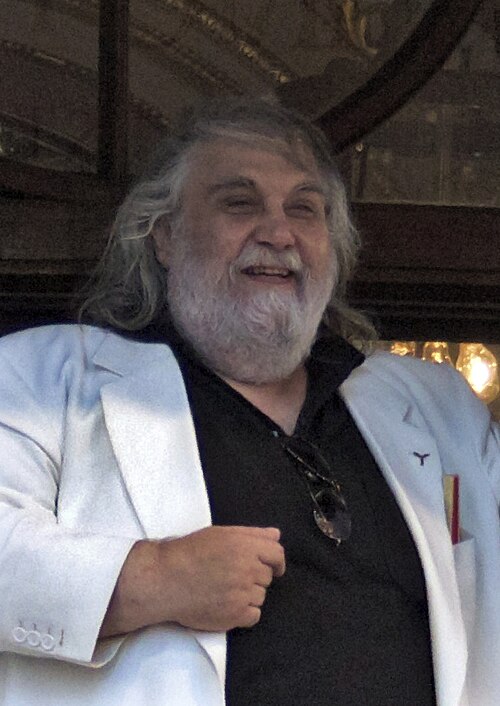
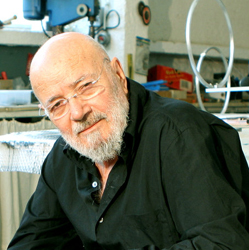
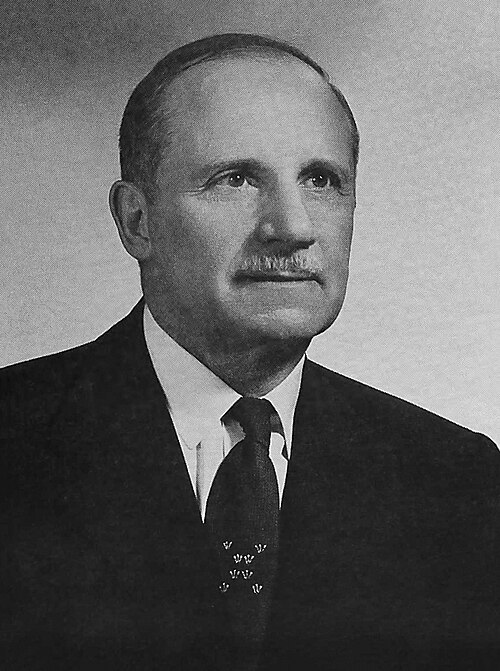
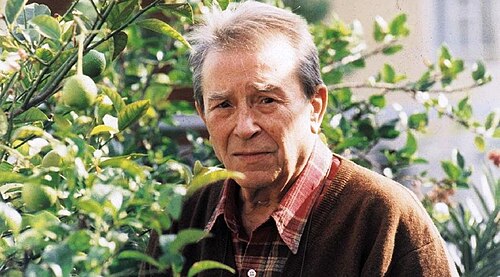
Iakovos Kambanellis
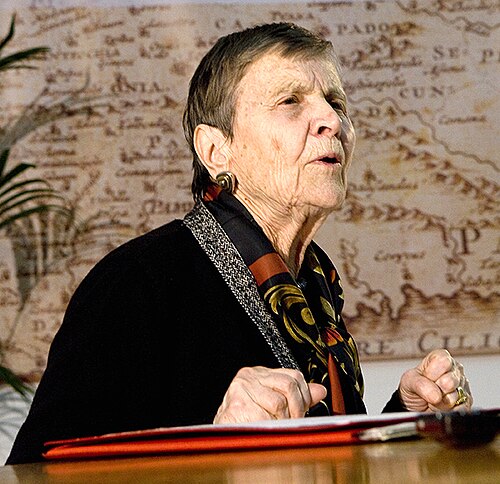
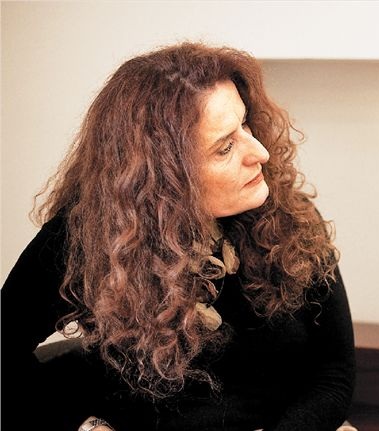
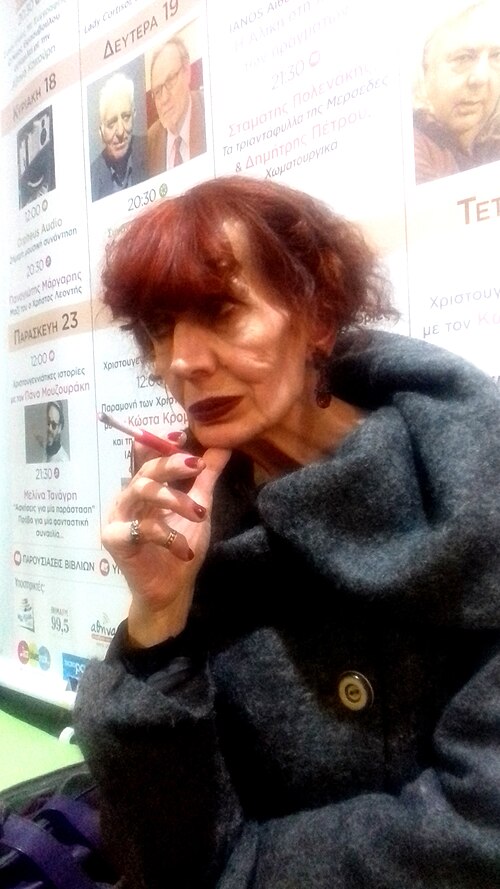
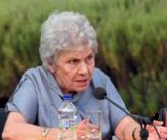
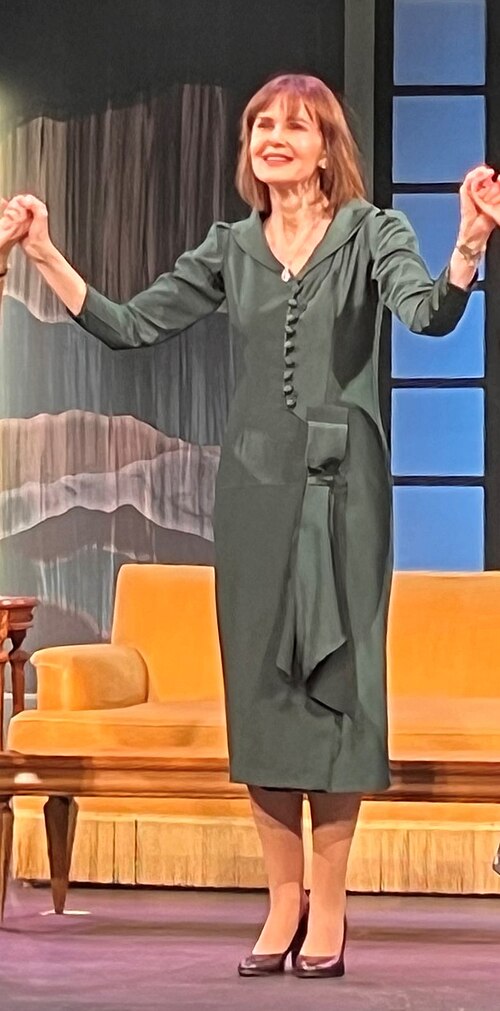
ΚΑΤΕΡΙΝΑ Ι.ΚΑΜΠΑΝΕΛΛΗ (Katerina I. Kambanelli) · CC BY-SA 3.0 · Wikimedia Commons

B2Modern Greece · Playwright and lyricist

Iakovos Kambanellis

Ιάκωβος Καμπανέλλης

1922 – 2011 · Naxos; Athens

Iakovos Kambanellis (Ιάκωβος Καμπανέλλης, 1922–2011), also spelled Kampanellis, is the playwright Greeks call the father of their modern theatre. A survivor of the Mauthausen concentration camp, he wrote Η αυλή των θαυμάτων (The Courtyard of Miracles), the play that put the Athenian neighbourhood on stage, the anti-junta musical Το μεγάλο μας τσίρκο (Our Grand Circus), the memoir Μαουτχάουζεν and the words of Άσμα ασμάτων, one of the most loved Greek songs.

Life

Kambanellis was born on 2 December 1922 in Chora, the main town of Naxos, into a family of modest means that moved to Athens in the mid-1930s. He left school early, worked and studied technical drawing at night classes, and had no formal literary education. In 1942, during the German Occupation, he tried to escape abroad to join the Allies, was arrested on the Austrian border in 1943 and deported to the Mauthausen concentration camp, where he remained until American troops liberated it on 5 May 1945.

Back in Athens, he discovered the theatre as a spectator, and taught himself to write for it. His first plays were staged around 1950, and the National Theatre produced Η έβδομη μέρα της δημιουργίας (The Seventh Day of Creation) in 1956. The breakthrough came the next year with Karolos Koun's Theatro Technis and Η αυλή των θαυμάτων. From then on he was the central figure of Greek playwriting for half a century, while also writing film scripts, directing one film himself, and supplying lyrics to Mikis Theodorakis, Stavros Xarchakos and others.

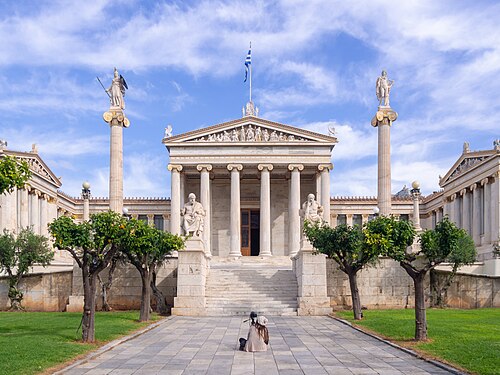
During the dictatorship of 1967–74 his Μεγάλο μας τσίρκο became a nightly act of resistance. He was elected to the Academy of Athens in 1999, continued to write plays into his eighties, and died in Athens on 29 March 2011. His daughter Katerina Kambanelli is a well-known singer.

Works

Η αυλή των θαυμάτων (The Courtyard of Miracles, 1957) takes place in the shared courtyard of an old Athenian house where several poor families live. The house is to be pulled down for an apartment block, one young couple leaves for Australia, and the play ends with the courtyard emptying. Written in everyday speech, with humour and no heroes, it became the model of Greek realist theatre. Παραμύθι χωρίς όνομα (A Tale Without a Name, 1959), from Penelope Delta's novel, and Οδυσσέα, γύρισε σπίτι (Odysseus, Come Home, 1966) show his other side, playful and political.

Μαουτχάουζεν (Mauthausen, 1963) is his prose account of the camp and, above all, of the strange months after liberation, when survivors stayed on and he fell in love with a Lithuanian Jewish girl. Mikis Theodorakis set four poems from it as Η Μπαλάντα του Μαουτχάουζεν (The Ballad of Mauthausen, 1966), sung by Maria Farantouri; its opening song, Άσμα ασμάτων (Song of Songs), in which a prisoner asks the girls of the camp whether they have seen his love, is among the best-known songs in Greek.

Το μεγάλο μας τσίρκο (Our Grand Circus, 1973), staged by Jenny Karezi and Kostas Kazakos with music by Stavros Xarchakos and the voice of the Cretan singer Nikos Xylouris, retells Greek history from 1821 to the present as a series of circus acts; audiences under the junta understood every allusion and the performances turned into demonstrations. For the cinema he wrote Στέλλα (Stella, 1955) for Michael Cacoyannis and Melina Mercouri, from his own play, and Ο Δράκος (The Ogre, 1956) for Nikos Koundouros.

Legacy in Greece today

Kambanellis is staged every season in Greece: a revival of Η αυλή των θαυμάτων or Το μεγάλο μας τσίρκο is a regular event, and his plays are set texts in Greek theatre schools and appear in the literature readers of the lyceum. The simplest way to meet him is to listen to Άσμα ασμάτων in Farantouri's recording, then read the short, clear Greek of Μαουτχάουζεν, which is also a moving introduction to the Occupation years. Theodorakis conducted the Ballad at the Mauthausen memorial itself in 1988 and again in 1995, with Kambanellis present, and the song is sung at Holocaust memorial days in Greece. On Naxos his birthplace honours him, and the film Στέλλα, with Mercouri singing «Αγάπη που 'γινες δίκοπο μαχαίρι», is a classic shown on Greek television.

Did you know?

  • He never finished secondary school and learned the theatre entirely by watching plays after his return from Mauthausen.
  • The lovers of Άσμα ασμάτων are real: the song grew out of his own love for a Lithuanian Jewish survivor in the months after the camp was liberated.
  • Το μεγάλο μας τσίρκο (1973) was performed under the colonels' censorship, and the audience's singing along with Nikos Xylouris turned every night into a protest.
  • He was elected to the Academy of Athens in 1999, a rare honour for a dramatist.

Key works

Greek titleTitleYear
ΣτέλλαStella (screenplay, from his play Stella with the Red Gloves)1955
Η αυλή των θαυμάτωνThe Courtyard of Miracles1957
ΜαουτχάουζενMauthausen (memoir)1963
Η Μπαλάντα του Μαουτχάουζεν (με τον Μίκη Θεοδωράκη)The Ballad of Mauthausen (lyrics, music by Theodorakis)1966
Το μεγάλο μας τσίρκοOur Grand Circus1973
Ο εχθρός λαόςThe Enemy People1975

A line to remember

Τι ωραία που είν' η αγάπη μου / με το καθημερνό της φόρεμα

Ti oraia pou ein' i agapi mou / me to kathimerno tis forema

How beautiful my love is / in her everyday dress
Άσμα ασμάτων, Η Μπαλάντα του Μαουτχάουζεν (1966), music by Mikis Theodorakis
B2

Read about Iakovos Kambanellis in Greek (B2)

Words from the passage

  • the Occupation
  • camp
  • liberation
  • theatre
  • work, play
  • courtyard
  • dictatorship
  • audience, public

Test yourself: 4 words from this page

1 / 4

What does this word mean?

Want to learn Greek?Start learning Greek

Others at level B2

Modern Greece · PoetKiki Dimoula1931 – 2020Modern Greece · PoetAngelos Sikelianos1884 – 1951Antiquity · TragedianEuripidesc. 480 BC – 406 BCModern Greece · PoetKostis Palamas1859 – 1943Modern Greece · Short-story writer and poetGeorgios Vizyinos1849 – 1896Antiquity · Historian and soldierXenophonc. 430 BC – c. 354 BCAntiquity · Biographer and essayistPlutarchc. 46 – c. 120Antiquity · PhilosopherHeraclitusc. 535 BC – c. 475 BCAntiquity · StatesmanPericlesc. 495 BC – 429 BCModern Greece · StatesmanEleftherios Venizelos1864 – 1936Modern Greece · First Governor of GreeceIoannis Kapodistrias1776 – 1831Modern Greece · PoetLorentzos Mavilis1860 – 1912Modern Greece · Novelist, short-story writerAndreas Karkavitsas1865 – 1922Modern Greece · Film and theatre directorMichael Cacoyannis1922 – 2011Modern Greece · ComposerVangelis1943 – 2022Modern Greece · NovelistDido Sotiriou1909 – 2004Modern Greece · Prime minister, reformerCharilaos Trikoupis1832 – 1896Modern Greece · Novelist, essayistGiorgos Theotokas1905 – 1966Modern Greece · NovelistPantelis Prevelakis1909 – 1986Modern Greece · PoetTasos Livaditis1922 – 1988Modern Greece · MathematicianConstantin Carathéodory1873 – 1950Modern Greece · PainterKonstantinos Parthenis1878 – 1967Modern Greece · PainterYannis Moralis1916 – 2009Modern Greece · SculptorTakis (Panagiotis Vassilakis)1925 – 2019Modern Greece · ConductorDimitri Mitropoulos1896 – 1960Modern Greece · Stage actressMarika Kotopouli1887 – 1954Modern Greece · Writer, art criticZacharias Papantoniou1877 – 1940Modern Greece · ArchaeologistSpyridon Marinatos1901 – 1974Modern Greece · BenefactorEvangelos Zappas1800 – 1865Modern Greece · Rock singer, songwriterPavlos Sidiropoulos1948 – 1990Modern Greece · Rebetiko composer, bouzoukiYannis Papaioannou1913 – 1972Modern Greece · ChemistLeonidas Zervas1902 – 1980Modern Greece · ArchaeologistGeorge Mylonas1898 – 1988Modern Greece · PainterAglaia Papa1904 – 1984Antiquity · Choral poetAlcmanModern Greece · Stage actressAmalia MoutousiModern Greece · Choreographer · dancerAngeliki Stellatou1963Antiquity · Literary compilerAthenaeus2nd c. ADAntiquity · Biographer · history of philosophyDiogenes Laertius3rd c. ADModern Greece · Historian · ByzantinistEleni Glykatzi-Arveler1926 – 2026Modern Greece · AutobiographerElisavet Moutzan-Martinengou1801 – 1832Antiquity · Comic poetEpicharmusc. 540 BC – c. 460 BCModern Greece · Novelist · poetErsi Sotiropoulou1953Modern Greece · Novelist; short-story writerGalateia Saranti1920 – 2009Modern Greece · Film director · screenwriterYorgos Lanthimos1973Modern Greece · Speculative novelist and storytellerIoanna Bourazopoulou1968Modern Greece · Actress · theatre managerKakia Analyti1934 – 2002Modern Greece · Stage and TV actorKatia Dandoulaki1948Antiquity · Bronze sculptorLysipposModern Greece · Actress · acting teacherMary Aronic. 1914 – 1992Modern Greece · NovelistMargarita Karapanou1946 – 2008Modern Greece · Poet, playwright and translatorMaria Laina1947 – 2023Modern Greece · Singer · songwriterMaria PapageorgiouModern Greece · Novelist · essayistMaro Vamvounaki1948Modern Greece · Poet; translatorMatsi Hatzilazarou1914 – 1987Modern Greece · Singer · composerMichalis Hatzigiannis1978Modern Greece · Composer and music teacherNikolaos Mantzaros1795 – 1872Modern Greece · Film directorNikos Panagiotopoulos1941 – 2016Modern Greece · Painter · sculptorOpy Zouni1941 – 2008Antiquity · Historian · political inquiryPolybiusc. 200 BC – c. 118 BCModern Greece · Novelist · historical fictionRea Galanaki1947Modern Greece · Novelist · playwrightRina Katselli1938 – 2021Modern Greece · Poet · translatorRita Boumi-Papa1906 – 1984Modern Greece · Stage actress · director · translatorSofia FilippidouAntiquity · Lyric poetStesichorusc. 630 BC – c. 555 BCModern Greece · Novelist · short-story writerTatiana Gritsi-Milliex1920 – 2005Modern Greece · Novelist · journalistVassilis Alexakis1943 – 2021Antiquity · Philosopher · Stoic founderZeno of Citiumc. 334–333 BC – c. 262–261 BCModern Greece · Film and stage actressZoe Laskaric. 1942 – 2017Modern Greece · Novelist · short-story writerZyranna Zateli1951
All personalities →