grecfacilegrecfacile
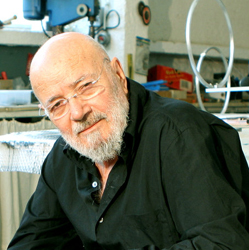
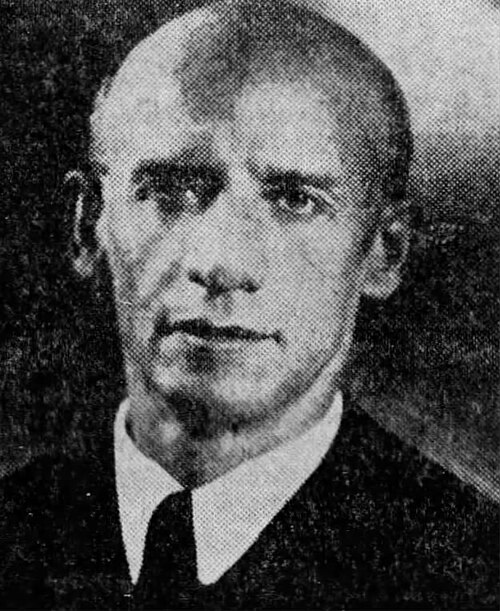
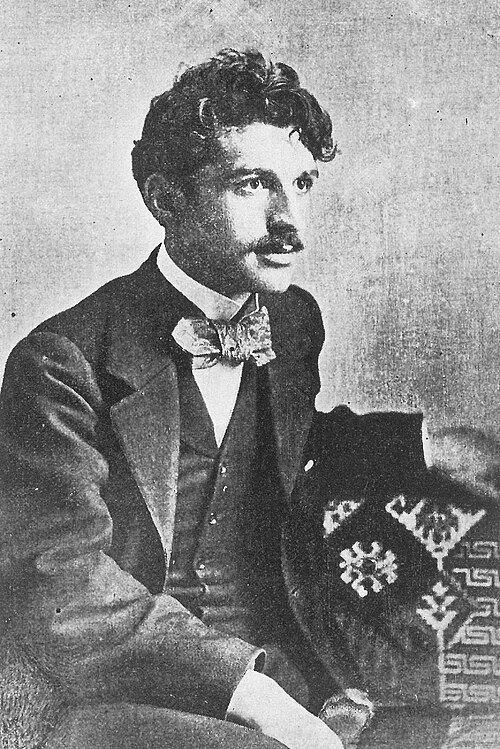
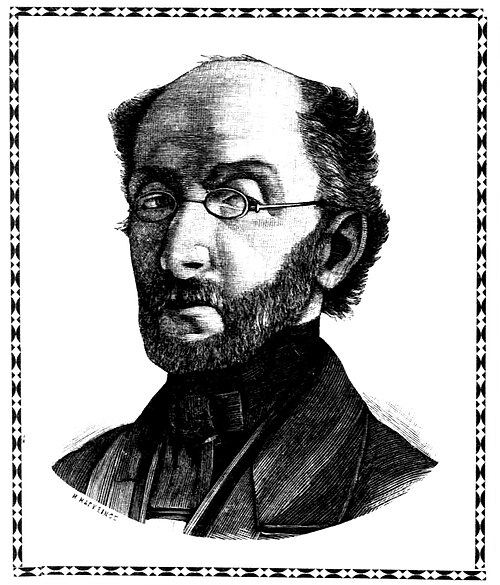
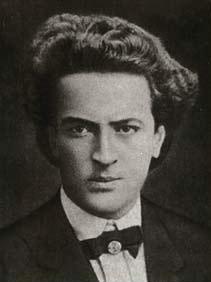
Angelos Sikelianos
Public domain · Wikimedia Commons

B2Modern Greece · Poet

Angelos Sikelianos

Άγγελος Σικελιανός

1884 – 1951 · Lefkada; Delphi; Athens

Angelos Sikelianos (Άγγελος Σικελιανός, 1884–1951), from the island of Lefkada, was the most lyrical and most ambitious Greek poet of his generation. His first long poem, Αλαφροΐσκιωτος (The Light-Shadowed, 1909), announced a new voice; with his American wife Eva Palmer he staged the Delphic Festivals of 1927 and 1930, reviving ancient drama at Delphi; and in 1943, at the funeral of Kostis Palamas, his poem «Ηχήστε οι σάλπιγγες» became a cry of resistance under German occupation.

Life

Sikelianos was born on 28 March 1884 in Lefkada, the Ionian island whose hills, sea and country festivals fill his early poetry. He went to Athens in 1900 to study law but never finished; poetry and travel were his real education. His sister Penelope married Raymond Duncan, brother of the dancer Isadora Duncan, and through that circle Angelos met Eva Palmer, a wealthy and brilliant American from New York. They married in 1907 in Bar Harbor, Maine, and settled in Greece; their son Glafkos was born in 1909.

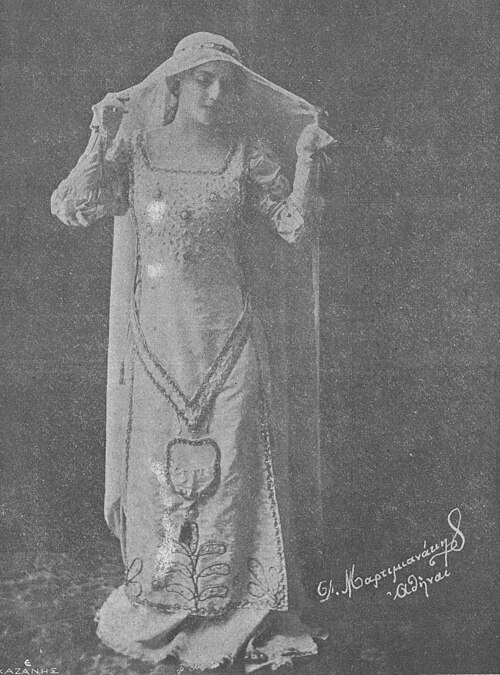
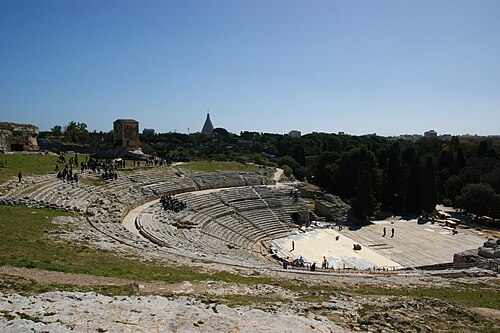
In the 1920s the couple devoted themselves to what Sikelianos called the Delphic Idea: the belief that Delphi could again become a spiritual centre for the world. In May 1927 and again in 1930 they staged the Delphic Festivals in the ancient stadium and theatre, with Aeschylus's Prometheus Bound and The Suppliants performed in Eva's hand-woven costumes, athletic contests and an exhibition of folk art. The festivals were a triumph and a financial catastrophe; Eva went back to America in 1933 to raise money and never returned to live with him. She died in 1952 and is buried at Delphi. In 1940 Sikelianos married Anna Karamani.

During the German occupation he stayed in Athens, wrote tragedies, and on 28 February 1943 turned the funeral of Palamas into a demonstration with his poem and his cry «Σ' αυτό το φέρετρο ακουμπά η Ελλάδα!» (On this coffin rests Greece!). He was nominated for the Nobel Prize several times in the late 1940s. He died in Athens on 19 June 1951, after being given a disinfectant by mistake instead of his medicine.

Works

Αλαφροΐσκιωτος (The Light-Shadowed, written 1907, published 1909) is a long hymn of a young man to the Greek earth, sea and sun, in rolling free verse that sounds like nothing before it in Greek; the title is a dialect word for someone who sees visions. Πρόλογος στη ζωή (Prologue to Life, 1915–1917) is a cycle of five great odes on the consciousness of the earth, the race, woman, faith and personal creation. Μήτηρ Θεού (Mother of God, 1917–1919), written after the death of his sister Penelope, is a lament that fuses the Virgin Mary with Demeter and Persephone; the Christian and the ancient Greek are always one world for him.

He wrote long cycles, Πάσχα των Ελλήνων (Easter of the Greeks) and Δελφικός Λόγος (Delphic Discourse, 1927), and short lyrics that are his most read poems: Στ' Όσιου Λουκά το μοναστήρι (At the Monastery of Hosios Loukas), where village women sing the Easter lament, and Γιατί βαθιά μου δόξασα (Because I Deeply Praised). From 1932 he turned to tragedy: Ο Διθύραμβος του Ρόδου (The Dithyramb of the Rose), Σίβυλλα (Sibyl, 1940), Ο Δαίδαλος στην Κρήτη (Daedalus in Crete, 1943), Ο Χριστός στη Ρώμη (Christ in Rome, 1946) and Ο θάνατος του Διγενή (The Death of Digenis, 1947), plays written for a theatre that barely existed.

His collected poems appeared as Λυρικός Βίος (Lyrical Life). The register is high, prophetic, full of nature and ritual; the vocabulary draws on dialect, Byzantine hymns and ancient myth at once. He is the Greek poet for whom the sacred never died, only changed names.

Legacy in Greece today

Listen to Πνευματικό εμβατήριο (Spiritual March), his 1945 poem set to music by Mikis Theodorakis, with its call «Εμπρός, βοηθάτε να σηκώσουμε τον ήλιο πάνω απ' την Ελλάδα» (Forward, help us lift the sun over Greece), sung at concerts and rallies for decades. Στ' Όσιου Λουκά το μοναστήρι and Γιατί βαθιά μου δόξασα are in the school anthologies and often read at Easter. In Delphi, the house that Eva and Angelos built on the hillside is now the Museum of Delphic Festivals, with her costumes and photographs of the 1927 performances; the Delphic Festivals are also the ancestor of today's summer festivals of ancient drama. Lefkada honours him with his name on streets and a cultural centre, and his grave is in the First Cemetery of Athens, close to Palamas.

Did you know?

  • He met his wife through the Duncans: his sister Penelope was married to Raymond Duncan, and Eva Palmer was a close friend of Isadora.
  • The 1927 Delphic Festival staged Prometheus Bound in the ancient theatre of Delphi with costumes Eva had woven by hand on an ancient-style loom.
  • The title Αλαφροΐσκιωτος is a folk word for a person who is «light-shadowed», that is, able to see spirits and visions.
  • At Palamas's funeral in 1943 he recited his poem over the coffin and the crowd then sang the national anthem in front of the occupying soldiers.

Key works

Greek titleTitleYear
ΑλαφροΐσκιωτοςThe Light-Shadowed1909
Πρόλογος στη ζωήPrologue to Life1915–1917
Μήτηρ ΘεούMother of God1917–1919
Δελφικός ΛόγοςDelphic Discourse1927
ΣίβυλλαSibyl1940
Ο Χριστός στη ΡώμηChrist in Rome1946

A line to remember

Ηχήστε οι σάλπιγγες… Καμπάνες βροντερές, / δονήστε σύγκορμη τη χώρα, πέρα ως πέρα…

Ichiste oi salpinges… Kampanes vronteres, / doniste sygkormi ti chora, pera os pera…

Sound, trumpets… Thundering bells, / shake the whole land, from end to end…

Παλαμάς (1943), read at the funeral of Kostis Palamas

From the original

The text as Angelos Sikelianos wrote it, out of copyright, with our own translation beside it.

«Η φωνή»The Voice

A complete poem from Sikelianos's first collection, whose title it explains: a voice from the sky asks who is the «αλαφροΐσκιωτος», the visionary who sees what others cannot, and the young poet takes the call as his own.

Και νά, σκοτάδι μοκλεισε τα βλέφαραAnd look, a darkness closed my eyelids,
πυκνό, βαθύ. Σαν ο ήλιος να 'σβησεν,thick and deep. As if the sun had gone out,
ο κάμπος, το βουνό, το ακροθαλάσσιthe plain, the mountain, the seashore
σαν ίσκιος στην ψυχή μου υψώθηκαν,rose like a shadow in my soul,
σαν κυπαρίσσι λύγισεbent like a cypress,
και βούιξεν όλ΄ η πλάση.and all creation roared.
Στερνά σημάδια, χάθηκαν στα μάτια μουLast signs, they vanished from my eyes,
οι πέντε αϊτοί στα αιθέρια,the five eagles in the high air,
στερνά σημάδια μέσα μου, που αστράψανεlast signs within me, that flashed
μαζίtogether
και σβήσανε όλα σαν αστέρια.and all went out like stars.
Και μια φωνή αργοκύλησενAnd a voice rolled slowly
ωσά βροντή στα τρίσβαθα του αγέρα,like thunder in the deepest depths of the air,
και μού ήταν γνώριμη η φωνήand the voice was known to me,
σα να 'βγαινε από τα σπλάχνα μουas if it came out of my own body
κι απ' όλο τον αιθέρα:and out of the whole of the sky:
«Ποιος είν' ο αλαφροΐσκιωτος,“Who is the light-shadowed seer,
που το βαθύ μυστήριο θε να δράξειwho will grasp the deep mystery
και θα σαρκώσει ανάλαφροςand, weightless, give flesh
το τάμα που πλανιέται τρίσβαθαto the vow that drifts in the depths
κι απάνω από την πράξη;»and above the deed?”
Και σίγησε, σα να 'κλεισεAnd it fell silent, as if the wind
κάθε φτερόν ο αγέρας.had folded every wing.
Μόλυε ένας βυθός τους αρμούς,A depth loosened my joints,
βαθιά τη σκέψη μού έδενεbinding my thought deep down,
δουλεύοντας τη σάρκα μουworking upon my flesh,
ο ακοίμητος αιθέρας.the sleepless ether.

«Η φωνή», from the collection «Αλαφροΐσκιωτος», complete · Public-domain text, source: el.wikisource.org
B2

Read about Angelos Sikelianos in Greek (B2)

Words from the passage

  • I admire
  • hymn
  • spiritual
  • costume
  • fortune, property
  • coffin
  • crowd
  • occupier, conqueror

Test yourself: 4 words from this page

1 / 4

What does this word mean?

Want to learn Greek?Start learning Greek
Others at level B2

Modern Greece · PoetKiki Dimoula1931 – 2020Antiquity · TragedianEuripidesc. 480 BC – 406 BCModern Greece · PoetKostis Palamas1859 – 1943Modern Greece · Short-story writer and poetGeorgios Vizyinos1849 – 1896Antiquity · Historian and soldierXenophonc. 430 BC – c. 354 BCAntiquity · Biographer and essayistPlutarchc. 46 – c. 120Antiquity · PhilosopherHeraclitusc. 535 BC – c. 475 BCAntiquity · StatesmanPericlesc. 495 BC – 429 BCModern Greece · StatesmanEleftherios Venizelos1864 – 1936Modern Greece · First Governor of GreeceIoannis Kapodistrias1776 – 1831Modern Greece · PoetLorentzos Mavilis1860 – 1912Modern Greece · Novelist, short-story writerAndreas Karkavitsas1865 – 1922Modern Greece · Film and theatre directorMichael Cacoyannis1922 – 2011Modern Greece · ComposerVangelis1943 – 2022Modern Greece · NovelistDido Sotiriou1909 – 2004Modern Greece · Playwright and lyricistIakovos Kambanellis1922 – 2011Modern Greece · Prime minister, reformerCharilaos Trikoupis1832 – 1896Modern Greece · Novelist, essayistGiorgos Theotokas1905 – 1966Modern Greece · NovelistPantelis Prevelakis1909 – 1986Modern Greece · PoetTasos Livaditis1922 – 1988Modern Greece · MathematicianConstantin Carathéodory1873 – 1950Modern Greece · PainterKonstantinos Parthenis1878 – 1967Modern Greece · PainterYannis Moralis1916 – 2009Modern Greece · SculptorTakis (Panagiotis Vassilakis)1925 – 2019Modern Greece · ConductorDimitri Mitropoulos1896 – 1960Modern Greece · Stage actressMarika Kotopouli1887 – 1954Modern Greece · Writer, art criticZacharias Papantoniou1877 – 1940Modern Greece · ArchaeologistSpyridon Marinatos1901 – 1974Modern Greece · BenefactorEvangelos Zappas1800 – 1865Modern Greece · Rock singer, songwriterPavlos Sidiropoulos1948 – 1990Modern Greece · Rebetiko composer, bouzoukiYannis Papaioannou1913 – 1972Modern Greece · ChemistLeonidas Zervas1902 – 1980Modern Greece · ArchaeologistGeorge Mylonas1898 – 1988Modern Greece · PainterAglaia Papa1904 – 1984Antiquity · Choral poetAlcmanModern Greece · Stage actressAmalia MoutousiModern Greece · Choreographer · dancerAngeliki Stellatou1963Antiquity · Literary compilerAthenaeus2nd c. ADAntiquity · Biographer · history of philosophyDiogenes Laertius3rd c. ADModern Greece · Historian · ByzantinistEleni Glykatzi-Arveler1926 – 2026Modern Greece · AutobiographerElisavet Moutzan-Martinengou1801 – 1832Antiquity · Comic poetEpicharmusc. 540 BC – c. 460 BCModern Greece · Novelist · poetErsi Sotiropoulou1953Modern Greece · Novelist; short-story writerGalateia Saranti1920 – 2009Modern Greece · Film director · screenwriterYorgos Lanthimos1973Modern Greece · Speculative novelist and storytellerIoanna Bourazopoulou1968Modern Greece · Actress · theatre managerKakia Analyti1934 – 2002Modern Greece · Stage and TV actorKatia Dandoulaki1948Antiquity · Bronze sculptorLysipposModern Greece · Actress · acting teacherMary Aronic. 1914 – 1992Modern Greece · NovelistMargarita Karapanou1946 – 2008Modern Greece · Poet, playwright and translatorMaria Laina1947 – 2023Modern Greece · Singer · songwriterMaria PapageorgiouModern Greece · Novelist · essayistMaro Vamvounaki1948Modern Greece · Poet; translatorMatsi Hatzilazarou1914 – 1987Modern Greece · Singer · composerMichalis Hatzigiannis1978Modern Greece · Composer and music teacherNikolaos Mantzaros1795 – 1872Modern Greece · Film directorNikos Panagiotopoulos1941 – 2016Modern Greece · Painter · sculptorOpy Zouni1941 – 2008Antiquity · Historian · political inquiryPolybiusc. 200 BC – c. 118 BCModern Greece · Novelist · historical fictionRea Galanaki1947Modern Greece · Novelist · playwrightRina Katselli1938 – 2021Modern Greece · Poet · translatorRita Boumi-Papa1906 – 1984Modern Greece · Stage actress · director · translatorSofia FilippidouAntiquity · Lyric poetStesichorusc. 630 BC – c. 555 BCModern Greece · Novelist · short-story writerTatiana Gritsi-Milliex1920 – 2005Modern Greece · Novelist · journalistVassilis Alexakis1943 – 2021Antiquity · Philosopher · Stoic founderZeno of Citiumc. 334–333 BC – c. 262–261 BCModern Greece · Film and stage actressZoe Laskaric. 1942 – 2017Modern Greece · Novelist · short-story writerZyranna Zateli1951

All personalities →