grecfacilegrecfacile
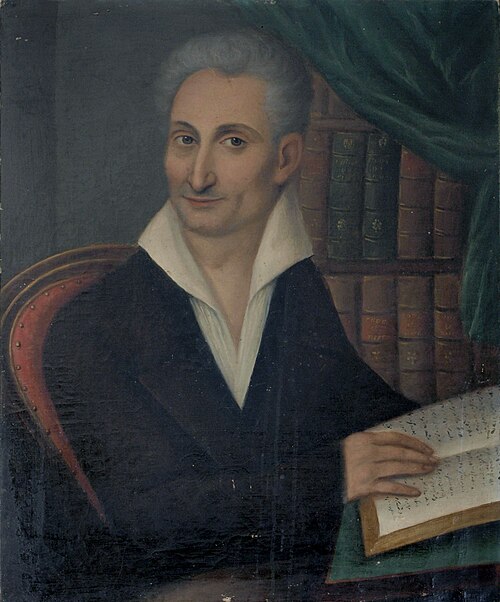
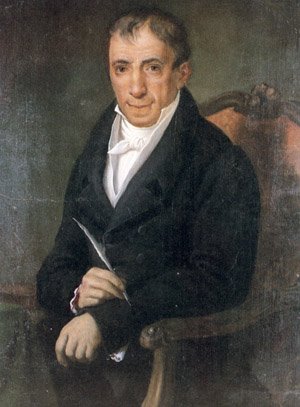
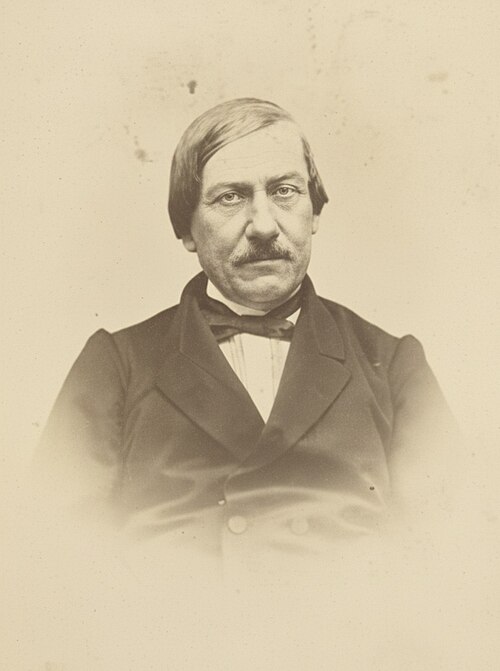
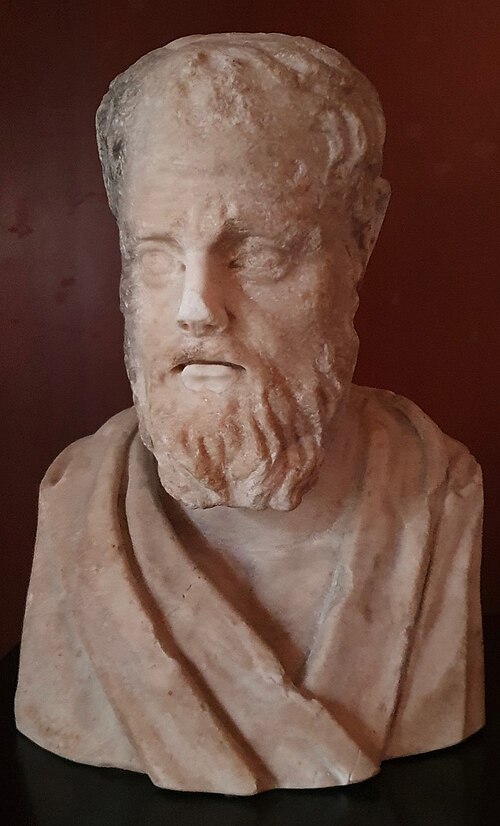
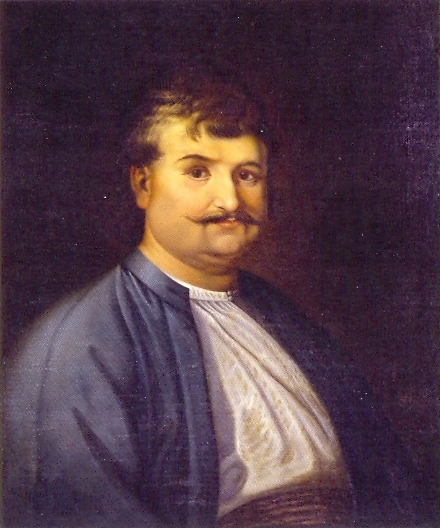
Rigas Feraios
Andreas Kriezis · Public domain · Wikimedia Commons

C2Modern Greece · Revolutionary writer and poet

Rigas Feraios

Ρήγας Βελεστινλής

c. 1757 – 1798 · Velestino, Thessaly; Bucharest; Vienna; Belgrade

Rigas Feraios, or Rigas Velestinlis (Ρήγας Βελεστινλής, c. 1757–1798), first put the ideas of the French Revolution into Greek. In Vienna in 1797 he printed a giant map of the Greek world, a republican constitution for the peoples of the Balkans and the war hymn Θούριος (Thourios), with the line every Greek knows: better one hour of free life than forty years of slavery. Strangled in Belgrade in June 1798, he became the first martyr of 1821.

Life

Rigas was born around 1757 in Velestino, a village in Thessaly on the site of ancient Pherae, into a prosperous family. He always signed himself Ρήγας Βελεστινλής Θετταλός, Rigas of Velestino the Thessalian; the learned surname Feraios, 'of Pherae', was given to him by later scholars. He received a good education in the schools of Pelion and as a young man left Ottoman Thessaly for Constantinople, where he entered the service of the Phanariot Greek families who governed the Danubian principalities.

That connection took him to Bucharest. There he worked as a secretary in the household of Nikolaos Mavrogenis, prince of Wallachia, and absorbed the French books and ideas circulating among the Greek and Romanian elite. In 1790 he travelled to Vienna and printed his first two books. He returned to Wallachia, and in 1796 came back to Vienna with a far more ambitious plan: to print, at the press of the Markides Pouliou brothers, the maps, translations and revolutionary texts that would prepare an uprising of all the subject peoples of the Ottoman Empire.

In December 1797 he left Vienna for Trieste on his way to Greece, carrying crates of printed sheets. A Greek merchant denounced him to the Austrian police, and he was arrested on arrival. Austria, allied with the Sultan, handed Rigas and seven companions over to the Ottomans as Ottoman subjects. They were taken down the Danube to Belgrade, held in the Nebojša tower, and strangled there one night in June 1798; their bodies were thrown into the river.

Works

His first books, both printed in Vienna in 1790, show the two sides of his mind. Σχολείον των ντελικάτων εραστών (School for Delicate Lovers) is a free Greek version of French sentimental stories by Rétif de la Bretonne, among the first fiction in modern Greek prose. Φυσικής απάνθισμα (Anthology of Physics) is a popular science primer whose preface carries his motto: «Όποιος ελεύθερα συλλογάται, συλλογάται καλά», whoever thinks freely, thinks well.

The Vienna printings of 1796–97 are his monument. The Χάρτα της Ελλάδος (Map of Greece) is a wall map on twelve sheets, more than two metres each way, showing the Balkans and Asia Minor with ancient and modern place names side by side, plans of cities and drawings of ancient coins: a visual argument that the Greek world was one country waiting to exist. The Νέα Πολιτική Διοίκησις (New Political Constitution) is modelled on the French constitution of 1793 and the Declaration of the Rights of Man; it proclaims a Hellenic Republic in which Greeks, Bulgarians, Albanians, Vlachs, Armenians and Turks would be equal citizens, regardless of language or religion.

Printed with it was the Θούριος (Thourios, 1797), a war hymn of 126 verses in the metre of folk song. It opens «Ως πότε, παλικάρια, να ζούμε στα στενά» (how long, brave lads, shall we live in the narrows), calls Christians and Muslims alike to rise together, and contains the line about one hour of freedom. In the same years he also published the Ηθικός Τρίπους (Moral Tripod), translations from Metastasio and Marmontel.

Legacy in Greece today

Rigas is the forerunner of 1821 in every Greek schoolbook, and the Θούριος is the first poem of modern Greek history pupils learn; listen to the version Nikos Xylouris recorded in the 1970s to hear it as a song. His bronze statue by Ioannis Kossos has stood in front of the University of Athens since 1871, and he appeared on the 200-drachma banknote in the 1990s. Almost every Greek town has a street named Ρήγα Φεραίου, and the municipality around Velestino is called Δήμος Ρήγα Φεραίου. In Belgrade the Nebojša tower by the Danube, where he was killed, is now a museum with a memorial to him, and a nearby street bears his name. The line «Καλύτερα μιας ώρας ελεύθερη ζωή» is still quoted at demonstrations and on 25 March, and his reported last words, that he had sown a seed that his nation would one day reap, are carved on monuments.

Did you know?

  • He never used the name Feraios; it was coined later from ancient Pherae, the site of his native Velestino, and he signed himself Rigas Velestinlis.
  • The Χάρτα της Ελλάδος of 1797 is one of the largest maps ever printed in Greek: twelve sheets forming a wall more than two metres high.
  • His constitution of 1797 gave the vote to every citizen of the planned republic, Christian or Muslim, and promised schooling for girls as well as boys.
  • Austria did not try him for his ideas: it simply handed him to the Ottomans as a foreign subject, and the Sultan's men strangled him and seven companions in Belgrade in June 1798.

Key works

Greek titleTitleYear
Σχολείον των ντελικάτων εραστώνSchool for Delicate Lovers1790
Φυσικής απάνθισμαAnthology of Physics1790
Χάρτα της ΕλλάδοςMap of Greece1797
Νέα Πολιτική ΔιοίκησιςNew Political Constitution1797
ΘούριοςThourios (War Hymn)1797
Ηθικός ΤρίπουςMoral Tripod1797

A line to remember

Καλύτερα μιας ώρας ελεύθερη ζωή, / παρά σαράντα χρόνια σκλαβιά και φυλακή.

Kalytera mias oras eleftheri zoi, / para saranta chronia sklavia kai fylaki.

Better one hour of free life / than forty years of slavery and prison.

Θούριος (1797)

From the original

The text as Rigas Feraios wrote it, out of copyright, with our own translation beside it.

«Θούριος»War Song (Thourios)

The opening of Rigas's revolutionary war song, written to be sung by the peoples of the Balkans against Ottoman rule. The couplet about one hour of free life sits at its heart and became a proverb.

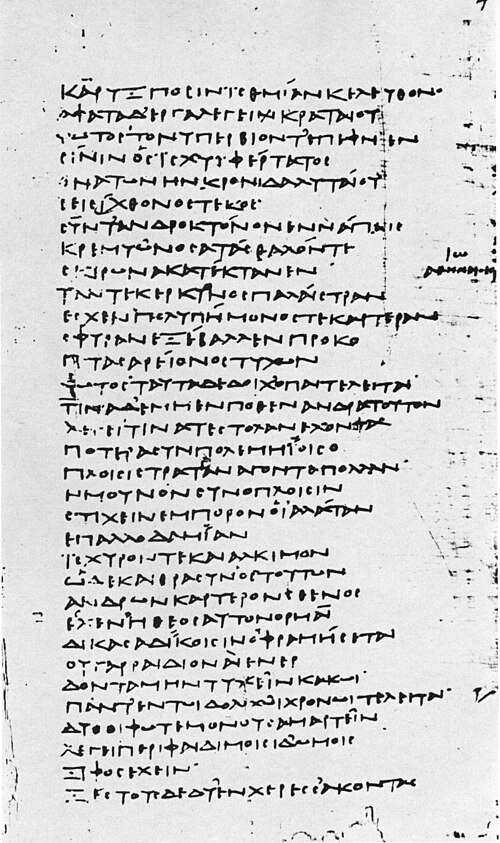
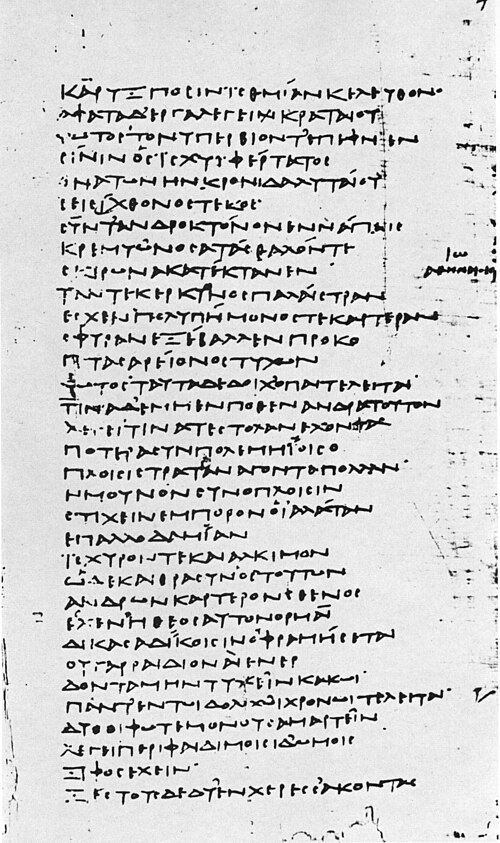
Ὡς πότε παλικάρια νὰ ζοῦμεν στὰ στενά,How long, brave lads, shall we live in the narrow passes,
Μονάχοι σὰ λιοντάρια, σταὶς ράχαις στὰ βουνά;alone like lions, on the ridges, in the mountains?
Σπηλιαὶς νὰ κατοικοῦμεν, νὰ βλέπωμεν κλαδιά,Dwell in caves, with nothing to look at but branches,
Νὰ φεύγωμ΄ ἀπ΄ τὸν Κόσμον, γιὰ τὴν πικρὴ σκλαβιά.and flee from the world because of bitter slavery?
Νὰ χάνωμεν ἀδέλφια, Πατρίδα, καὶ Γονεῖς,Lose our brothers, our homeland and our parents,
Τοὺς φίλους, τὰ παιδιά μας, κι΄ ὅλους τοὺς συγγενεῖς.our friends, our children and all of our kin?
Καλλιῶναι μίας ὥρας ἐλεύθερη ζωή,Better one hour of free life
Παρὰ σαράντα χρόνοι σκλαβιά, καὶ φυλακή.than forty years of slavery and prison.
Τί σ΄ ὠφελεῖ ἂν ζήσης, καὶ εἶσαι στὴ σκλαβιά,What good is it to live, if you live in slavery?
Στοχάσου πὼς σὲ ψένουν καθ΄ ὤραν στὴ φωτιά.Think how they roast you every hour in the fire.
Βεζύρης, Δραγουμάνος, Ἀφέντης κι΄ ἂν σταθῆς,Vizier, dragoman or lord, whatever you may be,
Ὁ Τύραννος ἀδίκως, σὲ κάμει νὰ χαθῆς.the Tyrant, unjustly, will have you destroyed.
Δουλεύεις ὂλ΄ ἡμέρα, σὲ ὅ,τι κι΄ ἂν σοὶ πῆ,You toil all day long at whatever he commands,
Κι΄ αὐτὸς πασχίζει πάλιν, τὸ αἷμα σου νὰ πιῆ.and still he strives the harder to drink your blood.

Θούριος, lines 1–14, the opening (1797) · Public-domain text, source: el.wikisource.org
C2

Read about Rigas Feraios in Greek (C2)

Words from the passage

  • prosperous, well-off
  • prince, ruler
  • maxim, principle
  • printing house
  • ambitious
  • betrayal
  • statue
  • I recite

Test yourself: 4 words from this page

1 / 4

What does this word mean?

Want to learn Greek?Start learning Greek

Others at level C2

Modern Greece · Novelist, critic and satiristEmmanouil Roidis1836 – 1904Modern Greece · PoetAndreas Kalvos1792 – 1869Antiquity · Philosopher and prose writerPlatoc. 427 BC – c. 347 BCAntiquity · Epic and didactic poetHesiodc. 750–650 BCAntiquity · PhilosopherAristotle384 BC – 322 BCAntiquity · HistorianThucydidesc. 460 BC – c. 400 BCAntiquity · Lyric poetPindarc. 518 BC – c. 438 BCRenaissance · Historian, Byzantine princessAnna Komnene1083 – c. 1153Renaissance · Archbishop and preacherJohn Chrysostomc. 347 – 407Renaissance · Byzantine historianProcopiusc. 500 – c. 565Modern Greece · Scholar of the Greek EnlightenmentAdamantios Korais1748 – 1833Modern Greece · Linguist, demoticistYannis Psycharis1854 – 1929Modern Greece · Surrealist poet and painterNikos Engonopoulos1907 – 1985Antiquity · SatiristLucian of Samosatac. 125 – after 180Antiquity · Lawgiver and poetSolonc. 630 BC – c. 560 BCModern Greece · SatiristAndreas Laskaratos1811 – 1901Modern Greece · NovelistKosmas Politis1888 – 1974Modern Greece · NovelistStratis Tsirkas1911 – 1980Modern Greece · Surrealist poet, psychoanalystAndreas Embirikos1901 – 1975Modern Greece · PoetMiltos Sachtouris1919 – 2005Modern Greece · NovelistMelpo Axioti1905 – 1973Modern Greece · Novelist, poetGiannis Skarimbas1893 – 1984Modern Greece · Philosopher, economist, psychoanalystCornelius Castoriadis1922 – 1997Modern Greece · Composer, architectIannis Xenakis1922 – 2001Modern Greece · Prose writerGiorgos Ioannou1927 – 1985Modern Greece · Novelist, playwrightPavlos Matesis1933 – 2013Modern Greece · LinguistManolis Triantafyllidis1883 – 1959Modern Greece · HistorianKonstantinos Paparrigopoulos1815 – 1891Modern Greece · Engraver, printmakerVaso Katraki1914 – 1988Modern Greece · Philosopher, jurist, PresidentKonstantinos Tsatsos1899 – 1987Modern Greece · PhilosopherIoannis Theodorakopoulos1900 – 1981Modern Greece · Short-story writer · teacherAlexandra Papadopoulou1867 – 1906Modern Greece · Folklorist · anthropologistAlki Kyriakidou-Nestoros1935 – 1988Modern Greece · Actor · stage directorAnna KokkinouModern Greece · Stage and film actressAntigoni Valakou1930 – 2013Antiquity · PainterApellesAntiquity · Grammarian and editorAristophanes of Byzantiumc. 257 BC – c. 180 BCModern Greece · Novelist; linguistDimitra Kolliakou1968Modern Greece · Theatre directorDimitris Rontiris1899 – 1981Modern Greece · Singer · songwriterEleni Vitali1954Modern Greece · Novelist · educatorElli Alexiou1894 – 1988Modern Greece · Singer · composerGiorgos Alkaios1971Antiquity · Orator and educatorIsocrates436 BC – 338 BCModern Greece · Stage and screen actorKaryofyllia Karabeti1958Modern Greece · Pop singerKostas Martakis1984Modern Greece · Stage director · actorLefteris Vogiatzis1944 – 2013Modern Greece · Choreographer · dancerLenio Kaklea1985Modern Greece · Novelist; journalistLilika Nakou1904 – 1989Modern Greece · Novelist · short-story writerMaria Mitsora1946Modern Greece · Singer · actress · directorMartha Frintzila1972Modern Greece · Actress · musical starMartha Karagianni1939 – 2022Modern Greece · Actor · stage and screenMirka Papakonstantinou1947Modern Greece · SculptorNausica Pastra1921 – 2011Modern Greece · Poet · prose writer · painterNiki Marangou1948 – 2013Modern Greece · ActressNora Valsami1945Modern Greece · PoetOlga Votsi1922 – 1998Antiquity · Bronze sculptor and art theoristPolykleitosModern Greece · Stage actressReni Pittakic. 1945Modern Greece · Singer · stage performerRita AntonopoulouModern Greece · Pop singerSarbel1981Modern Greece · Novelist · teacherSofia Nikolaidou1968Modern Greece · Film director · screenwriterStavros Tsiolis1937 – 2019Modern Greece · Singer · actressStefania Liberakakis2002Modern Greece · Rapper · producerStereo Mike1978Antiquity · Choral lyric poetBacchylidesc. 510 BCModern Greece · Stage actorVera Zavitsianou1927 – 2008Modern Greece · Playwright · actressXenia Kalogeropoulou1936

All personalities →