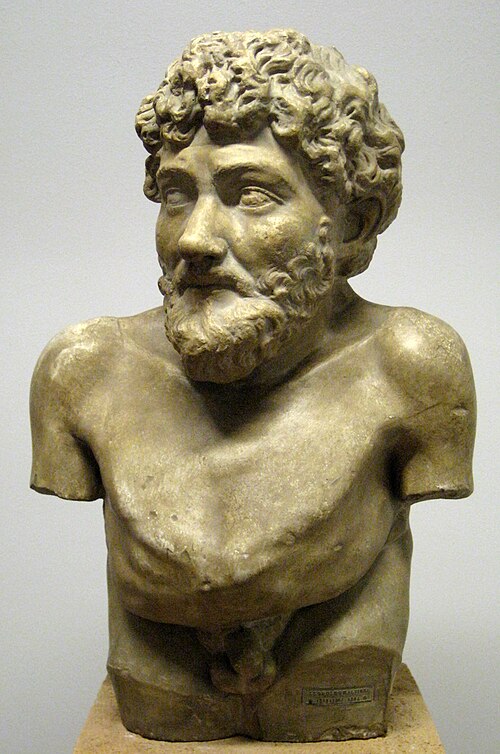
Life
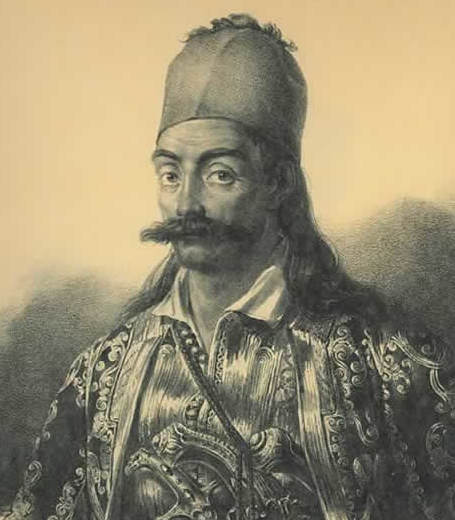
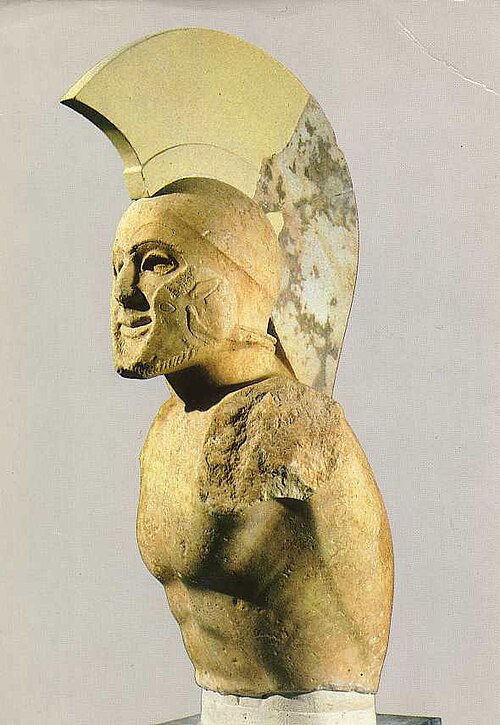
Leonidas was born in Sparta around 540 BC, a son of King Anaxandridas II of the Agiad royal house. Sparta had two kings at a time, and Leonidas was not expected to rule: he had an older half-brother, Cleomenes I, and an older full brother, Dorieus. Like every Spartan boy he went through the ἀγωγή (agoge), the harsh state education for war. Dorieus left Sparta and died abroad, and when Cleomenes died around 489 BC Leonidas became king. He married Cleomenes' daughter Gorgo, who appears in Herodotus as a clever, outspoken woman, and they had a son, Pleistarchus.
In 480 BC Xerxes, the Great King of Persia, invaded Greece with an army and fleet far larger than anything the Greek cities could assemble. The allied Greeks decided to block the Persians at Thermopylae, a narrow strip of land between the mountains and the sea in central Greece, while the fleet held the straits nearby at Artemisium. Leonidas marched north with a royal guard of 300 Spartans and gathered several thousand allies from Thespiae, Thebes, Phocis and other cities on the way.
For two days the Greeks held the pass. Then a local man, Ephialtes, showed the Persians a mountain path that led behind the Greek position. Leonidas dismissed most of the allies and remained with the Spartans, the Thespians and the Thebans. He was killed in the final fight on the third day, and his men fought over his body until they were surrounded and cut down. Herodotus, who tells the whole story in Book 7 of his Histories, says that Xerxes had the king's head cut off and his body impaled.
Works

Leonidas left no writings and no laws; what he left was an example. Militarily, Thermopylae was a defeat: the pass fell, Xerxes marched on and burned Athens. But the three days bought time for the Greek fleet and showed the rest of Greece that the Persian army could be fought. A few weeks later the Greek fleet won at Salamis, and the next year the allied army, led by Sparta, destroyed the Persian land force at Plataea. The men who died at Thermopylae were remembered as the proof that free citizens, fighting under their own laws, would stand where subjects of a king would run.
Two sayings carry the story. When Xerxes, according to the later tradition recorded by Plutarch, demanded that the Spartans hand over their weapons, Leonidas answered «Μολὼν λαβέ», come and take them. And on the hill where the last Spartans fell, the poet Simonides wrote the epitaph that Herodotus preserves: «Ὦ ξεῖν’, ἀγγέλλειν Λακεδαιμονίοις ὅτι τῇδε κείμεθα τοῖς κείνων ῥήμασι πειθόμενοι», stranger, tell the Spartans that we lie here, obedient to their words. Both are still quoted in Greece, usually in exactly these ancient forms.
Around forty years after the battle, Pausanias reports, the bones of Leonidas were brought back to Sparta and buried there, and games were held every year in his honour. The story of the 300 was told and retold in antiquity, and the modern world inherited it: Kavafis' poem Θερμοπύλες (Thermopylae, 1903) honours those who guard their post knowing that Ephialtes will appear in the end, and the comic book and film 300 (2006) turned Leonidas into a global pop-culture figure.
Legacy in Greece today
At Thermopylae, beside the national road from Athens to Thessaloniki, a bronze statue of Leonidas from 1955 stands on a monument carrying the words ΜΟΛΩΝ ΛΑΒΕ; opposite it is the low hill of the last stand with the Simonides epitaph on a stone. A second statue of the king, from 1968, stands in front of the stadium in modern Sparta, where runners of the Spartathlon race finish. Λεωνίδας is a common Greek first name, and almost every Greek town has an Οδός Λεωνίδου. The phrase «Μολών λαβέ» is used in everyday speech, often with a smile, to mean «you will not get it without a fight», and Greek pupils read about Thermopylae in primary school and meet Herodotus' account in lyceum. A learner can visit the battlefield (about two hours north of Athens) and read Kavafis' poem Thermopylae, only fourteen lines long.
Did you know?
- Herodotus says Leonidas chose for Thermopylae only Spartans who already had sons, so that no family line would die out with them.
- A Delphic oracle, quoted by Herodotus, had said that either Sparta would be destroyed or one of its kings would die; Leonidas' death was understood as fulfilling it.
- The 300 were not alone: about 700 men from the small city of Thespiae stayed and died with them, and are honoured on a monument of their own next to the Leonidas statue.
- According to Pausanias, his bones were brought back to Sparta about forty years after the battle, and a tomb called the Leonidaion was shown to visitors there.
Key works
| Greek title | Title | Year |
|---|---|---|
| Βασιλιάς της Σπάρτης | Becomes king of Sparta | c. 489 BC |
| Η πορεία στις Θερμοπύλες με τους 300 | The march to Thermopylae with the 300 | 480 BC |
| «Μολὼν λαβέ» | «Come and take them»: the answer to Xerxes | 480 BC |
| Η μάχη των Θερμοπυλών | The battle of Thermopylae | August 480 BC |
| Το επίγραμμα του Σιμωνίδη για τους πεσόντες | Simonides' epitaph for the fallen | c. 479 BC |
| Η επιστροφή των οστών του στη Σπάρτη | His bones are brought back to Sparta | c. 440 BC |
From the works


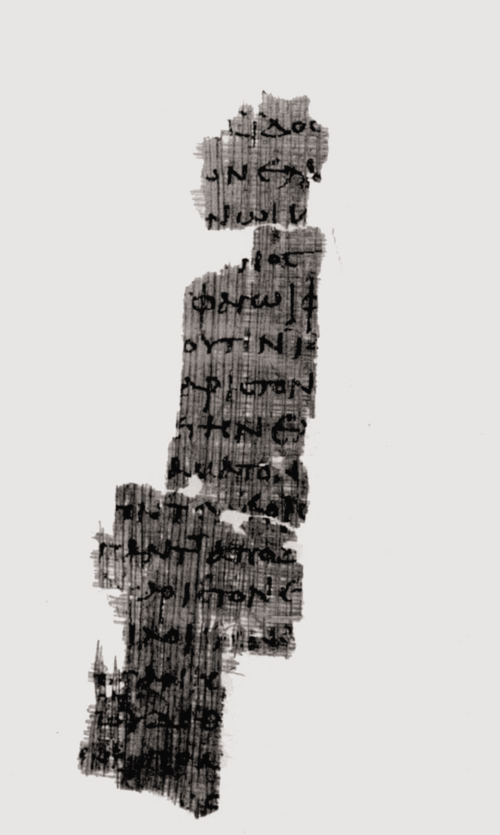
Public-domain pictures from Wikimedia Commons.
A line to remember
Μολὼν λαβέ.
In today's GreekΈλα να τα πάρεις.
Molon lave.
Come and take them.