Life
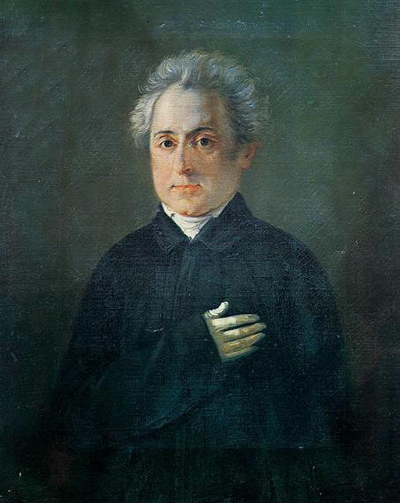
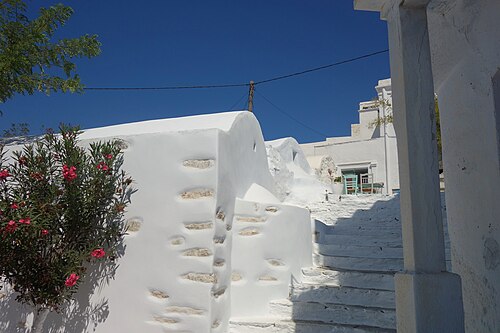
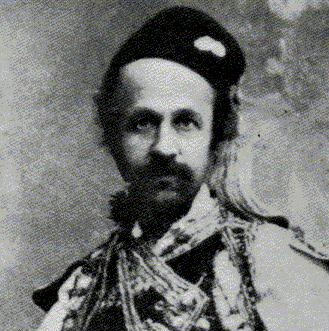
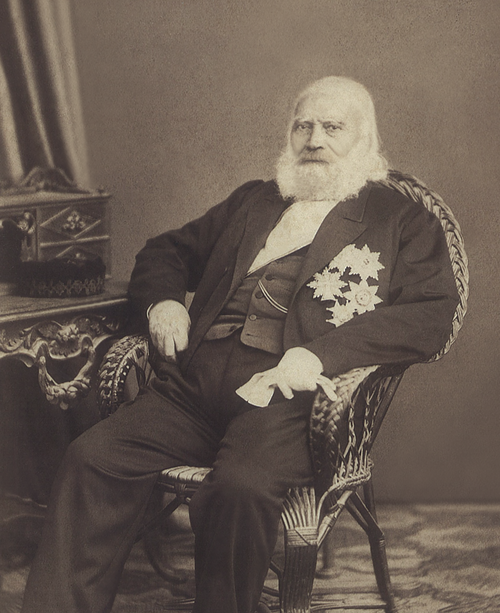
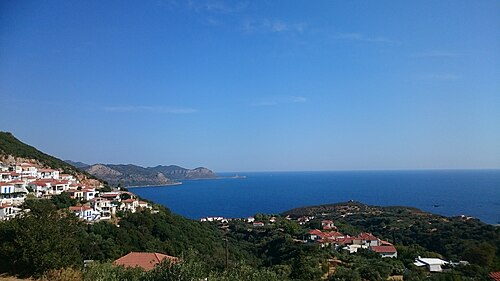
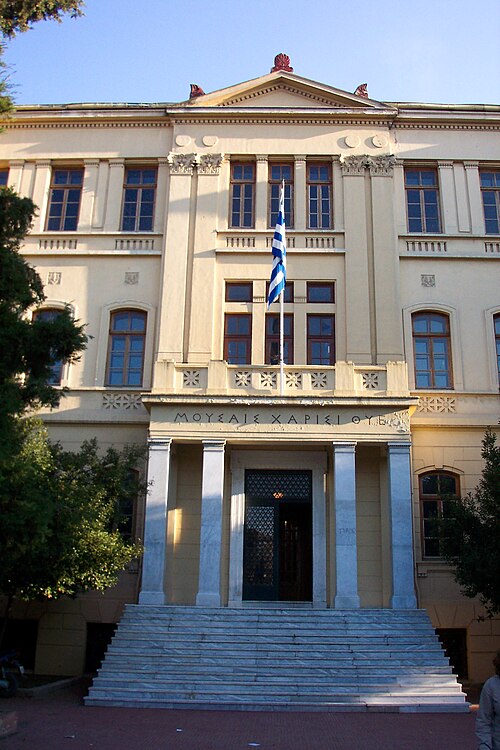
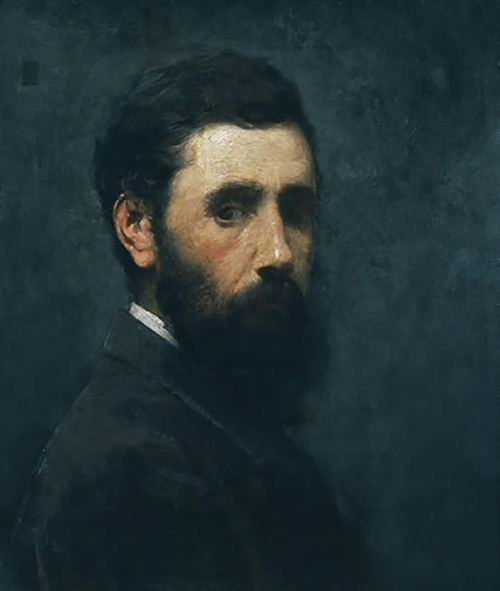
Lytras was born in 1832 in Pyrgos, a village of marble-carvers on Tinos, the Cycladic island that produced an astonishing number of Greek painters and sculptors; his father was a marble sculptor. In 1850 he went to Athens to study at the School of Arts (Σχολείο των Τεχνών), the ancestor of today's Athens School of Fine Arts, and in 1860 a state scholarship took him to the Academy of Fine Arts in Munich, where he worked in the studio of Karl von Piloty, the master of grand history painting. Munich was then the artistic capital of the German-speaking world, and the Greeks who trained there, Lytras, Nikolaos Gyzis, Georgios Iakovidis and others, are known as the Munich School (Σχολή του Μονάχου) of Greek painting.
Unlike Gyzis, who stayed in Germany, Lytras came home. In 1866 he was appointed professor of painting at the School of Arts in Athens, a post he held until his death, thirty-eight years in all. Almost every Greek painter of the next generation passed through his classroom, among them Iakovidis, Georgios Roilos and his own son Nikolaos Lytras. He travelled with Gyzis to Smyrna and Asia Minor in 1873 and to Paris in 1876, and he married Irene Kyriakidi, with whom he had six children.
He died in Athens in June 1904. It was said at the time that the toxic chemicals in his paints had slowly poisoned him. Nikephoros Lytras, as his name is also spelled, was buried with honours, and his pupils took over the school he had shaped.
Works

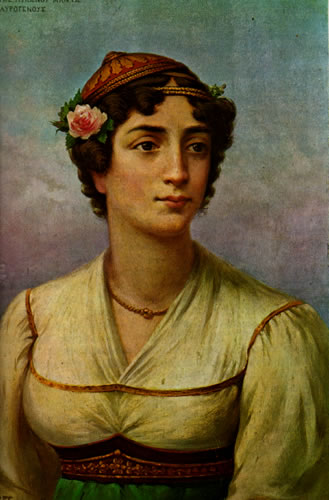
Lytras trained as a history painter, and his first major canvas is in that grand manner: Η Αντιγόνη εμπρός στον νεκρό Πολυνείκη (Antigone before the Dead Polynices, 1865), painted in Munich, shows Sophocles' heroine at the body of her brother. But what made him loved were his genre scenes, small pictures of everyday Greek life painted with warmth and a sharp eye. Τα κάλαντα (The Carols, c. 1872) shows a group of children with a triangle and a drum singing Christmas carols at a doorway, one of them holding a lantern; it is the most reproduced Greek painting of the nineteenth century. Το φίλημα (The Kiss, c. 1878) catches a young man kissing a girl through the bars of a window. Ο γαλατάς (The Milkman, c. 1895) and Η αναμονή (Waiting, c. 1895–1900) are quiet portraits of ordinary people in everyday light.
He also painted the history of his own century. Ψαριανό μοιρολόι (Lament at Psara, c. 1888) shows women mourning after the destruction of the island of Psara in 1824, and an earlier canvas shows Kanaris setting fire to the Turkish flagship in 1822. His style is the Munich style: careful drawing, dark warm tones, light falling on faces and hands, every object carefully placed. What was new was the subject. Before Lytras, Greek painting meant icons and portraits; he and his friends made the Greek village, the Greek child and the Greek street worth painting.
Legacy in Greece today
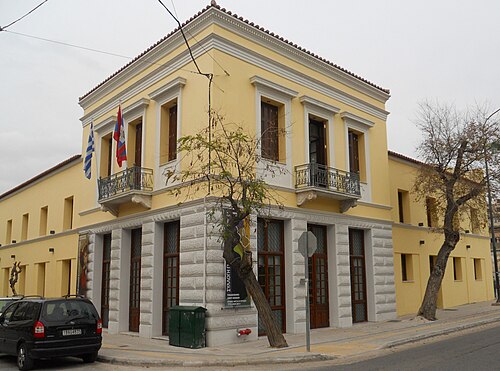
Lytras is called the patriarch of modern Greek painting, and the title is not only a compliment: through his students, the whole of Greek painting up to the twentieth century descends from his classroom. The National Gallery (Εθνική Πινακοθήκη) in Athens, reopened in 2021, shows a room of his work, including the Antigone, and the Museum of Tinian Artists in Tinos town shows the island's painters and sculptors together. Streets named Νικηφόρου Λύτρα exist in Athens and other Greek towns. Every December Τα κάλαντα is reproduced on Christmas cards, in newspapers and on television, so that the painting has become the image Greeks see when they think of carols. A learner can simply search for the picture, name what is in it in Greek, and then listen to the real carols sung on Christmas Eve.
Did you know?
- Pyrgos on Tinos, his birthplace, is a village of marble-workers that also produced the sculptor Giannoulis Chalepas; Gyzis was born a few kilometres away.
- He taught at the School of Arts in Athens from 1866 until his death in 1904, thirty-eight years, longer than any other professor of painting.
- His son Nikolaos Lytras (1883–1927) also became a painter and professor, in a much freer, impressionist style.
- The children in Τα κάλαντα carry a triangle, the instrument Greek children still bring when they sing carols from door to door.
Key works
| Greek title | Title | Year |
|---|---|---|
| Η Αντιγόνη εμπρός στον νεκρό Πολυνείκη | Antigone before the Dead Polynices | 1865 |
| Τα κάλαντα | The Carols | c. 1872 |
| Το φίλημα | The Kiss | c. 1878 |
| Ψαριανό μοιρολόι | Lament at Psara | c. 1888 |
| Ο γαλατάς | The Milkman | c. 1895 |
| Η αναμονή | Waiting | c. 1895–1900 |
From the works


Public-domain pictures from Wikimedia Commons.
A line to remember
Ο πατριάρχης της νεοελληνικής ζωγραφικής
O patriarchis tis neoellinikis zografikis
The patriarch of modern Greek painting