grecfacilegrecfacile
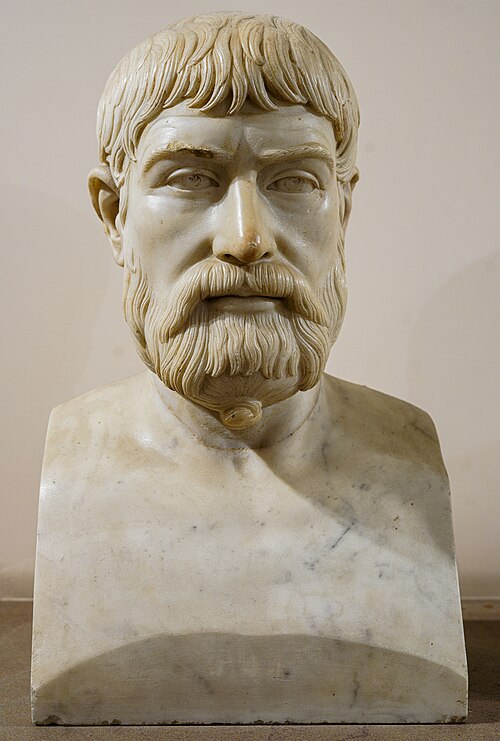
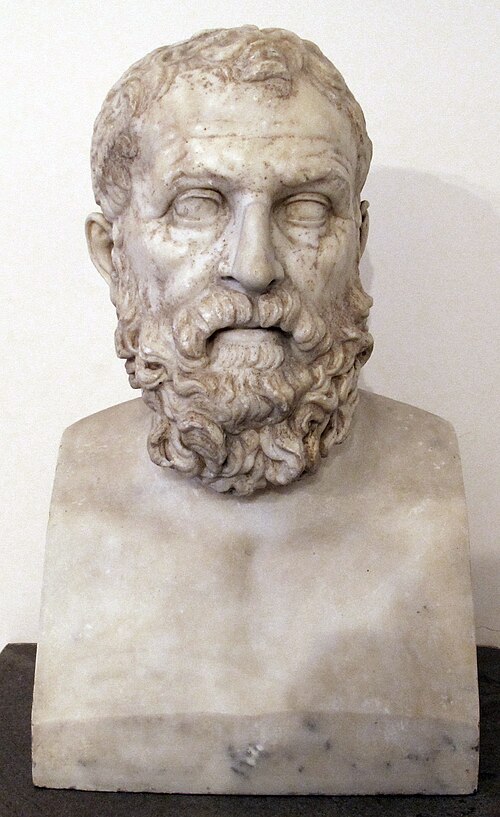
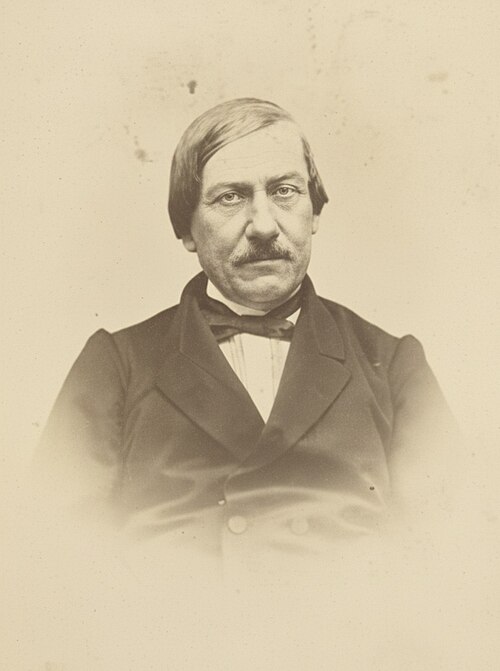
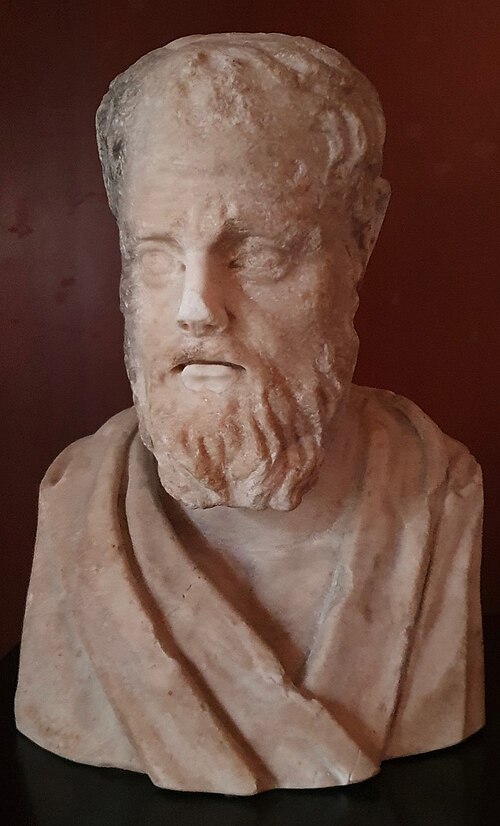
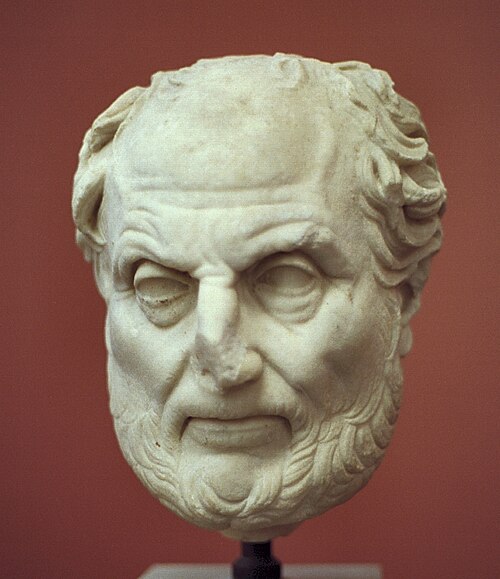
Thucydides
Zde · CC BY-SA 4.0 · Wikimedia Commons

C2Antiquity · Historian

Thucydides

Θουκυδίδης

c. 460 BC – c. 400 BC · Athens; Thrace (in exile)

Thucydides (Θουκυδίδης, c. 460–c. 400 BC) was an Athenian general who, exiled after a defeat in 424 BC, spent twenty years writing the history of the war between Athens and Sparta that he had watched from both sides. His unfinished «Ιστορίαι» (Histories) of the Peloponnesian War invented the critical, evidence-based study of events and the analysis of power that political scientists still teach. He wanted it to be, in his own words, a possession for all time.

Life

Thucydides, son of Olorus, was born in Athens around 460 BC into a wealthy family with Thracian connections and the right to work gold mines on the Thracian coast opposite Thasos. His father's name is Thracian and royal, and he was probably related to Cimon, the great aristocratic general. Of his youth we know nothing except what he tells us: that he began taking notes as soon as the war broke out in 431 BC, because he foresaw that it would be greater than any before it, and that he caught the plague in 430 BC and survived it, which is why his description of the symptoms is so precise.

In 424 BC he was elected one of the ten generals and posted to the north Aegean. When the Spartan commander Brasidas made a surprise attack on Amphipolis, the key Athenian colony on the Strymon, Thucydides sailed from Thasos with seven ships but arrived half a day too late; the city had already surrendered. Athens condemned him to exile. He spent the next twenty years, as he says, away from the city, with leisure to observe events and access to the Peloponnesian side as well as his own, and he seems to have travelled widely, perhaps to Sicily and certainly through the Peloponnese and Macedonia.

He returned to Athens after the amnesty of 404 BC and died some years later, around 400 BC, perhaps violently, with the work unfinished: it stops in mid-sentence in the year 411. Ancient tradition placed his tomb among those of Cimon's family outside the walls. Xenophon and others took up the narrative where he left it.

Works

The «Ιστορίαι», divided into eight books by later editors, tell the story of the Peloponnesian War from its causes to 411 BC. Book 1 explains why Thucydides thinks the war the greatest ever, surveys early Greek history with a sceptic's eye, sets out his method and distinguishes the public grievances from what he calls «the truest cause»: the growth of Athenian power and the fear it inspired in Sparta. He tells the reader that he checked every report, trusted no one's memory, and composed the speeches by keeping as close as possible to what was said while making the speakers say what the occasion demanded.

The set pieces that follow are among the most read pages in Greek. The Funeral Oration of Pericles (2.35–46) is democracy describing itself; the plague of Athens (2.47–54) is a clinical and moral autopsy of a city in panic; the civil war at Corcyra (3.82–83) analyses how words change meaning when a community tears itself apart; the Mytilene debate (3.36–49) argues over whether to massacre a rebel city; the Melian Dialogue (5.84–116) has the Athenians tell a small island that the strong do what they can and the weak suffer what they must; and Books 6 and 7 narrate the Sicilian expedition, from the departure of the fleet to its destruction at Syracuse, as tragedy in prose.

His Greek is famously hard: compressed, abstract, full of antitheses and sentences that break under the weight of their thought. His view of human affairs is unsentimental, with no gods, no omens believed, and human nature as the constant that makes the past useful for understanding the future. That is why he is the ancestor of political realism and of every historian who asks for evidence.

Legacy in Greece today

Greek lyceum pupils read Thucydides in the original, usually the Corcyra chapters of Book 3 and extracts from the Funeral Oration, which many find the hardest text of their school years and remember for life. The phrase «κτήμα ες αεί» is used in Modern Greek for anything of lasting value, and «οι ισχυροί κάνουν ό,τι μπορούν και οι αδύναμοι υποφέρουν ό,τι πρέπει» is quoted in every discussion of international politics. Abroad, the «Thucydides trap», coined in the 2010s to describe the danger of war between a rising and an established power, put his name in newspapers again. A learner can walk the Kerameikos in Athens, where the war dead of 431 BC were buried before Pericles spoke, or visit the site of Amphipolis in Macedonia, whose loss cost him his career and gave us the book. The site's C2 exercise on counterfactual history and the pages on Pericles and Herodotus continue the subject.

Did you know?

  • He is the only major ancient historian who was also a general in the war he describes, and he lost his command because he arrived at Amphipolis half a day late.
  • He caught the plague of Athens and lived, which allowed him to describe the disease from the inside; doctors still debate which illness it was.
  • His history breaks off in mid-sentence in 411 BC, seven years before the war ended; Xenophon's Hellenica begins exactly where it stops.
  • Thomas Hobbes's first published book, in 1629, was an English translation of Thucydides, whom he called «the most politic historiographer that ever writ».

Key works

Greek titleTitleYear
Αρχαιολογία και μέθοδος (Βιβλίο Α΄, 1–23)The Archaeology and the statement of method (Book 1)
Περικλέους Επιτάφιος (Β΄ 35–46)The Funeral Oration of Pericles431/430 BC
Ο λοιμός των Αθηνών (Β΄ 47–54)The plague of Athens430 BC
Τα Κερκυραϊκά (Γ΄ 70–85)The civil war at Corcyra427 BC
Ο διάλογος των Μηλίων (Ε΄ 84–116)The Melian Dialogue416 BC
Η Σικελική εκστρατεία (Βιβλία ΣΤ΄–Ζ΄)The Sicilian Expedition415–413 BC

A line to remember

Κτῆμά τε ἐς αἰεὶ μᾶλλον ἢ ἀγώνισμα ἐς τὸ παραχρῆμα ἀκούειν ξύγκειται.

In today's GreekΈχει γραφτεί ως απόκτημα παντοτινό μάλλον, παρά ως αγώνισμα για να ακουστεί μια φορά και να ξεχαστεί.

Ktima te es aiei mallon i agonisma es to parachrima akouein xynkeitai.

It is composed as a possession for all time rather than as a prize piece to be heard for the moment.

Ιστορίαι 1.22.4

From the original

The text as Thucydides wrote it, out of copyright, with our own translation beside it.

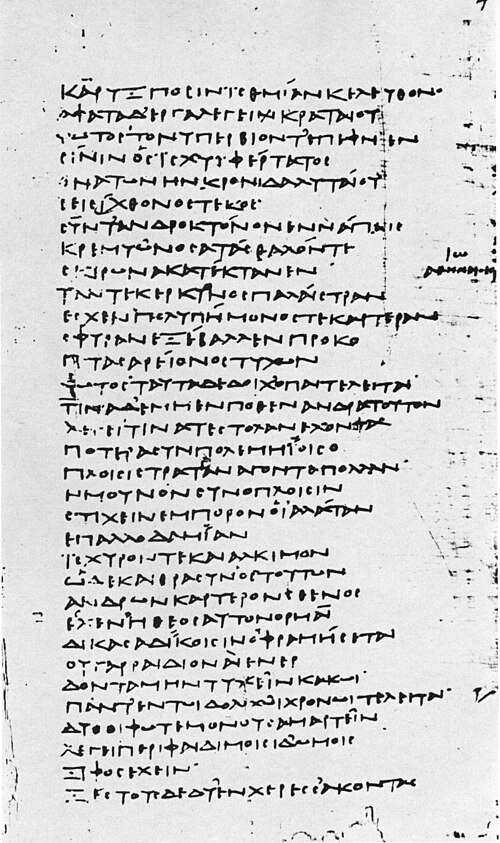
«Ἱστορίαι»The History of the Peloponnesian War

Thucydides' statement of method at the end of the introduction to Book 1: how he handled the speeches, how he checked the facts, and what he hoped his history would be, a possession for all time.

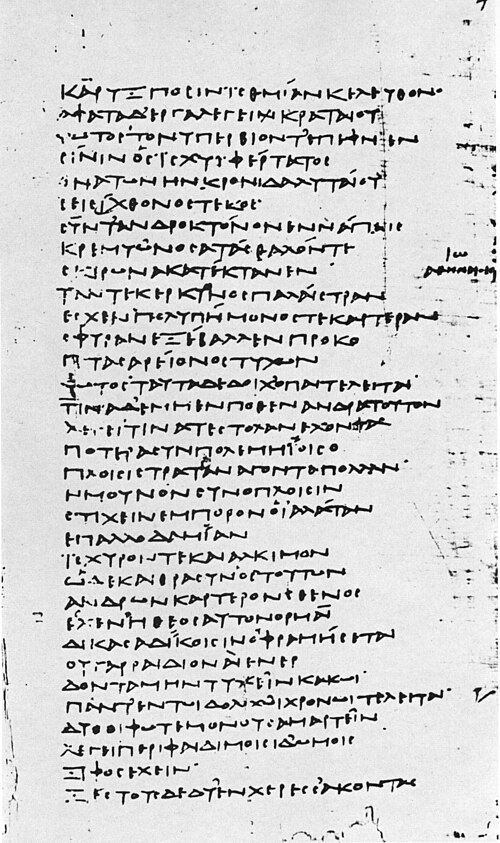
Καὶ ὅσα μὲν λόγῳ εἶπον ἕκαστοι ἢ μέλλοντες πολεμήσειν ἢ ἐν αὐτῷ ἤδη ὄντες, χαλεπὸν τὴν ἀκρίβειαν αὐτὴν τῶν λεχθέντων διαμνημονεῦσαι ἦν ἐμοί τε ὧν αὐτὸς ἤκουσα καὶ τοῖς ἄλλοθέν ποθεν ἐμοὶ ἀπαγγέλλουσιν· ὡς δ’ ἂν ἐδόκουν ἐμοὶ ἕκαστοι περὶ τῶν αἰεὶ παρόντων τὰ δέοντα μάλιστ’ εἰπεῖν, ἐχομένῳ ὅτι ἐγγύτατα τῆς ξυμπάσης γνώμης τῶν ἀληθῶς λεχθέντων, οὕτως εἴρηται. τὰ δ’ ἔργα τῶν πραχθέντων ἐν τῷ πολέμῳ οὐκ ἐκ τοῦ παρατυχόντος πυνθανόμενος ἠξίωσα γράφειν, οὐδ’ ὡς ἐμοὶ ἐδόκει, ἀλλ’ οἷς τε αὐτὸς παρῆν καὶ παρὰ τῶν ἄλλων ὅσον δυνατὸν ἀκριβείᾳ περὶ ἑκάστου ἐπεξελθών. ἐπιπόνως δὲ ηὑρίσκετο, διότι οἱ παρόντες τοῖς ἔργοις ἑκάστοις οὐ ταὐτὰ περὶ τῶν αὐτῶν ἔλεγον, ἀλλ’ ὡς ἑκατέρων τις εὐνοίας ἢ μνήμης ἔχοι. καὶ ἐς μὲν ἀκρόασιν ἴσως τὸ μὴ μυθῶδες αὐτῶν ἀτερπέστερον φανεῖται· ὅσοι δὲ βουλήσονται τῶν τε γενομένων τὸ σαφὲς σκοπεῖν καὶ τῶν μελλόντων ποτὲ αὖθις κατὰ τὸ ἀνθρώπινον τοιούτων καὶ παραπλησίων ἔσεσθαι, ὠφέλιμα κρίνειν αὐτὰ ἀρκούντως ἕξει. κτῆμά τε ἐς αἰεὶ μᾶλλον ἢ ἀγώνισμα ἐς τὸ παραχρῆμα ἀκούειν ξύγκειται.As for the speeches that each side made, either when they were about to go to war or when they were already in it, it was hard to recall the exact words that were spoken, both for me, where I heard them myself, and for those who reported them to me from elsewhere; so I have set them down as it seemed to me each speaker would most fittingly have spoken on the matter at hand, keeping as close as possible to the general sense of what was really said. As for the deeds done in the war, I did not think it right to write them down from the first person I happened to ask, nor as they seemed to me, but I went into each one with as much accuracy as possible, both those at which I was present myself and those I learned of from others. And they were found out with effort, because those present at each event did not say the same things about the same matters, but spoke according to their sympathy for one side or the other, or their memory. Perhaps the absence of the fabulous from my account will seem less pleasing to the ear; but it will be enough for me if it is judged useful by those who wish to see clearly what happened, and what will one day happen again, in the same or a similar way, human nature being what it is. It is composed as a possession for all time rather than as a prize piece to be heard for the moment.

Ἱστορίαι 1.22.1–4, the statement of method · Public-domain text, source: el.wikisource.org
C2

Read about Thucydides in Greek (C2)

Words from the passage

  • exile
  • beneficial
  • testimony
  • clarity
  • I understand, grasp
  • I reject
  • pretext, occasion
  • distillation, essence

Test yourself: 4 words from this page

1 / 4

What does this word mean?

Want to learn Greek?Start learning Greek
Others at level C2

Modern Greece · Novelist, critic and satiristEmmanouil Roidis1836 – 1904Modern Greece · PoetAndreas Kalvos1792 – 1869Antiquity · Philosopher and prose writerPlatoc. 427 BC – c. 347 BCAntiquity · Epic and didactic poetHesiodc. 750–650 BCModern Greece · Revolutionary writer and poetRigas Feraiosc. 1757 – 1798Antiquity · PhilosopherAristotle384 BC – 322 BCAntiquity · Lyric poetPindarc. 518 BC – c. 438 BCRenaissance · Historian, Byzantine princessAnna Komnene1083 – c. 1153Renaissance · Archbishop and preacherJohn Chrysostomc. 347 – 407Renaissance · Byzantine historianProcopiusc. 500 – c. 565Modern Greece · Scholar of the Greek EnlightenmentAdamantios Korais1748 – 1833Modern Greece · Linguist, demoticistYannis Psycharis1854 – 1929Modern Greece · Surrealist poet and painterNikos Engonopoulos1907 – 1985Antiquity · SatiristLucian of Samosatac. 125 – after 180Antiquity · Lawgiver and poetSolonc. 630 BC – c. 560 BCModern Greece · SatiristAndreas Laskaratos1811 – 1901Modern Greece · NovelistKosmas Politis1888 – 1974Modern Greece · NovelistStratis Tsirkas1911 – 1980Modern Greece · Surrealist poet, psychoanalystAndreas Embirikos1901 – 1975Modern Greece · PoetMiltos Sachtouris1919 – 2005Modern Greece · NovelistMelpo Axioti1905 – 1973Modern Greece · Novelist, poetGiannis Skarimbas1893 – 1984Modern Greece · Philosopher, economist, psychoanalystCornelius Castoriadis1922 – 1997Modern Greece · Composer, architectIannis Xenakis1922 – 2001Modern Greece · Prose writerGiorgos Ioannou1927 – 1985Modern Greece · Novelist, playwrightPavlos Matesis1933 – 2013Modern Greece · LinguistManolis Triantafyllidis1883 – 1959Modern Greece · HistorianKonstantinos Paparrigopoulos1815 – 1891Modern Greece · Engraver, printmakerVaso Katraki1914 – 1988Modern Greece · Philosopher, jurist, PresidentKonstantinos Tsatsos1899 – 1987Modern Greece · PhilosopherIoannis Theodorakopoulos1900 – 1981Modern Greece · Short-story writer · teacherAlexandra Papadopoulou1867 – 1906Modern Greece · Folklorist · anthropologistAlki Kyriakidou-Nestoros1935 – 1988Modern Greece · Actor · stage directorAnna KokkinouModern Greece · Stage and film actressAntigoni Valakou1930 – 2013Antiquity · PainterApellesAntiquity · Grammarian and editorAristophanes of Byzantiumc. 257 BC – c. 180 BCModern Greece · Novelist; linguistDimitra Kolliakou1968Modern Greece · Theatre directorDimitris Rontiris1899 – 1981Modern Greece · Singer · songwriterEleni Vitali1954Modern Greece · Novelist · educatorElli Alexiou1894 – 1988Modern Greece · Singer · composerGiorgos Alkaios1971Antiquity · Orator and educatorIsocrates436 BC – 338 BCModern Greece · Stage and screen actorKaryofyllia Karabeti1958Modern Greece · Pop singerKostas Martakis1984Modern Greece · Stage director · actorLefteris Vogiatzis1944 – 2013Modern Greece · Choreographer · dancerLenio Kaklea1985Modern Greece · Novelist; journalistLilika Nakou1904 – 1989Modern Greece · Novelist · short-story writerMaria Mitsora1946Modern Greece · Singer · actress · directorMartha Frintzila1972Modern Greece · Actress · musical starMartha Karagianni1939 – 2022Modern Greece · Actor · stage and screenMirka Papakonstantinou1947Modern Greece · SculptorNausica Pastra1921 – 2011Modern Greece · Poet · prose writer · painterNiki Marangou1948 – 2013Modern Greece · ActressNora Valsami1945Modern Greece · PoetOlga Votsi1922 – 1998Antiquity · Bronze sculptor and art theoristPolykleitosModern Greece · Stage actressReni Pittakic. 1945Modern Greece · Singer · stage performerRita AntonopoulouModern Greece · Pop singerSarbel1981Modern Greece · Novelist · teacherSofia Nikolaidou1968Modern Greece · Film director · screenwriterStavros Tsiolis1937 – 2019Modern Greece · Singer · actressStefania Liberakakis2002Modern Greece · Rapper · producerStereo Mike1978Antiquity · Choral lyric poetBacchylidesc. 510 BCModern Greece · Stage actorVera Zavitsianou1927 – 2008Modern Greece · Playwright · actressXenia Kalogeropoulou1936

All personalities →