grecfacilegrecfacile
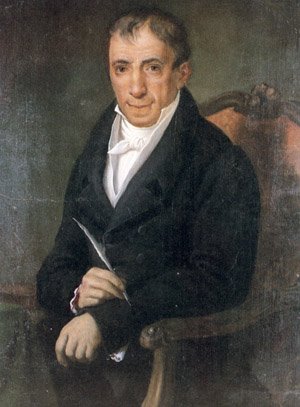
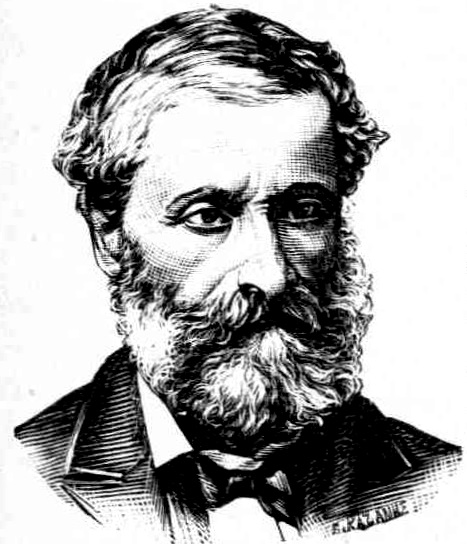
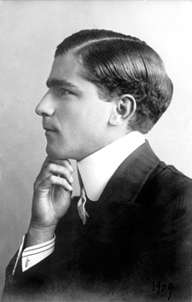
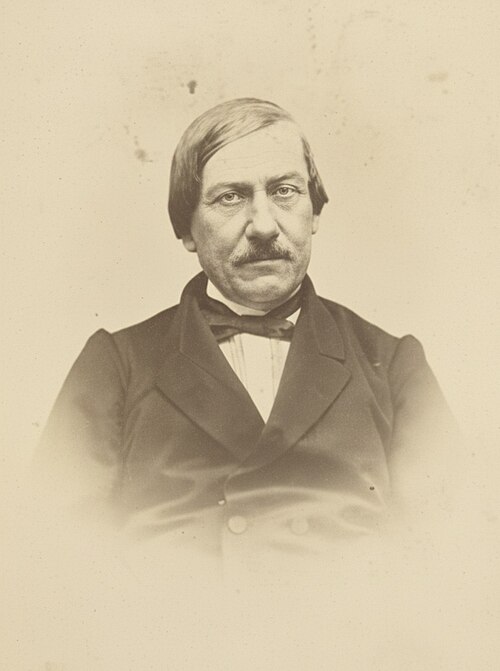
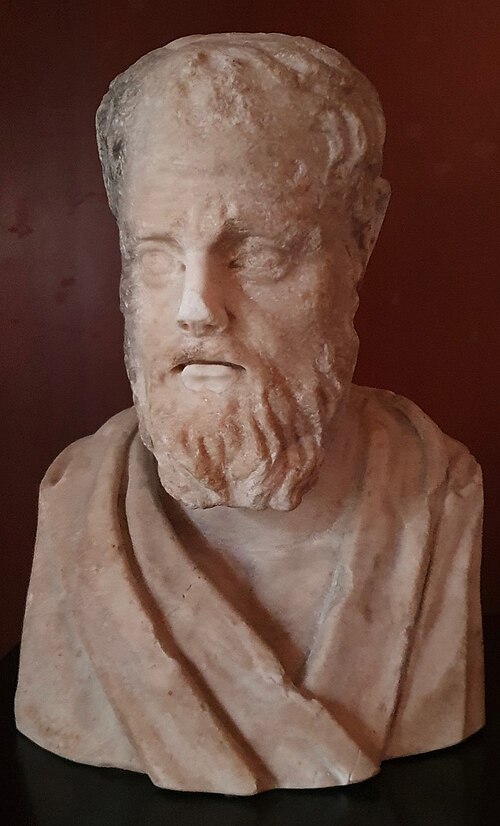
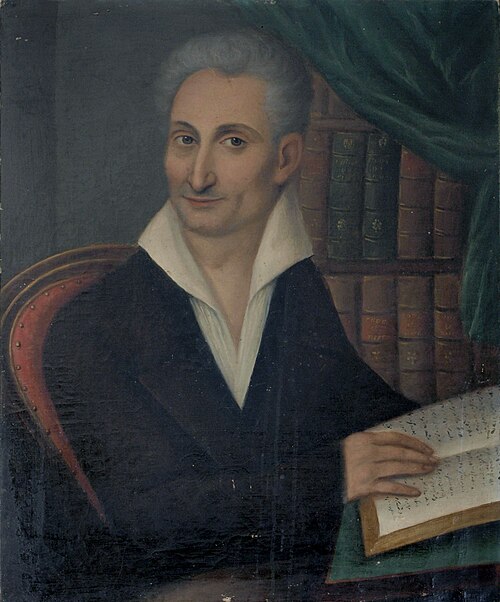
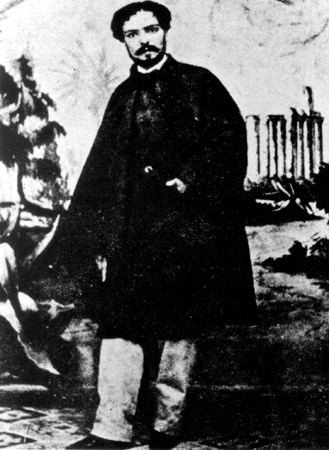
Andreas Kalvos
Public domain · Wikimedia Commons

C2Modern Greece · Poet

Andreas Kalvos

Ανδρέας Κάλβος

1792 – 1869 · Zakynthos; Livorno; Florence; Geneva; Paris; Corfu; Louth, England

Andreas Kalvos (Ανδρέας Κάλβος, 1792–1869) wrote only twenty Greek poems, the odes of Η Λύρα (The Lyre, 1824) and Λυρικά (Lyrics, 1826), composed abroad while Greece fought for independence. Written in a strange, lofty Greek of his own making, they were forgotten for sixty years, then rediscovered by Palamas and Seferis. One line is on every Greek's lips: Θέλει αρετήν και τόλμην η ελευθερία, freedom needs virtue and daring.

Life

Kalvos was born in April 1792 on Zakynthos, then still Venetian, and his life was a long exile. In 1802 his father took him and his younger brother to Livorno in Italy, leaving their mother behind; Kalvos never saw her again. He grew up Italian-speaking and in 1812, in Florence, met the poet Ugo Foscolo, who made him his secretary and pupil. He followed Foscolo to Switzerland and London in 1816, where he taught languages and married an Englishwoman, Maria Theresa Thomas, who died in 1820 together with their infant daughter.

Back in Florence he joined the Carbonari, the secret society of Italian liberals, and was expelled from Tuscany in 1821, the year the Greek Revolution began. In Geneva he published Η Λύρα (1824), ten odes, and in Paris Λυρικά (1826), ten more. In 1826 he sailed to Nafplio to serve the Revolution, was disgusted by the factional fighting and withdrew to British-ruled Corfu, where he taught at the Ionian Academy and in private schools for a quarter of a century, writing no more Greek poetry.

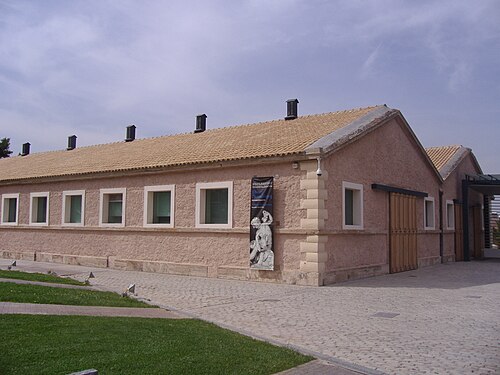
In 1852 he left for England with his second wife, Charlotte Augusta Wadams, and ran a girls' school with her in the Lincolnshire market town of Louth. He died there on 3 November 1869. In 1960 his remains, and hers, were brought to Zakynthos and placed beside Dionysios Solomos, the other great poet of the island, whom he had never met.

Works

The twenty odes are poems of the Greek War of Independence written from a distance, in a Greek no one had ever spoken: an archaic, Homeric-tinged idiom mixed with the demotic, with forms such as ας έχωσι and words like χάλκεον. Kalvos invented a stanza for them, four short unrhymed lines followed by a fifth of five syllables, which gives the odes a solemn, marching rhythm quite unlike the folk-song metre of Solomos.

Ο Φιλόπατρις (The Patriot), the first ode, addresses Zakynthos as ω φιλτάτη πατρίς and ends with the wish not to be buried in foreign soil, a wish that fate ignored. Εις Σάμον (To Samos) opens with the stanza everyone knows: those who feel the bronze hand of fear may keep the yoke of slavery; freedom needs virtue and daring. Εις Ψαρά and Εις Χίον mourn the islands destroyed by the Ottomans in 1822 and 1824; Εις Σούλι and Εις Πάργαν honour the Epirote strongholds; Ο Ωκεανός (The Ocean) and Τα Ηφαίστεια (The Volcanoes) turn to the sea and the Greek fire-ships. Εις Θάνατον (To Death) remembers his mother appearing to him in a dream.

Behind the patriotic themes stand the classical ideals he absorbed from Foscolo: virtue, liberty, the moral grandeur of nature. The odes are abstract and statuesque rather than tender, and their vocabulary needs a dictionary even for native speakers, which is exactly why Seferis admired their strangeness.

Legacy in Greece today

Θέλει αρετήν και τόλμην η ελευθερία is quoted in parliament, in newspaper headlines and on school walls; few Greeks know the rest of the ode, but everyone knows that line. The odes returned to life in 1889, when Kostis Palamas gave a lecture on 'Kalvos the Zakynthian', and again in the 1930s and 1940s through Seferis's essays; today Εις Σάμον is in the Lyceum literature anthology. On Zakynthos the Museum of Solomos and Eminent Zakynthians houses the mausoleum with the tombs of Solomos and Kalvos side by side; in Louth, England, a plaque marks the house where he died. Streets named Κάλβου exist in Athens and many towns. Listening to a good reading of Ο Φιλόπατρις is the best way to hear his rhythm.

Did you know?

  • He wrote twenty Greek poems in his whole life, all between about 1823 and 1826, and then, for more than forty years, not one more.
  • Before his Greek odes he wrote tragedies and poems in Italian, and in England he published a textbook of Italian grammar.
  • His first ode wishes for a grave in his homeland; he died in an English market town and reached Zakynthos only in 1960, ninety-one years later.
  • Kalvos and Solomos, both born on Zakynthos and both writing the Revolution, never met, and now lie in the same mausoleum.

Key works

Greek titleTitleYear
Η Λύρα (δέκα ωδές)The Lyre (ten odes)1824
Ο ΦιλόπατριςThe Patriot1824
Εις ΘάνατονTo Death1824
Λυρικά (δέκα ωδές)Lyrics (ten odes)1826
Εις ΣάμονTo Samos1826
Εις ΨαράTo Psara1826

A line to remember

Όσοι το χάλκεον χέρι / βαρύ του φόβου αισθάνονται, / ζυγόν δουλείας ας έχωσι· / θέλει αρετήν και τόλμην / η ελευθερία.

In today's GreekΌσοι αισθάνονται το βαρύ, χάλκινο χέρι του φόβου, ας έχουν τον ζυγό της σκλαβιάς· η ελευθερία θέλει αρετή και τόλμη.

Osoi to chalkeon cheri / vary tou fovou aisthanontai, / zygon douleias as echosi; / thelei aretin kai tolmin / i eleftheria.

Those who feel the heavy / bronze hand of fear, / let them keep the yoke of slavery; / freedom needs virtue / and daring.

Εις Σάμον, Λυρικά (1826)

From the original

The text as Andreas Kalvos wrote it, out of copyright, with our own translation beside it.

«Εἰς Σάμον»To Samos

The opening stanzas of the ode to Samos: Kalvos states his creed, that freedom demands virtue and daring, and reads the fall of Icarus as a free death. Note his learned, archaising language and unrhymed five-line stanzas.

Ὅσοι τὸ χάλκεον χέριThose who feel the bronze hand
βαρὺ τοῦ φόβου αἰσθάνονται,of fear lie heavy on them,
ζυγὸν δουλείας, ἂς ἔχωσι·let them keep the yoke of slavery;
θέλει ἀρετὴν καὶ τόλμηνit is virtue and daring
ἡ ἐλευθερία.that freedom asks.
Αὐτὴ (καὶ ὁ μῦθος κρύπτειShe (and the myth conceals
νοῦν ἀληθείας) ἐπτέρωσεa kernel of truth) gave wings
τὸν Ἴκαρον· καὶ ἂν ἔπεσενto Icarus; and if he fell,
ὁ πτερωθεὶς κ᾿ ἐπνίγηthe winged youth, and drowned,
θαλασσωμένος·swallowed by the sea,
Ἀφ᾿ ὑψηλὰ ὅμως ἔπεσε,yet he fell from on high,
καὶ ἀπέθανεν ἐλεύθερος. -and he died free. —
Ἂν γένῃς σφάγιον ἄτιμονIf you become the shameful victim
ἑνὸς τυράννου, νόμιζεof a tyrant, hold
φρικτὸν τὸν τάφον.your grave a thing of horror.

Εἰς Σάμον, Λυρικά (1826), stanzas 1–3 · Public-domain text, source: el.wikisource.org
C2

Read about Andreas Kalvos in Greek (C2)

Words from the passage

  • to abandon
  • secretary
  • disappointed
  • ode
  • idiosyncratic
  • stanza
  • to recite
  • oblivion

Test yourself: 4 words from this page

1 / 4

What does this word mean?

Want to learn Greek?Start learning Greek
Others at level C2

Modern Greece · Novelist, critic and satiristEmmanouil Roidis1836 – 1904Antiquity · Philosopher and prose writerPlatoc. 427 BC – c. 347 BCAntiquity · Epic and didactic poetHesiodc. 750–650 BCModern Greece · Revolutionary writer and poetRigas Feraiosc. 1757 – 1798Antiquity · PhilosopherAristotle384 BC – 322 BCAntiquity · HistorianThucydidesc. 460 BC – c. 400 BCAntiquity · Lyric poetPindarc. 518 BC – c. 438 BCRenaissance · Historian, Byzantine princessAnna Komnene1083 – c. 1153Renaissance · Archbishop and preacherJohn Chrysostomc. 347 – 407Renaissance · Byzantine historianProcopiusc. 500 – c. 565Modern Greece · Scholar of the Greek EnlightenmentAdamantios Korais1748 – 1833Modern Greece · Linguist, demoticistYannis Psycharis1854 – 1929Modern Greece · Surrealist poet and painterNikos Engonopoulos1907 – 1985Antiquity · SatiristLucian of Samosatac. 125 – after 180Antiquity · Lawgiver and poetSolonc. 630 BC – c. 560 BCModern Greece · SatiristAndreas Laskaratos1811 – 1901Modern Greece · NovelistKosmas Politis1888 – 1974Modern Greece · NovelistStratis Tsirkas1911 – 1980Modern Greece · Surrealist poet, psychoanalystAndreas Embirikos1901 – 1975Modern Greece · PoetMiltos Sachtouris1919 – 2005Modern Greece · NovelistMelpo Axioti1905 – 1973Modern Greece · Novelist, poetGiannis Skarimbas1893 – 1984Modern Greece · Philosopher, economist, psychoanalystCornelius Castoriadis1922 – 1997Modern Greece · Composer, architectIannis Xenakis1922 – 2001Modern Greece · Prose writerGiorgos Ioannou1927 – 1985Modern Greece · Novelist, playwrightPavlos Matesis1933 – 2013Modern Greece · LinguistManolis Triantafyllidis1883 – 1959Modern Greece · HistorianKonstantinos Paparrigopoulos1815 – 1891Modern Greece · Engraver, printmakerVaso Katraki1914 – 1988Modern Greece · Philosopher, jurist, PresidentKonstantinos Tsatsos1899 – 1987Modern Greece · PhilosopherIoannis Theodorakopoulos1900 – 1981Modern Greece · Short-story writer · teacherAlexandra Papadopoulou1867 – 1906Modern Greece · Folklorist · anthropologistAlki Kyriakidou-Nestoros1935 – 1988Modern Greece · Actor · stage directorAnna KokkinouModern Greece · Stage and film actressAntigoni Valakou1930 – 2013Antiquity · PainterApellesAntiquity · Grammarian and editorAristophanes of Byzantiumc. 257 BC – c. 180 BCModern Greece · Novelist; linguistDimitra Kolliakou1968Modern Greece · Theatre directorDimitris Rontiris1899 – 1981Modern Greece · Singer · songwriterEleni Vitali1954Modern Greece · Novelist · educatorElli Alexiou1894 – 1988Modern Greece · Singer · composerGiorgos Alkaios1971Antiquity · Orator and educatorIsocrates436 BC – 338 BCModern Greece · Stage and screen actorKaryofyllia Karabeti1958Modern Greece · Pop singerKostas Martakis1984Modern Greece · Stage director · actorLefteris Vogiatzis1944 – 2013Modern Greece · Choreographer · dancerLenio Kaklea1985Modern Greece · Novelist; journalistLilika Nakou1904 – 1989Modern Greece · Novelist · short-story writerMaria Mitsora1946Modern Greece · Singer · actress · directorMartha Frintzila1972Modern Greece · Actress · musical starMartha Karagianni1939 – 2022Modern Greece · Actor · stage and screenMirka Papakonstantinou1947Modern Greece · SculptorNausica Pastra1921 – 2011Modern Greece · Poet · prose writer · painterNiki Marangou1948 – 2013Modern Greece · ActressNora Valsami1945Modern Greece · PoetOlga Votsi1922 – 1998Antiquity · Bronze sculptor and art theoristPolykleitosModern Greece · Stage actressReni Pittakic. 1945Modern Greece · Singer · stage performerRita AntonopoulouModern Greece · Pop singerSarbel1981Modern Greece · Novelist · teacherSofia Nikolaidou1968Modern Greece · Film director · screenwriterStavros Tsiolis1937 – 2019Modern Greece · Singer · actressStefania Liberakakis2002Modern Greece · Rapper · producerStereo Mike1978Antiquity · Choral lyric poetBacchylidesc. 510 BCModern Greece · Stage actorVera Zavitsianou1927 – 2008Modern Greece · Playwright · actressXenia Kalogeropoulou1936

All personalities →