grecfacilegrecfacile
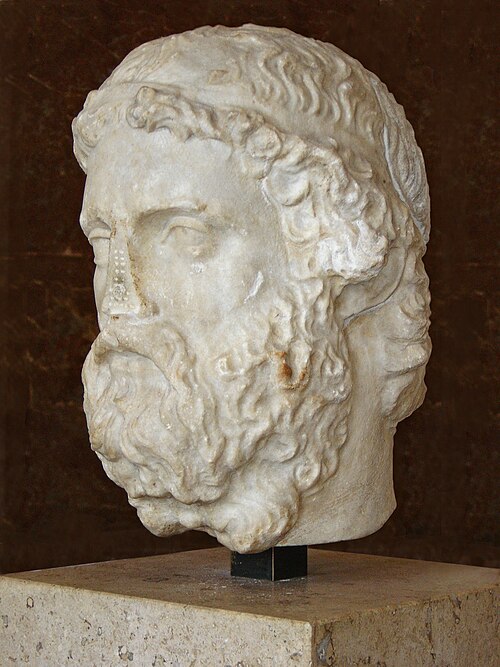
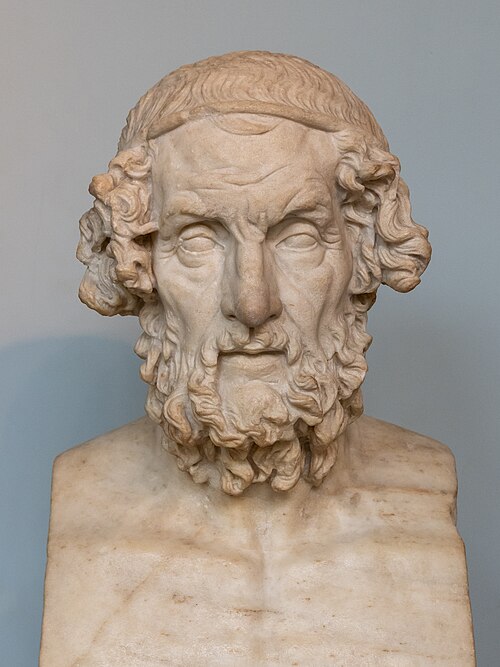
Homer
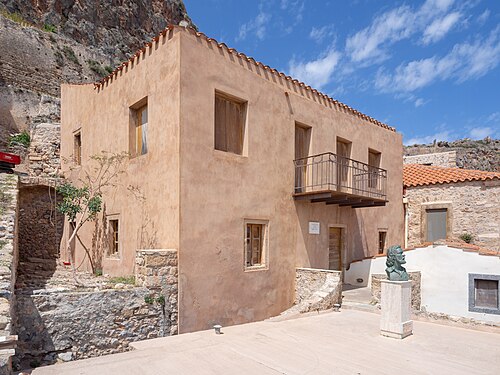
Mike Peel · CC BY-SA 4.0 · Wikimedia Commons

A2Antiquity · Epic poet

Homer

Όμηρος

c. 8th century BC · Ionia (Smyrna or Chios by tradition)

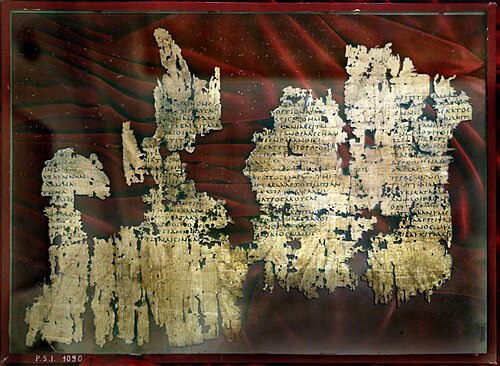
Homer (Όμηρος, Omiros) is the name the Greeks gave to the poet of the two oldest works of European literature, the Ιλιάδα (Iliad) and the Οδύσσεια (Odyssey), composed around the eighth century BC. The Iliad tells of a few weeks in the tenth year of the Trojan War and the anger of Achilles; the Odyssey follows Odysseus on his ten-year journey home to Ithaca. Nothing certain is known about the man, but every Greek pupil still reads him.

Life

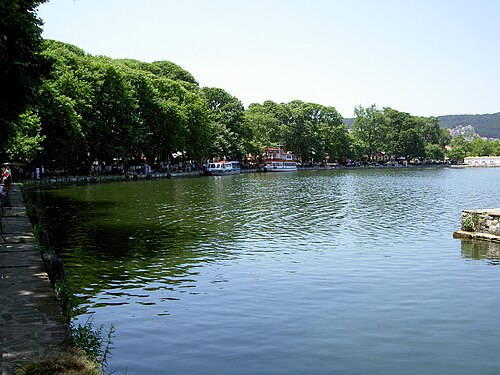
The ancient Greeks themselves knew almost nothing about Homer and argued about him constantly. Seven cities claimed to be his birthplace, Smyrna and Chios most insistently, and tradition made him a blind wandering singer; the Homeric Hymn to Apollo speaks of a blind man who lives on rocky Chios, and later readers took this as the poet's self-portrait. A guild of rhapsodes on Chios, the Homeridai, claimed to be his descendants and recited his poems for centuries. Dates were guessed from 1100 to 700 BC; today most scholars place the poems in the second half of the eighth century BC, at the moment when the Greek alphabet was new.

Since the eighteenth century the «Homeric question» has asked whether one poet composed both epics, or any of them. The answer that emerged in the twentieth century, largely from the work of Milman Parry in the 1930s, is that the poems grew out of a long tradition of oral poetry: singers improvised in dactylic hexameter using stock phrases such as «swift-footed Achilles» and «rosy-fingered Dawn», and the Iliad and Odyssey are the monumental end-products of that tradition, perhaps shaped by one great singer, perhaps written down in Athens under Peisistratos in the sixth century BC.

Whoever he was, Homer was for the Greeks what the Bible was for others: the text children learned to read from, the source of their gods and heroes, and the book Alexander the Great is said to have kept under his pillow.

Works

The Ιλιάδα (Iliad) does not tell the whole Trojan War. In roughly 15,700 lines and 24 books it covers a few weeks in the last year of the siege: Agamemnon insults Achilles, the greatest Greek warrior, by taking his captive Briseis; Achilles withdraws from battle, the Trojans under Hector drive the Greeks back to their ships, and Achilles's friend Patroclus is killed. Achilles returns in a fury, kills Hector and drags his body around the walls, until old King Priam comes to his tent at night to beg for his son's body, and the poem ends with Hector's funeral. It is a poem about anger, honour, and the price of war on both sides.

The Οδύσσεια (Odyssey), about 12,100 lines, is an adventure story and a homecoming. Odysseus, king of Ithaca, spends ten years trying to get home after the war: he blinds the Cyclops Polyphemus, resists the Sirens, loses all his men, and is held for years by the nymph Calypso. Meanwhile on Ithaca his wife Penelope keeps her suitors waiting by weaving and unweaving a shroud, and his son Telemachus sets out to find news of him. Odysseus comes home disguised as a beggar, is recognised only by his old dog Argos, strings his great bow and kills the suitors. Both poems are in dactylic hexameter and use the same formulaic epithets, similes from farm and sea, and long speeches; the Greek is an artificial mixture of dialects that no one ever spoke, which is why Greeks read Homer in translation as foreigners do, but they read him first.

Legacy in Greece today

Every Greek pupil reads the Odyssey in the first year of gymnasio and the Iliad in the second, in the modern translations of Nikos Kazantzakis and Ioannis Kakridis or of Dimitris Maronitis. The language is full of Homer: a long ordeal is an οδύσσεια, a hidden trap a δούρειος ίππος (Trojan horse), a faithful wife a Πηνελόπη, a tempting danger a σειρήνα, a wise adviser a μέντορας (after Mentor), and a huge quarrel a «ομηρικός καβγάς». Visitors still go to Mycenae, Agamemnon's citadel, and to the island of Ithaca with a copy of the poems in hand. On this site you can read short, graded retellings of the Trojan Horse, the Cyclops, the Sirens, Penelope and the dog Argos, and a B2 reading about Homer himself.

Did you know?

  • Seven ancient cities claimed Homer as their own; a Greek epigram lists Smyrna, Rhodes, Colophon, Salamis, Chios, Argos and Athens.
  • The Iliad covers only about fifty days of a ten-year war and never mentions the Trojan Horse; that story is told in the Odyssey and in later poems.
  • Many Homeric phrases are formulas repeated hundreds of times, such as «rosy-fingered Dawn», which helped oral singers compose on the spot.
  • The Greeks of the classical age learned the poems by heart in school, and public recitations of the whole Iliad and Odyssey were held at the Panathenaic festival in Athens.

Key works

Greek titleTitleYear
ΙλιάδαIliadc. 750–700 BC
ΟδύσσειαOdysseyc. 750–700 BC
Ομηρικοί Ύμνοι (αποδίδονται στον Όμηρο)Homeric Hymns (attributed to Homer)7th–6th century BC
Βατραχομυομαχία (αποδίδεται στον Όμηρο)Battle of the Frogs and Mice (attributed to Homer)later antiquity

A line to remember

Ἄνδρα μοι ἔννεπε, Μοῦσα, πολύτροπον, ὃς μάλα πολλὰ / πλάγχθη, ἐπεὶ Τροίης ἱερὸν πτολίεθρον ἔπερσεν

In today's GreekΤον άντρα τραγούδησέ μου, Μούσα, τον πολυμήχανο, που τόσο πολύ / περιπλανήθηκε, αφού κυρίεψε το ιερό κάστρο της Τροίας

Andra moi ennepe, Mousa, polytropon, os mala polla / planchthi, epei Troiis ieron ptoliethron epersen

Tell me, Muse, of the man of many turns, who wandered / so very far after he sacked the holy city of Troy

Οδύσσεια, book 1, lines 1–2

From the original

The text as Homer wrote it, out of copyright, with our own translation beside it.

«Ὀδύσσεια»The Odyssey

These are the first ten lines of the Odyssey: the poet asks the Muse to sing of Odysseus, the man of many turns, and in a few lines gives away the whole story of his long wandering and his lost companions.

Ἄνδρα μοι ἔννεπε, Μοῦσα, πολύτροπον, ὃς μάλα πολλὰTell me, Muse, of the man of many turns, who wandered
πλάγχθη, ἐπεὶ Τροίης ἱερὸν πτολίεθρον ἔπερσε·so very far, once he had sacked the holy citadel of Troy;
πολλῶν δ’ ἀνθρώπων ἴδεν ἄστεα καὶ νόον ἔγνω,he saw the cities of many peoples and came to know their minds,
πολλὰ δ’ ὅ γ’ ἐν πόντῳ πάθεν ἄλγεα ὃν κατὰ θυμόν,and on the sea he suffered many griefs in his heart,
ἀρνύμενος ἥν τε ψυχὴν καὶ νόστον ἑταίρων.fighting to save his own life and bring his comrades home.
ἀλλ' οὐδ' ὣς ἑτάρους ἐρρύσατο, ἱέμενός περ·Yet even so he could not save his comrades, much as he longed to:
αὐτῶν γὰρ σφετέρῃσιν ἀτασθαλίῃσιν ὄλοντο,they perished through their own reckless folly,
νήπιοι, οἳ κατὰ βοῦς Ὑπερίονος Ἠελίοιοthe fools, who laid hands on the cattle of Hyperion the Sun
ἤσθιον· αὐτὰρ ὁ τοῖσιν ἀφείλετο νόστιμον ἦμαρ.and ate them; and he took from them the day of their return.
τῶν ἁμόθεν γε, θεά, θύγατερ Διός, εἰπὲ καὶ ἡμῖν.Begin where you will, goddess, daughter of Zeus, and tell it to us too.

Ὀδύσσεια, Ῥαψωδία α, lines 1–10 (the proem) · Public-domain text, source: el.wikisource.org
A2

Read about Homer in Greek (A2)

Words from the passage

  • poet
  • ancient
  • life
  • blind
  • war
  • hero
  • I return
  • woman, wife

Test yourself: 4 words from this page

1 / 4

What does this word mean?

Want to learn Greek?Start learning Greek
Others at level A2

Modern Greece · PoetKonstantinos Kavafis1863 – 1933Modern Greece · PoetYannis Ritsos1909 – 1990Modern Greece · Novelist (children's literature)Penelope Delta1874 – 1941Modern Greece · NovelistNikos Kazantzakis1883 – 1957Antiquity · Cynic philosopherDiogenes the Cynicc. 412 BC – 323 BCAntiquity · Philosopher and mathematicianThales of Miletusc. 624 BC – c. 546 BCAntiquity · Philosopher and mathematicianPythagorasc. 570 BC – c. 495 BCRenaissance · PainterEl Greco1541 – 1614Modern Greece · PainterNikolaos Gyzis1842 – 1901Modern Greece · SopranoMaria Callas1923 – 1977Modern Greece · ComposerManos Hadjidakis1925 – 1994Modern Greece · ActorThanasis Veggos1927 – 2011Modern Greece · PoetGeorgios Drosinis1859 – 1951Modern Greece · PoetNikiforos Vrettakos1912 – 1991Modern Greece · Singer, lyra playerNikos Xylouris1936 – 1980Modern Greece · PhysicianGeorgios Papanikolaou1883 – 1962Modern Greece · Priest and fighter of 1821Papaflessasc. 1788 – 1825Modern Greece · Satirical poetGeorgios Souris1853 – 1919Modern Greece · SculptorYannoulis Chalepas1851 – 1938Modern Greece · PainterAlekos Fassianos1935 – 2022Modern Greece · ComposerSpyridon Samaras1861 – 1917Modern Greece · Rebetiko singerSotiria Bellou1921 – 1997Modern Greece · Rebetiko singerMarika Ninou1922 – 1957Modern Greece · Bouzouki virtuoso, composerManolis Chiotis1921 – 1970Modern Greece · ActressKatina Paxinou1900 – 1973Modern Greece · Rebetiko singerRosa Eskenazic. 1895 – 1980Modern Greece · ActorManos Katrakis1908 – 1984Modern Greece · PainterDimitris Mytaras1934 – 2017Modern Greece · ComposerManos Loizos1937 – 1982Modern Greece · Laïko singerDimitris Mitropanos1948 – 2012Modern Greece · General of 1821Odysseas Androutsosc. 1790 – 1825Modern Greece · Leader of the Filiki EtaireiaAlexandros Ypsilantis1792 – 1828Modern Greece · PhotographerNelly's (Elli Souyioultzoglou-Seraidari)1899 – 1998Modern Greece · Mezzo-sopranoAgnes Baltsa1944Modern Greece · Lied singer and benefactorAlexandra Trianti1896/1901 – 1977Modern Greece · Actor · DirectorAlekos Alexandrakis1928 – 2005Antiquity · Lyric poetAlcaeus of MytileneModern Greece · SingerAlkistis Protopsalti1954Modern Greece · Singer · songwriterAmanda TenfjordAntiquity · Lyric poetAnacreonc. 570 BCE – c. 485 BCEModern Greece · Novelist and journalistAndreas Frangias1921 – 2002Modern Greece · Singer · songwriterAndromacheModern Greece · SingerAnna Vissi1957Modern Greece · Poet · EditorAntonis Fostieris1953Antiquity · Poet · EpigrammatistAnyte of TegeaAntiquity · Epic poet · ScholarApollonius of RhodesAntiquity · Archaic lyric poetArchilochusModern Greece · NovelistChristos Chomenidis1966Modern Greece · Short-story writerChristos Ikonomou1970Modern Greece · Singer · musical performerDemy1991Modern Greece · SingerDespina Vandi1969Modern Greece · Singer · composerDimitra Galani1952Modern Greece · Playwright · TranslatorDimitris Dimitriadis1944Modern Greece · Singer-songwriterDionysis Savvopoulos1944 – 2025Modern Greece · Singer · popular song and poetryEleftheria Arvanitaki1957Modern Greece · SingerEleftheria Eleftheriou1989Modern Greece · Pop singerElena Tsagrinou1994Modern Greece · SingerEleni Foureira1987Modern Greece · Singer · Greek song and international repertoireElli Paspala1957Modern Greece · Novelist · PuppeteerEvgenia Fakinou1945Modern Greece · Singer · SongwriterGianna Terzi1980Modern Greece · Basketball playerGiannis Antetokounmpo1994Modern Greece · Composer · ConductorGiannis Markopoulos1939 – 2023Modern Greece · Classical pianistGina Bachauer1910 – 1976Modern Greece · Singer · guitaristGeorge Dalaras1949Modern Greece · SculptorGiorgos Zongolopoulos1903 – 2004Modern Greece · SingerGlykeria1953Modern Greece · Singer · songwriterHaris Alexiou1950Modern Greece · Pop singerHelena Paparizou1982Modern Greece · Poet and librettistIoulita IliopoulouAntiquity · PoetErinnaModern Greece · SingerIvi Adamou1993Modern Greece · Pop · laïko singerKaiti Garbi1961Modern Greece · Singer · songwriterKaterine Duska1989Modern Greece · Poet and travel writerKostas Ouranis1890 – 1953Modern Greece · Composer · pianistLena Platonos1951Modern Greece · Singer · songwriterMaria Elena Kyriakou1984Modern Greece · Tennis playerMaria Sakkari1995Modern Greece · Singer · producerMarina Satti1986Modern Greece · SingerMarinella1938 – 2026Modern Greece · NovelistMaro Douka1947Modern Greece · Singer · contemporary Greek songMelina Kana1966Modern Greece · Poet and lyricistMichalis Ganas1944 – 2024Modern Greece · Composer · PianistMimis Plessas1924 – 2024Modern Greece · SingerNatassa Bofiliou1983Modern Greece · Actor · screenwriterNia Vardalos1962Modern Greece · Writer and essayistNikos Dimou1935Modern Greece · PainterNikos Nikolaou1909 – 1986Modern Greece · Singer-songwriter · ProducerNikos Papazoglou1948 – 2011Modern Greece · Poet and illustratorPavlina Pampoudi1948Modern Greece · Pianist and composerRena Kyriakou1917 – 1994Modern Greece · Singer · dancerSilia Kapsis2006Modern Greece · Singer-songwriter · GuitaristSokratis Malamas1957Modern Greece · Composer · SongwriterStavros Kougioumtzis1932 – 2005Modern Greece · Composer and conductorStavros Xarchakos1939Modern Greece · SingerTamta1981Modern Greece · Soprano · Opera and filmTeresa Stratas1938Modern Greece · Painter · visual chroniclerThalia Flora-Karavia1871 – 1960Modern Greece · Songwriter · SingerThanasis Papakonstantinou1959Antiquity · Bucolic poetTheocritusModern Greece · SingerVicky Leandros1952Modern Greece · Composer · keyboardistYanni1954

All personalities →