grecfacilegrecfacile
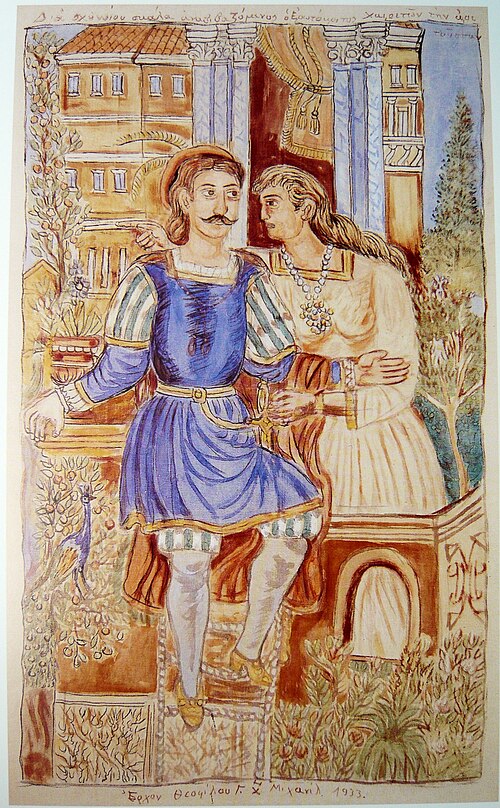
Θεόφιλος, «Ερωτόκριτος και Αρετούσα» (1933)
Θεόφιλος, «Ερωτόκριτος και Αρετούσα» (1933) · Theophilos Hatzimihail · Public domain · Wikimedia Commons

C1Renaissance · Poet (Cretan Renaissance)

Vitsentzos Kornaros

Βιτσέντζος Κορνάρος

1553 – 1613 or 1614 · Trapezonda near Sitia, Crete; Candia (Heraklion)

Vitsentzos Kornaros (Βιτσέντζος Κορνάρος) lived in Venetian Crete, between Sitia and Candia, from 1553 to about 1614, and wrote one book: Ερωτόκριτος (Erotokritos), some 10,000 rhyming verses about a king's daughter, Aretousa, and the young man who sings under her window, wins a joust, is exiled and returns in disguise to save her father's kingdom. Four centuries later, Cretans still sing it by heart.

Life

Almost all we know for certain comes from the last lines of the poem, where the poet names himself: Vitsentzos, of the Kornaros family, born in Sitia, married in Kastro, the Venetian capital of Crete that is today Heraklion. Scholars now broadly accept that he was Vincenzo Cornaro, born in 1553 at Trapezonda, an estate near Sitia, into a family of Venetian origin that had lived on the island for generations and spoke Greek as its mother tongue.

Around 1590 he moved to Candia, where he married Marietta Zeno, held public offices during the plague years of the 1590s and belonged to the Accademia degli Stravaganti, a literary society founded by his brother Andrea. This was the world of the Cretan Renaissance: Crete had been Venetian since 1211, and its educated class read Ariosto and Tasso while hearing Greek folk songs in the streets. He died in Candia in 1613 or 1614, half a century before the Ottomans took the city after a twenty-one-year siege.

Some scholars have doubted the identification, since the name was common among the island's nobility, and the question of whether he also wrote the religious drama Η Θυσία του Αβραάμ (The Sacrifice of Abraham) is still open. What is not in doubt is that a single poet produced, in the first decade of the seventeenth century, the finest long poem in Greek between Homer and modern times.

Works

Ερωτόκριτος (Erotokritos) is a romance in five parts and about 10,000 rhyming fifteen-syllable verses, the metre of Greek folk song, written in the Cretan dialect. Erotokritos, son of the king's counsellor, loves Aretousa, daughter of Herakles, king of Athens. He serenades her secretly at night; the king holds a joust in which he defeats the knights of the Greek world; when he dares to ask for her hand, the king exiles him. Aretousa refuses every other suitor and is thrown into a dungeon. Then the Vlachs invade, and a dark-skinned stranger, Erotokritos disguised by a magic potion, saves Athens in single combat. He tests Aretousa's faithfulness, reveals himself, and the poem ends with their wedding.

The plot is borrowed from a French medieval romance, Paris et Vienne, probably through an Italian version, but Kornaros rebuilt it entirely: the setting is an imaginary ancient Athens, the characters think and speak like Cretan villagers, and the moral centre is the constancy of the lovers against fortune's wheel. Long passages are monologues of love and grief that stand on their own as songs.

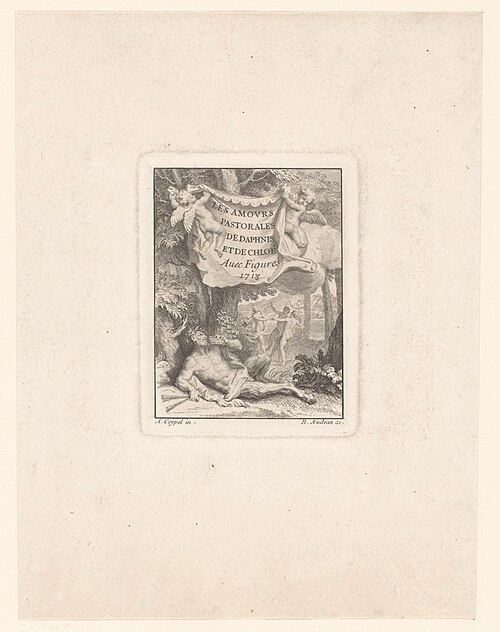
The language is rich and musical, full of proverbs and images from nature, and it is the reason the poem survived: it was printed in Venice in 1713, but Cretans had long since learned it by heart.

Legacy in Greece today

Erotokritos is sung in Crete to this day, in the slow, winding melody of the Cretan lyra, and couplets from it are used as μαντινάδες at weddings and feasts. Listen to Nikos Xylouris's 1976 recording of the opening lines, or Psarantonis's rougher version, and you will hear why. Extracts, usually Aretousa's farewell or the joust, are in the Greek Lyceum literature anthology, and Seferis devoted an essay to the poem. In Sitia a summer festival, the Κορνάρεια, carries his name, and in Heraklion the square called Πλατεία Κορνάρου has a modern sculpture of Erotokritos and Aretousa. The opening line, Του Κύκλου τα γυρίσματα, is as familiar to Greeks as the first line of a national anthem.

Did you know?

  • The poem was written around 1600–1610 but first printed in Venice only in 1713; for a century it circulated in manuscript and by voice.
  • Kornaros names himself in the poem's epilogue; this is almost the only biographical document we have about him.
  • The story is set in ancient Athens, yet the heroes fight a joust, the medieval sport of knights, and the king's enemies are the Vlachs.
  • Kornaros's family spoke Greek although it was of Venetian noble origin; the Cornaro were one of the oldest families in Venice.

Key works

Greek titleTitleYear
Ερωτόκριτος, Μέρος Α΄: ο έρωτας και τα τραγούδιαErotokritos, Part 1: love and the night songsc. 1600–1610
Ερωτόκριτος, Μέρος Β΄: η γκιόστραErotokritos, Part 2: the joustc. 1600–1610
Ερωτόκριτος, Μέρος Γ΄: η εξορίαErotokritos, Part 3: the exilec. 1600–1610
Ερωτόκριτος, Μέρος Δ΄–Ε΄: ο πόλεμος και ο γάμοςErotokritos, Parts 4–5: the war and the weddingc. 1600–1610
Ερωτόκριτος (πρώτη έκδοση, Βενετία)Erotokritos (first printed edition, Venice)1713

A line to remember

Του Κύκλου τα γυρίσματα, που ανεβοκατεβαίνουν, / και του Τροχού, που ώρες ψηλά κι ώρες στα βάθη πηαίνουν.

In today's GreekΤα γυρίσματα του κύκλου του χρόνου, που ανεβοκατεβαίνουν, και του τροχού της τύχης, που άλλοτε πηγαίνουν ψηλά και άλλοτε στα βάθη.

Tou Kyklou ta gyrismata, pou anevokatevainoun, / kai tou Trochou, pou ores psila ki ores sta vathi piainoun.

The turnings of the circle of time, that rise and fall, / and of the wheel of fortune, that goes now high, now to the depths.

Ερωτόκριτος, Α΄ 1–2 (c. 1600–1610)

From the original

The text as Vitsentzos Kornaros wrote it, out of copyright, with our own translation beside it.

«Ερωτόκριτος»Erotokritos

The opening lines of the Cretan romance: the poet invokes the turning wheel of fortune, then promises the story of a maiden and a youth bound by a love without blemish. The text is in Cretan dialect, in rhyming fifteen-syllable couplets.

Του Κύκλου τα γυρίσματα, που ανεβοκατεβαίνουν,The turnings of the Circle, rising and falling,
και του Τροχού, που ώρες ψηλά κι ώρες στα βάθη πηαίνουν·and of the Wheel, that go now high and now down to the depths;
και του Καιρού τα πράματα, που αναπαημό δεν έχουν,and the doings of Time, that never take their rest,
μα στο Καλό κ' εις το Κακό περιπατούν και τρέχουν·but walk and run toward Good and toward Evil;
και των Αρμάτω' οι ταραχές, όχθρητες, και τα βάρη,and the turmoil of Arms, the enmities and the burdens,
του Έρωτος οι μπόρεσες και τση Φιλιάς η χάρη·the powers of Love and the grace of Friendship:
αυτάνα μ' εκινήσασι τη σήμερον ημέραν,these are what have moved me on this very day
ν' αναθιβάλω και να πω τά κάμαν και τά φέρανto call to mind and tell what they did and what they bore,
σ' μιά Κόρη κ' έναν Άγουρο, που μπερδευτήκα' ομάδιa Maiden and a Youth who were bound up together
σε μιά Φιλιάν αμάλαγη, με δίχως ασκημάδι.in a Love without alloy, without a single blemish.
Κι όποιος του Πόθου εδούλεψε εις-ε καιρόν κιανένα,And whoever has served Desire at any time at all,
ας έρθει για ν' αφουκραστεί ό,τ' είν' εδώ γραμμένα·let him come and listen to what is written here;
να πάρει ξόμπλι κι [α]ρμηνειά, βαθιά να θεμελιώνειlet him take example and counsel, and lay deep foundations
πάντα σ' αμάλαγη Φιλιάν, οπού να μην κομπώνει.always on unmixed Love, a love that does not cheat.
Γιατί όποιος δίχως πιβουλιά του Πόθου του ξετρέχει,For whoever follows his Desire without guile,
εις μιάν αρχή [α' βασανιστεί], καλό το τέλος έχει.though he suffers at the start, will have a happy end.
Αφουκραστείτε, το λοιπόν, κι ας πιάνει οπού'χει γνώση,Listen, then, and let whoever has the sense take hold of it,
για να κατέχει κι αλλουνού απόκριση να δώσει.so that he understands, and can give an answer to another.

Ερωτόκριτος, Α΄ 1–18, the poet's prologue (c. 1600–1610) · Public-domain text, source: el.wikisource.org
C1

Read about Vitsentzos Kornaros in Greek (C1)

Words from the passage

  • origin, descent
  • dialect
  • verse, line
  • bridegroom
  • secretly
  • to exile
  • disguised
  • by heart

Test yourself: 4 words from this page

1 / 4

What does this word mean?

Want to learn Greek?Start learning Greek
Others at level C1

Modern Greece · Novelist and short-story writerAlexandros Papadiamantis1851 – 1911Antiquity · Lyric poetSapphoc. 630 BC – c. 570 BCAntiquity · TragedianAeschylusc. 525 BC – 456 BCAntiquity · HistorianHerodotusc. 484 BC – c. 425 BCAntiquity · PhilosopherSocratesc. 470 BC – 399 BCAntiquity · PhilosopherEpicurus341 BC – 270 BCAntiquity · Orator and statesmanDemosthenes384 BC – 322 BCRenaissance · HymnographerRomanos the Melodistc. 490 – c. 556Modern Greece · General of 1821, memoiristIoannis Makriyannis1797 – 1864Modern Greece · PoetNapoleon Lapathiotis1888 – 1944Modern Greece · NovelistKonstantinos Theotokis1872 – 1923Modern Greece · Film directorTheo Angelopoulos1935 – 2012Modern Greece · Poet, satiristKostas Varnalis1884 – 1974Modern Greece · Theatre directorKarolos Koun1908 – 1987Antiquity · MathematicianEuclidc. 325 BC – c. 265 BCModern Greece · Poet, novelistKonstantinos Chatzopoulos1868 – 1920Modern Greece · NovelistM. Karagatsis1908 – 1960Modern Greece · Novelist, playwrightAngelos Terzakis1907 – 1979Modern Greece · PoetManolis Anagnostakis1925 – 2005Modern Greece · NovelistKostas Taktsis1927 – 1988Modern Greece · Scholar, EnlightenmentEvgenios Voulgaris1716 – 1806Modern Greece · Artist (Arte Povera)Jannis Kounellis1936 – 2017Modern Greece · SculptorChryssa (Vardea)1933 – 2013Modern Greece · ComposerNikos Skalkottas1904 – 1949Modern Greece · ComposerManolis Kalomiris1883 – 1962Modern Greece · Journalist, feministKallirroi Parren1861 – 1940Modern Greece · Poet, actressKaterina Gogou1940 – 1993Modern Greece · FolkloristNikolaos Politis1852 – 1921Modern Greece · ArchitectDimitris Pikionis1887 – 1968Modern Greece · ComposerThanos Mikroutsikos1947 – 2019Modern Greece · Playwright, journalistSpyros Melas1882 – 1966Modern Greece · NovelistAlkyoni PapadakiModern Greece · Theatre historian · translation scholarAnna TabakiModern Greece · ChoreographerAndonis Foniadakis1971Modern Greece · Singer-songwriter · painterArleta1945 – 2017Modern Greece · Stage and screen actressBetty Arvaniti1939Modern Greece · Island folk singerEleni Legaki1956Modern Greece · Singer · rebetiko and laïkoFoteini Velesiotou1958Modern Greece · Choreographer · dancerIoannis Mandafounis1981Modern Greece · Poet · translator · editorKaterina Iliopoulou1967Modern Greece · Stage actressKyveli1888 – 1978Modern Greece · Singer · lyricistLizeta Kalimeri1969Antiquity · Ancient novelistLongusModern Greece · SingerLoukas GiorkasModern Greece · Painter and printmakerLoukia Maggiorou1914 – 2008Antiquity · Speechwriter and oratorLysiasc. 445 BC – c. 380 BCModern Greece · SingerMarika Papagika1890 – 1943Modern Greece · Tenor · crossover singerMario Frangoulis1966Modern Greece · Singer · composer · music educatorMariza Koch1944Modern Greece · Singer · songwriterMatoula Zamani1981Modern Greece · Poet · translatorMelissanthi1907 – 1990Antiquity · Bronze sculptorMyronModern Greece · Painter and tapestry artistNiki Kanagini1933 – 2008Modern Greece · Laïko singerNikos Vertis1976Modern Greece · Stage actress · translatorNonika Galinea1938 – 2023Antiquity · Poet · EpigrammatistNossisModern Greece · RapperPavlos Fyssas1979 – 2013Modern Greece · Singer · songwriterPenny BaltatziAntiquity · PhilosopherPlotinusc. AD 204–205 – 270Modern Greece · ChoreographerSofia Mavragani1978Modern Greece · Theatre and opera directorSpyros Evangelatos1940 – 2017Antiquity · AnthologistStobaeusAntiquity · Elegiac poetTyrtaeus7th c. BCModern Greece · Singer · songwriterVictor Vernicos2006Modern Greece · Poet · prose writerVictoria Theodorouc. 1925 – 2019Modern Greece · Hellenist and scholarJacqueline de Romilly1913 – 2010

All personalities →