grecfacilegrecfacile
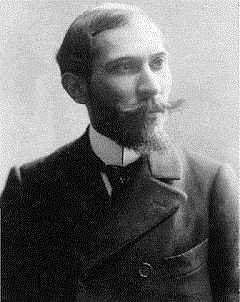
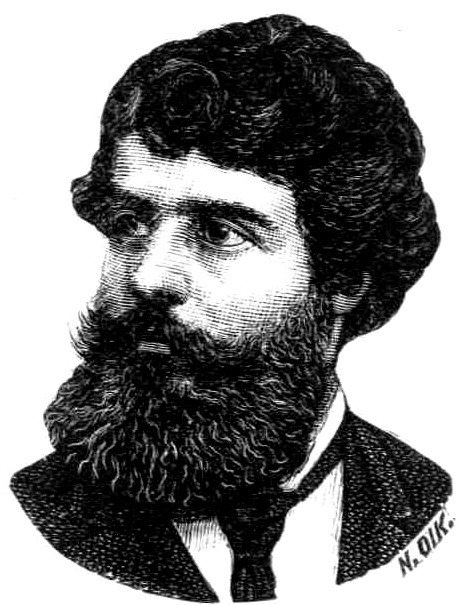
Konstantinos Theotokis
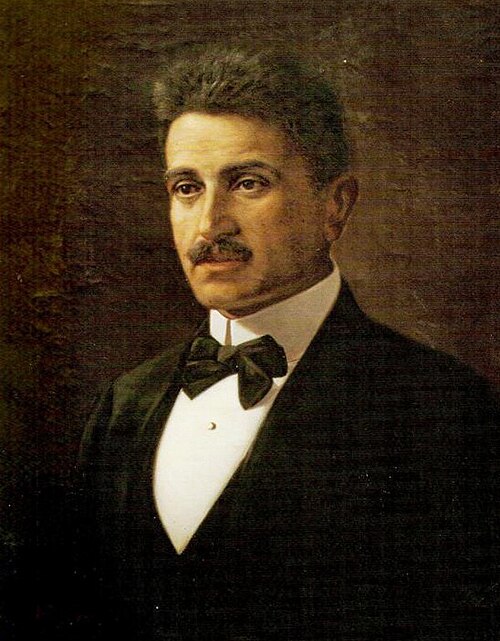
Andreas Vranas (1860-1933) · Public domain · Wikimedia Commons

C1Modern Greece · Novelist

Konstantinos Theotokis

Κωνσταντίνος Θεοτόκης

1872 – 1923 · Corfu; Graz; Karousades

Konstantinos Theotokis (Κωνσταντίνος Θεοτόκης, 1872–1923) was a Corfiot aristocrat, a scholar who read Sanskrit and translated Lucretius and Shakespeare, and a convinced socialist who turned the villages and drawing rooms of his island into fiction. His novellas and novels, Η τιμή και το χρήμα (Honour and Money), Κατάδικος (The Convict), Η ζωή και ο θάνατος του Καραβέλα and Οι σκλάβοι στα δεσμά τους (Slaves in Their Chains), founded the Greek social novel.

Life

Theotokis was born in Corfu town on 13 May 1872 into one of the island's oldest noble families; his father was a count of the Venetian nobility and the family owned the estate of Karousades in the north of the island. He was educated by private tutors, went to Paris at seventeen to study natural science and philosophy, and at the same age married Ernestine von Mallowitz, a baroness from Graz, with whom he would live between Austria and Corfu. In 1897 he and his close friend, the poet Lorentzos Mavilis, fought as volunteers in the Cretan uprising against the Ottomans.

A restless, learned man, he studied Sanskrit at the University of Graz, read Nietzsche and then, decisively, Marx, and in 1910 he was among the founders of the Socialist Group of Corfu (Σοσιαλιστικός Όμιλος), scandalising his class. The death of his young daughter and his growing estrangement from the aristocratic world around him darkened his later years and deepened his writing. He was a committed demoticist, publishing in the journal Ο Νουμάς and siding with the «vulgarists» in the language quarrel.

By the time of the First World War he had spent most of his fortune and was selling family land to live. He died of cancer in Corfu on 1 July 1923, aged fifty-one, having published his last and largest novel the year before; much of his work, including the Corfiot short stories, appeared in book form only after his death.

Works

Theotokis began with short, violent tales of village life, collected posthumously as Κορφιάτικες ιστορίες (Corfiot Stories, 1935). The most famous, Πίστομα (Face Down, 1899), is barely three pages long: a bandit returns from the mountains, finds his wife has had a child by another man, and the story ends with a single terrible command.

The novellas that followed moved to society and money. Η τιμή και το χρήμα (Honour and Money, 1912) is set in Mandouki, a poor quarter of Corfu town: Rini loves the smuggler Andreas, who will not marry her without the dowry her mother cannot pay, and when he finally offers to take her without it she refuses, choosing her own labour over a husband bought with money. Κατάδικος (The Convict, 1919) tells of Tourkogiannos, a farmhand who accepts a prison sentence for a murder he did not commit and preaches a Christ-like love from his cell. Η ζωή και ο θάνατος του Καραβέλα (The Life and Death of Karavelas, 1920) follows an old miser destroyed by the greed of the village around him.

His final novel, Οι σκλάβοι στα δεσμά τους (Slaves in Their Chains, 1922), is a panorama of Corfu town at the turn of the century: the ruined aristocratic family of the Ofiomachos, the rising banker who buys their daughter in marriage, and the young socialist who cannot save her. Written in a rich demotic full of Corfiot words, it is the first Greek novel that reads like Balzac, and the «slaves» of the title are everyone in it, rich and poor alike.

Legacy in Greece today

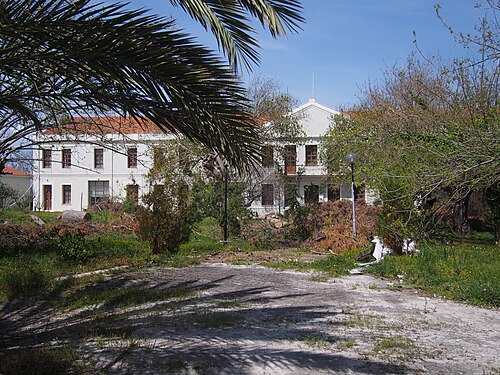
Theotokis entered Greek classrooms long ago: Πίστομα, with its shock ending, and extracts from Η τιμή και το χρήμα and Κατάδικος appear in the literature anthologies of the lyceum, and the dilemma of Rini, honour or money, is a standard essay subject. His books have never gone out of print; since 1993, seventy years after his death, they are in the public domain and his Greek texts are freely available online, which makes them a practical choice for an advanced learner, especially the compact Η τιμή και το χρήμα. In Corfu the Theotokis name is attached to streets and to the family houses in town and at Karousades, and the Ionian islands claim him, with Solomos, Mavilis and Kalvos, as part of the Heptanesian School. Literary historians credit him with the first properly socialist novels in Greek.

Did you know?

  • He married at seventeen an Austrian baroness, Ernestine von Mallowitz, and divided his life between Corfu and Graz.
  • He learned Sanskrit and translated from it, and also translated Lucretius' On the Nature of Things and several plays of Shakespeare into demotic Greek.
  • A count by birth, he helped found the Socialist Group of Corfu in 1910 and died almost poor, having sold off the family estate.
  • His short story Πίστομα (1899) is only about three pages long and is still one of the most discussed texts in Greek schools.

Key works

Greek titleTitleYear
ΠίστομαFace Down (short story)1899
Η τιμή και το χρήμαHonour and Money1912
ΚατάδικοςThe Convict1919
Η ζωή και ο θάνατος του ΚαραβέλαThe Life and Death of Karavelas1920
Οι σκλάβοι στα δεσμά τουςSlaves in Their Chains1922
Κορφιάτικες ιστορίεςCorfiot Stories (posthumous collection)1935

A line to remember

Πίστομα!

Pistoma!

Face down!

Πίστομα (1899), the single word that ends the story

From the original

The text as Konstantinos Theotokis wrote it, out of copyright, with our own translation beside it.

«Πίστομα»Face Down

The last page of the story. The brigand Koukouliotis has come home under an amnesty to find his wife with another man's child; he has already killed the lover. The single word that ends the tale gives it its title.

Την ημέραν εκείνην ο ήλιος δεν εφάνη στην Ανατολή γιατί ο ουρανός είτουν γνέφια γιομάτος και το φως μετά βιάς επλήθαινε.That day the sun did not appear in the East, for the sky was full of clouds and the light grew only slowly.
Κι ο Κουκουλιώτης βάνοντας φτιάρι και τσαπί στον ώμο εδιάταξε τη γυναίκα να τον ακολουθήσει μαζί με το παιδί της, κ' έτσι εβγήκαν κ' οι τρεις από το σπίτι.And Koukouliotis, putting a shovel and a mattock on his shoulder, ordered the woman to follow him with her child, and so all three left the house.
Και φτάνοντας εις το χωράφι που είτουν πολύ νοτερό ακόμα από την πρωτυτερνή βροχή, ο ληστής εβάλθη να σκάψει λάκκο.And when they reached the field, which was still very wet from the rain of the day before, the brigand set about digging a pit.
Δεν επρόφερνε λέξη και το πρόσωπό του είτουν χλωμό και ο ίδρος, που έβρεχε το μέτωπό του, έβγαινε κρύος. Το σταχτί φως που έπεφτε από τον ουρανό εχρωμάτιζε παράξενα τον τόπο· το χινόπωρο την αυγήν εκείνην έλεγεν όλη του τη θλίψη. Η γυναίκα εκοίταζε περίεργη κι ανήσυχη και το παιδάκι επαιγνιδούσε με τα γουλιά και με τα χώματα που ανάσκαφτεν ο κακούργος. Κ' εφάνη για μια στιγμήν ο ήλιος κ' εχρύσωσε τα ξανθά μαλλιά του νηπίου που αγγελικά χαμογελούσε.He did not utter a word, and his face was pale, and the sweat that drenched his forehead came out cold. The ashen light that fell from the sky coloured the place strangely; that morning the autumn was telling all its sorrow. The woman watched, curious and uneasy, and the little child played with the pebbles and the earth that the murderer was digging up. And for a moment the sun came out and gilded the fair hair of the infant, who was smiling like an angel.
Κι ωστόσο ο λάκκος είτουν έτοιμος, κι ο Κουκουλιώτης, ακουμπώντας στο φτυάρι, είπε της γυναικός του:And meanwhile the pit was ready, and Koukouliotis, leaning on the shovel, said to his wife:
"Βάλ'το πίστομα μέσα"."Put it in face down."

«Πίστομα» (1899), the closing paragraphs · Public-domain text, source: el.wikisource.org
C1

Read about Konstantinos Theotokis in Greek (C1)

Words from the passage

  • scion, offspring
  • volunteer
  • conviction
  • outcry
  • embellishment
  • dowry
  • I decline, decay
  • founder

Test yourself: 4 words from this page

1 / 4

What does this word mean?

Want to learn Greek?Start learning Greek

Others at level C1

Modern Greece · Novelist and short-story writerAlexandros Papadiamantis1851 – 1911Antiquity · Lyric poetSapphoc. 630 BC – c. 570 BCAntiquity · TragedianAeschylusc. 525 BC – 456 BCAntiquity · HistorianHerodotusc. 484 BC – c. 425 BCRenaissance · Poet (Cretan Renaissance)Vitsentzos Kornaros1553 – 1613 or 1614Antiquity · PhilosopherSocratesc. 470 BC – 399 BCAntiquity · PhilosopherEpicurus341 BC – 270 BCAntiquity · Orator and statesmanDemosthenes384 BC – 322 BCRenaissance · HymnographerRomanos the Melodistc. 490 – c. 556Modern Greece · General of 1821, memoiristIoannis Makriyannis1797 – 1864Modern Greece · PoetNapoleon Lapathiotis1888 – 1944Modern Greece · Film directorTheo Angelopoulos1935 – 2012Modern Greece · Poet, satiristKostas Varnalis1884 – 1974Modern Greece · Theatre directorKarolos Koun1908 – 1987Antiquity · MathematicianEuclidc. 325 BC – c. 265 BCModern Greece · Poet, novelistKonstantinos Chatzopoulos1868 – 1920Modern Greece · NovelistM. Karagatsis1908 – 1960Modern Greece · Novelist, playwrightAngelos Terzakis1907 – 1979Modern Greece · PoetManolis Anagnostakis1925 – 2005Modern Greece · NovelistKostas Taktsis1927 – 1988Modern Greece · Scholar, EnlightenmentEvgenios Voulgaris1716 – 1806Modern Greece · Artist (Arte Povera)Jannis Kounellis1936 – 2017Modern Greece · SculptorChryssa (Vardea)1933 – 2013Modern Greece · ComposerNikos Skalkottas1904 – 1949Modern Greece · ComposerManolis Kalomiris1883 – 1962Modern Greece · Journalist, feministKallirroi Parren1861 – 1940Modern Greece · Poet, actressKaterina Gogou1940 – 1993Modern Greece · FolkloristNikolaos Politis1852 – 1921Modern Greece · ArchitectDimitris Pikionis1887 – 1968Modern Greece · ComposerThanos Mikroutsikos1947 – 2019Modern Greece · Playwright, journalistSpyros Melas1882 – 1966Modern Greece · NovelistAlkyoni PapadakiModern Greece · Theatre historian · translation scholarAnna TabakiModern Greece · ChoreographerAndonis Foniadakis1971Modern Greece · Singer-songwriter · painterArleta1945 – 2017Modern Greece · Stage and screen actressBetty Arvaniti1939Modern Greece · Island folk singerEleni Legaki1956Modern Greece · Singer · rebetiko and laïkoFoteini Velesiotou1958Modern Greece · Choreographer · dancerIoannis Mandafounis1981Modern Greece · Poet · translator · editorKaterina Iliopoulou1967Modern Greece · Stage actressKyveli1888 – 1978Modern Greece · Singer · lyricistLizeta Kalimeri1969Antiquity · Ancient novelistLongusModern Greece · SingerLoukas GiorkasModern Greece · Painter and printmakerLoukia Maggiorou1914 – 2008Antiquity · Speechwriter and oratorLysiasc. 445 BC – c. 380 BCModern Greece · SingerMarika Papagika1890 – 1943Modern Greece · Tenor · crossover singerMario Frangoulis1966Modern Greece · Singer · composer · music educatorMariza Koch1944Modern Greece · Singer · songwriterMatoula Zamani1981Modern Greece · Poet · translatorMelissanthi1907 – 1990Antiquity · Bronze sculptorMyronModern Greece · Painter and tapestry artistNiki Kanagini1933 – 2008Modern Greece · Laïko singerNikos Vertis1976Modern Greece · Stage actress · translatorNonika Galinea1938 – 2023Antiquity · Poet · EpigrammatistNossisModern Greece · RapperPavlos Fyssas1979 – 2013Modern Greece · Singer · songwriterPenny BaltatziAntiquity · PhilosopherPlotinusc. AD 204–205 – 270Modern Greece · ChoreographerSofia Mavragani1978Modern Greece · Theatre and opera directorSpyros Evangelatos1940 – 2017Antiquity · AnthologistStobaeusAntiquity · Elegiac poetTyrtaeus7th c. BCModern Greece · Singer · songwriterVictor Vernicos2006Modern Greece · Poet · prose writerVictoria Theodorouc. 1925 – 2019Modern Greece · Hellenist and scholarJacqueline de Romilly1913 – 2010

All personalities →