Life
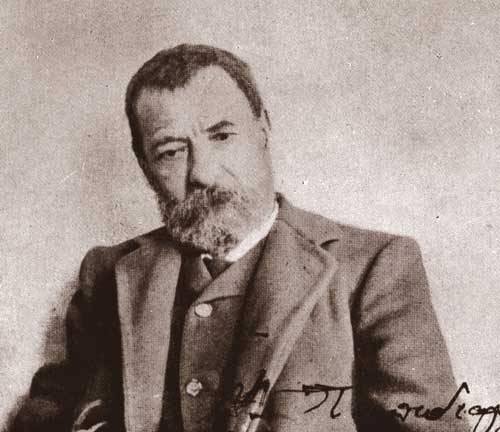
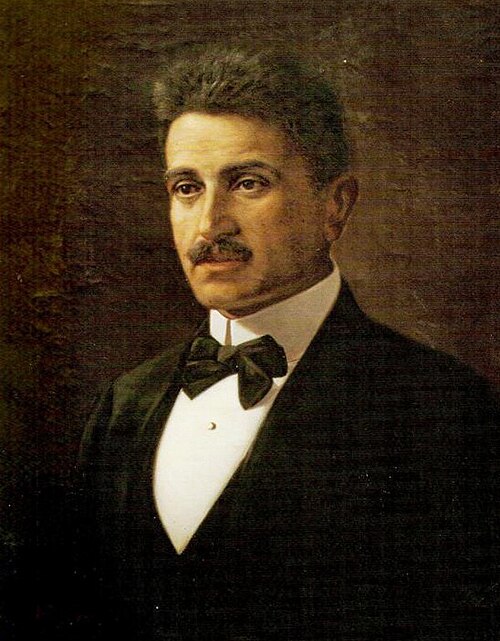
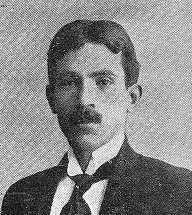
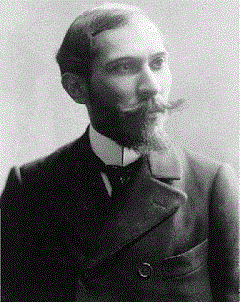
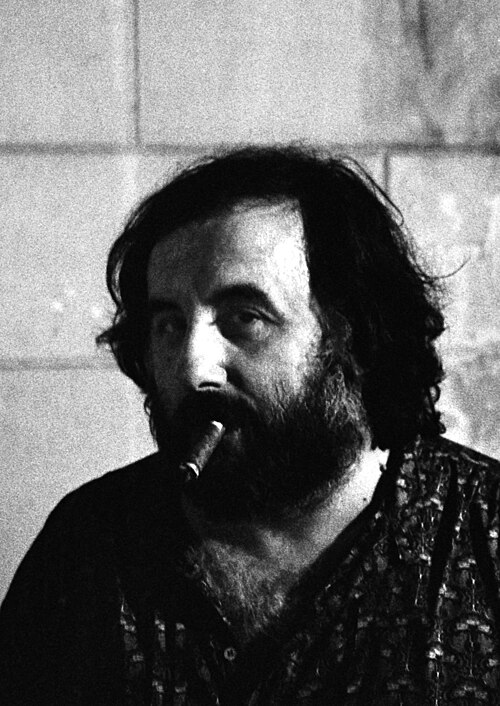
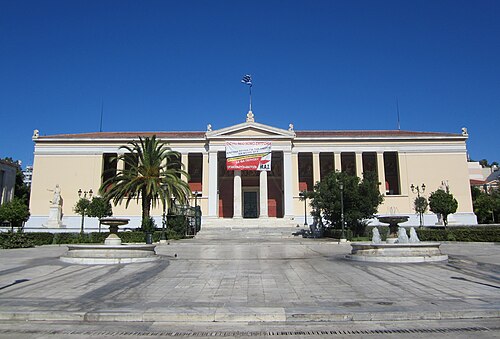
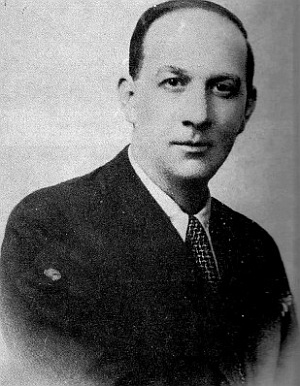
Lapathiotis was born in Athens on 31 October 1888. His father, Leonidas Lapathiotis, was an army officer who rose to general and served briefly as minister of military affairs. The boy grew up in comfort, learned languages and music, and wrote verse so early and so fluently that he was publishing in literary magazines in his teens. He took a law degree at the University of Athens and never used it. In 1914 he published a «Μανιφέστο» (Manifesto) in the review Νουμάς, a youthful call for art and beauty against the dullness of bourgeois life, and it set the tone of the aesthete he would remain.
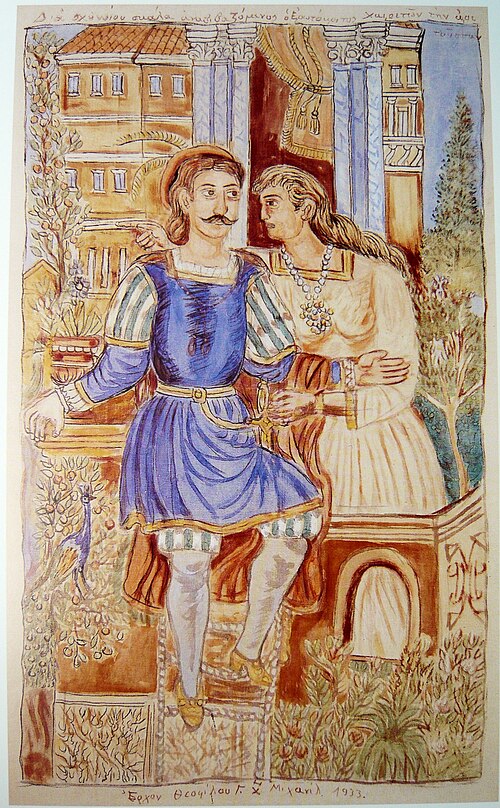
He lived, in a sense, in public. His homosexuality was neither hidden nor forgiven; he dressed with studied elegance, kept the company of the poet Mitsos Papanikolaou and the literary cafés of Athens, declared himself a communist in the 1920s, and became dependent on drugs, first morphine and later heroin and cocaine. The family fortune drained away. By the 1930s he was living in the old house in Exarcheia with his mother, in growing poverty, still writing poems of extraordinary polish.
Only in 1939, at fifty, did he gather a selection into a book, «Τα ποιήματα». Then came the war and the German Occupation, with its famine winter of 1941–42. Ill, addicted and destitute, Lapathiotis shot himself in the family house on 7 January 1944 and died the next day. He left behind many unpublished poems, prose pieces and an unfinished autobiography, «Η ζωή μου» (My Life), published decades later.
Works

Lapathiotis wrote short poems, rarely more than a page, in regular metres and rhymes, and their first quality is sound: they are as close to song as Greek verse gets without music. Their subjects are the standard ones of the European fin de siècle, night, autumn, rain, lost love, the passing of youth, the wish for death, but handled with a lightness that keeps them from self-pity. A typical poem, often called simply «Νυχτερινό» (Nocturne), sets a quiet scene, lets a feeling rise, and closes on a line that drops like a sigh. Beneath the gentleness there is a steady gaze at decay, which is why critics group him with the «decadent» poets and with Karyotakis, although he never shares Karyotakis's sarcasm.
He also had a taste for mischief. In 1938 he published «Βάο, γάο, ντάο», a sonnet-like poem made entirely of invented words that obey Greek grammar and rhythm perfectly and mean nothing at all, to show that a certain kind of modern critic would praise anything that sounded like poetry. The poem became famous, is still quoted, and anticipates by decades the games of concrete and nonsense verse.
Beyond the lyrics he wrote prose: the short novel «Το τάμα της Ανθούλας» (Anthoula's Vow, 1932), stories, critical essays and the autobiography. «Τα ποιήματα» (1939) remains the core of his work, a small, carefully chosen book in which almost every line could be sung, and several since have been.
Legacy in Greece today
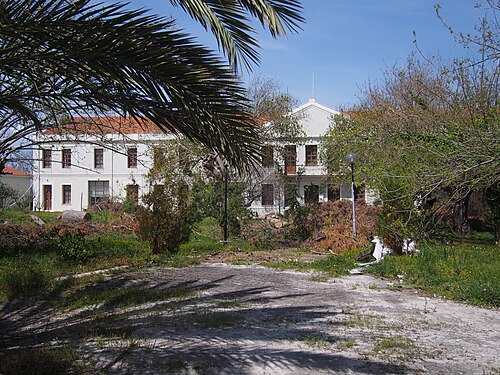
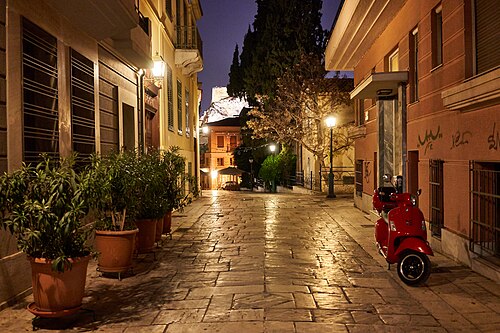
Lapathiotis is read today as one of the purest lyric voices between Palamas and the Generation of the 1930s, and his poems are in the lyceum anthologies next to Karyotakis. Several Greek composers have set them to music, and his verses turn up in albums of art song and even in rock settings, which suits a poet who always wrote for the ear. His life became a film, Takis Spetsiotis's «Μετέωρο και σκιά» (Meteor and Shadow, 1985), which made him a reference for Greek queer culture. The house where he lived and died, on Oikonomou Street in Exarcheia, Athens, still stands, half-ruined, and campaigns to save it as a listed building have made it a small place of pilgrimage. A learner can start with «Βάο, γάο, ντάο», read aloud for the pleasure of its empty music, and then with the real poems, where every word counts.
Did you know?
- His father Leonidas was a general and served as Greece's minister of military affairs; the son never held a job in his life.
- «Βάο, γάο, ντάο» (1938) consists entirely of made-up words, yet it scans, rhymes and conjugates like real Greek; it is probably the most famous nonsense poem in the language.
- He published only one book of poems in his lifetime, in 1939, at the age of fifty.
- He died in January 1944, in the same Occupation winter that killed thousands of Athenians, in the family house in Exarcheia that still stands today.
Key works
| Greek title | Title | Year |
|---|---|---|
| Μανιφέστο | Manifesto (in the review Noumas) | 1914 |
| Νυχτερινό | Nocturne (lyric poems under this title) | 1920s |
| Το τάμα της Ανθούλας | Anthoula's Vow (short novel) | 1932 |
| Βάο, γάο, ντάο | Vao, gao, dao (nonsense poem) | 1938 |
| Τα ποιήματα | The Poems (his only collection) | 1939 |
| Η ζωή μου | My Life (unfinished autobiography, posthumous) | written 1940s |
From the works


Public-domain pictures from Wikimedia Commons.
A line to remember
Ζινώντας αποβίδονο σαβίνι / κι απονιβώντας ερομιδαλιό
Zinontas apovidono savini / ki aponivontas eromidalio
Untranslatable: every word is invented, only the grammar and the music are Greek.
From the original
The text as Napoleon Lapathiotis wrote it, out of copyright, with our own translation beside it.
«Νυχτερινό»Nocturne
A complete short lyric, one of his most anthologised: four images of a night, each cut off by the same refrain, until the last couplet turns the refrain inward. The nonsense poem quoted on this page cannot be translated; this one shows the music it plays with.
«Νυχτερινό» (1920s), complete · Public-domain text, source: el.wikisource.org